

Blog
Blog Kagoshima
-
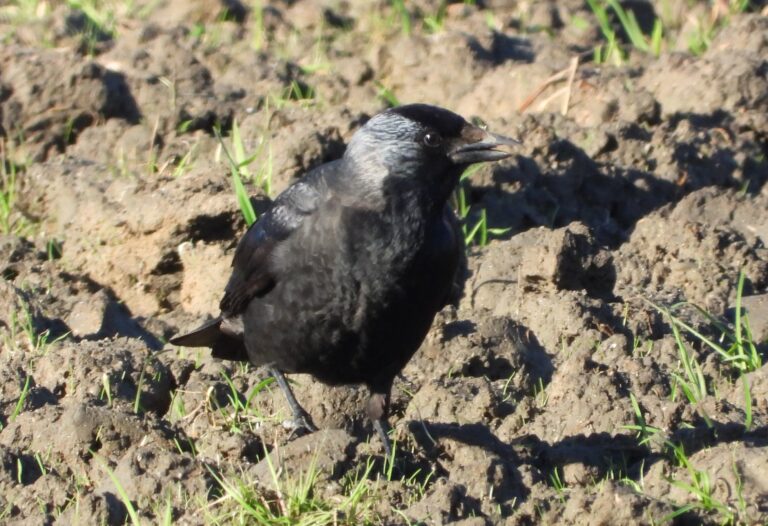
Daurian jackdaw
A small crow, about the size of a pigeon, it migrates to Japan as one of the few winter visitors. In the Izumi Plain, several individuals are often seen mixed within large flocks of rooks. Previously, it was thought there were two types: a pale morph with white from the back of the neck to the chest and belly, and a dark morph with a glossy black overall colour. Now, the pale morph is generally considered the adult, and the dark morph the juvenile. The first time I saw one, I was astonished by its sheer smallness. Standing alongside a…
- Birds
- Kagoshima
-
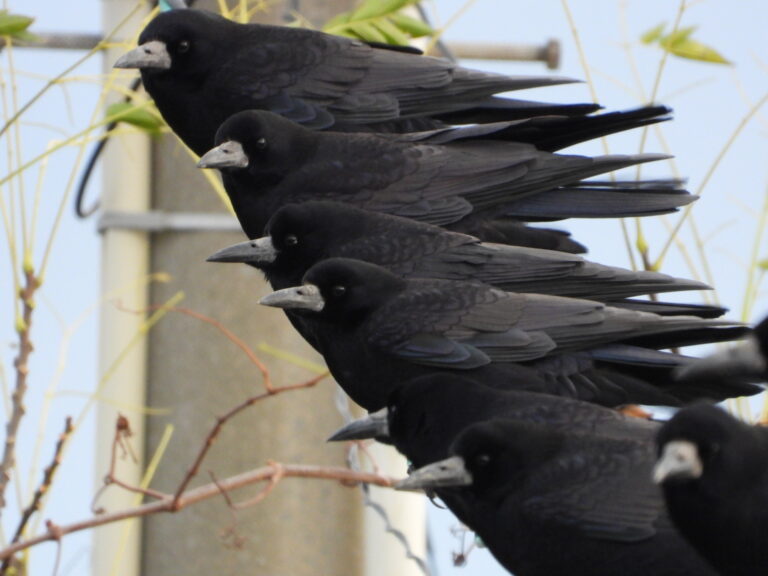
Rook
The crow that breeds in northeastern China and migrates to Japan for the winter. Once rarely seen outside Kyushu, it is now observed nationwide, including Hokkaido. They often move in large flocks, sometimes numbering several hundred. In the Izumi Plain, they forage in farmland, and by evening, one can see them clustered like bells on power lines near residential areas. In Aesop's fable “The Crow and the Pitcher”, a crow appears that uses tools. The story describes a crow dropping pebbles one by one into a jug containing only a little water, raising the water level so it…
- Birds
- Kagoshima
-
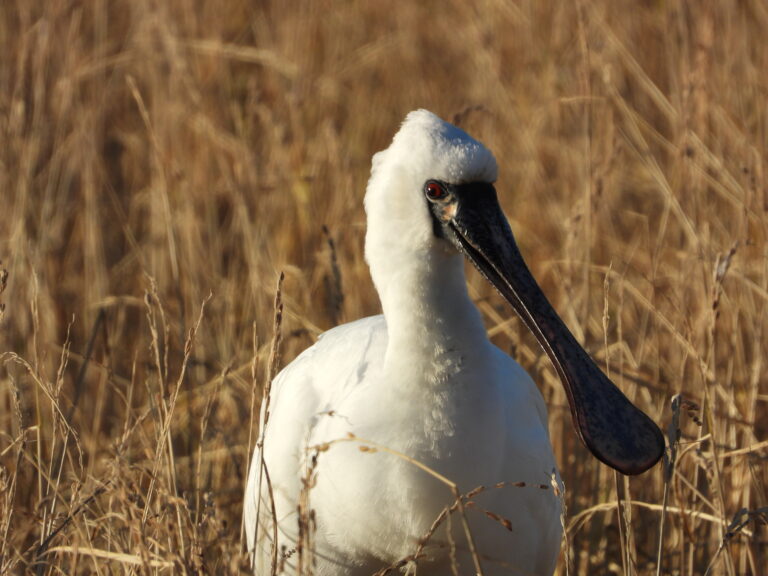
Black-faced spoonbill
It closely resembles the Eurasian spoonbill, but its black eye patch and the lack of a visible boundary between its eye and bill led to its English and Japanese names meaning 'black-faced'. Its population once dwindled to around 300 birds, bringing it to the brink of extinction. It primarily nests on the cliffs of islands along North Korea's west coast, but its numbers are said to have plummeted due to environmental destruction during the Korean War in the 1950s and pesticide use. It is now protected as a flagship species for wetland conservation along the East Asian-Australasian Flyway and…
- Birds
- Kagoshima
-

Eurasian spoonbill
The Eurasian spoonbill, characterised by its spoonbill-like beak. In Japan, small numbers migrate annually, primarily to Kyushu. In the Izumi Plain, they can be seen quite close by, such as along the roads of the East Reclamation Area, and are often photographed alongside large flocks of cranes. Though not classified as endangered, its breeding range in Europe is localised, leading to its listing under Appendix II of the Convention on International Trade in Endangered Species of Wild Fauna and Flora (CITES). In Senegal, where I was based, small numbers migrate from Europe during winter. Research using GPS tags…
- Birds
- Kagoshima
-
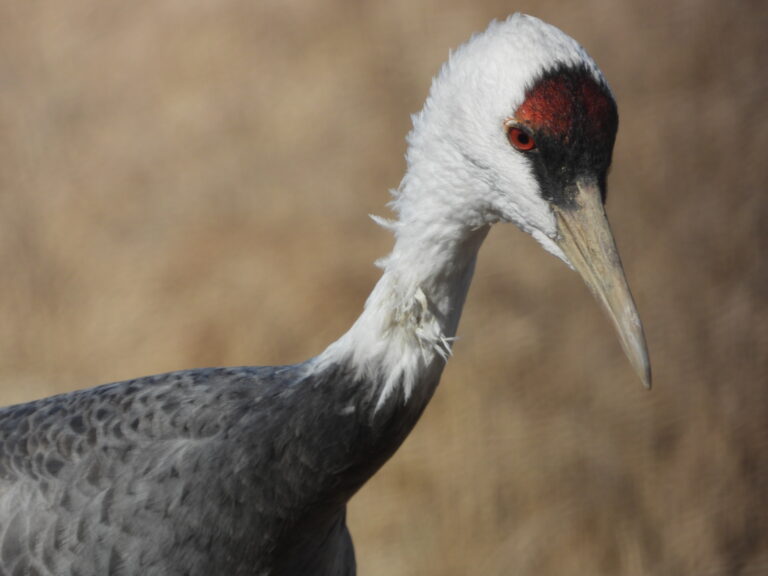
Hooded crane
Alongside the white-naped crane, this crane is a primary attraction drawing overseas birdwatchers to Japan. Breeding in south-central to south-eastern Siberia, nearly 10,000 individuals migrate to the Izumi Plain each year. With the global population estimated at 11,600 birds, this means almost 90% migrate to the Izumi Plain. While they now overwinter not only in the Izumi Plain but also in parts of Shikoku and the Chūgoku region, it is thought they once migrated to various parts of the country. During the Edo period, they were part of the “Three Birds and Two Fishes” delicacies, and it is said that…
- Birds
- Kagoshima
-
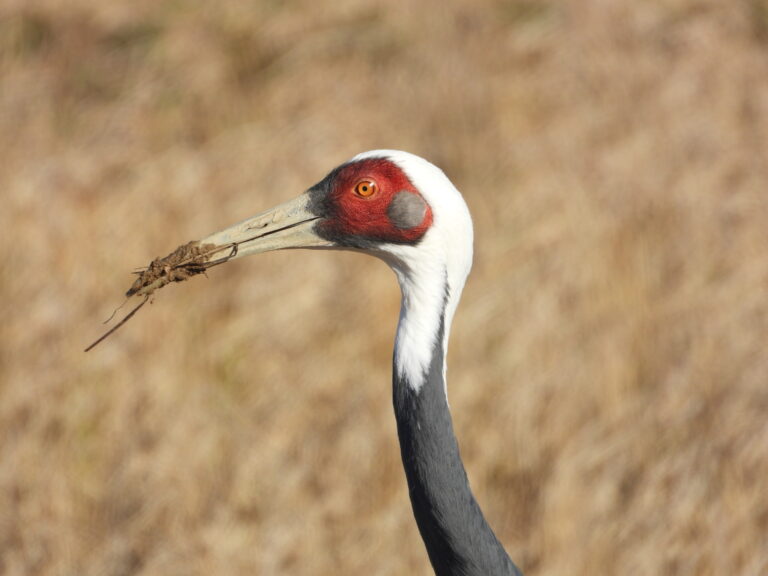
White-naped crane
The white-crowned crane, designated as an endangered species, is one of the birds sought after by foreign birdwatchers visiting Japan. There are two main groups of white-naped cranes: the western group breeds in northeastern Mongolia and China's Hanyang Lake, wintering in the lower Yangtze River region; the eastern group breeds in the Amur River basin of China and Russia, wintering in central Korea, Japan, and particularly the Izumi Plain. The number migrating varies significantly from year to year in Japan, exceeding 3,000 birds in some years and dropping to around 200 in others. Reports indicate their numbers in central Korea…
- Birds
- Kagoshima
-
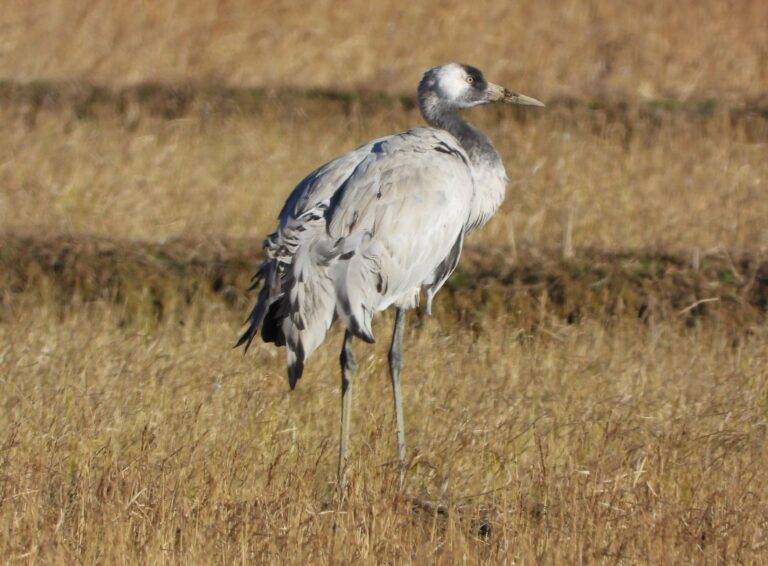
Common crane
Among the flocks of cranes in the Izumi Plain, the common crane is the hardest to spot. Though several migrate here each year, finding them among over ten thousand cranes proves quite a challenge. Their global population is estimated at 500,000 birds. In France, it is said that royalty and nobility once savoured them as a delicacy. In Japan, the more common hooded crane was particularly favoured by the upper classes when salted, suggesting cranes were a globally cherished delicacy symbolising longevity.
- Birds
- Kagoshima
-
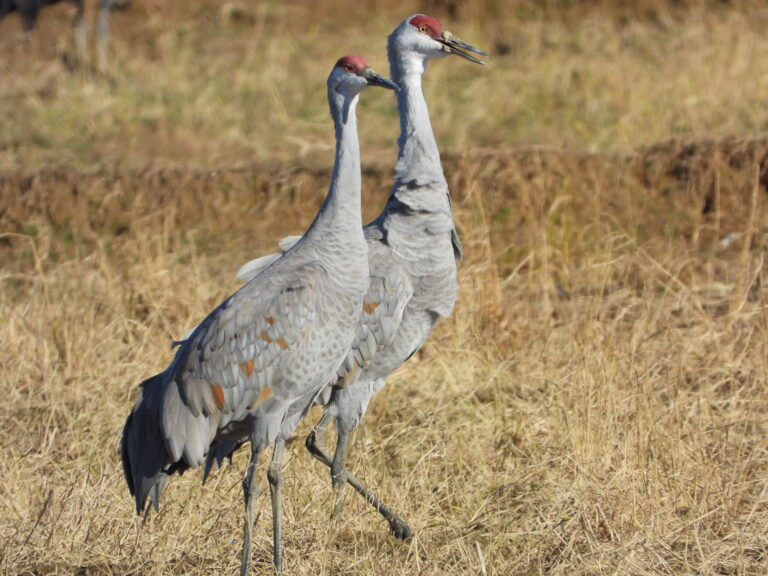
Sandhill crane
The sandhill crane, known in Japan as the “Canadian Crane”. Several birds migrate to the Izumi Plain almost every year. This year, three are said to be overwintering here, two of which are always inseparable. From morning till night, they spent their time together, never straying far apart. Though a rare bird in Japan, it is the world's most abundant crane, with an estimated population exceeding 1.5 million. In some US states, hunting of the sandhill crane is permitted for pest control of crops and for sport hunting. Reports indicate that, for now, capture is being carried out at sustainable…
- Birds
- Kagoshima
-
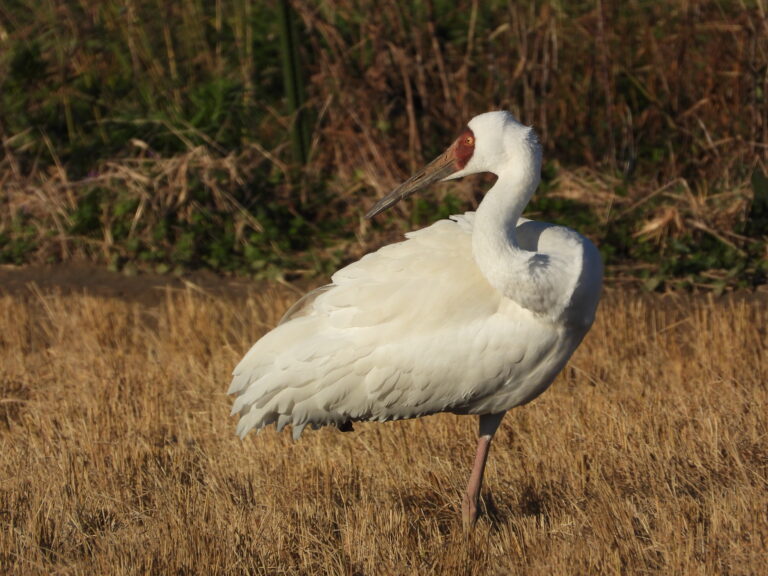
Siberian crane
Another rare crane species has arrived at this year's Izumi Plain. It is the endangered Siberian Crane, of which only 3,200 to 4,000 are thought to exist worldwide. According to locals, it appeared to have an injured leg when it first arrived, but now half of one leg is missing, possibly due to necrosis. It occasionally displayed behaviour suggesting it was pecking at the leg with its beak, perhaps in pain. The Siberian Crane breeds in northern Russia. However, environmental changes in its wintering grounds, heavy pesticide use, and poaching are believed to be the primary causes of its significant…
- Birds
- Kagoshima
-
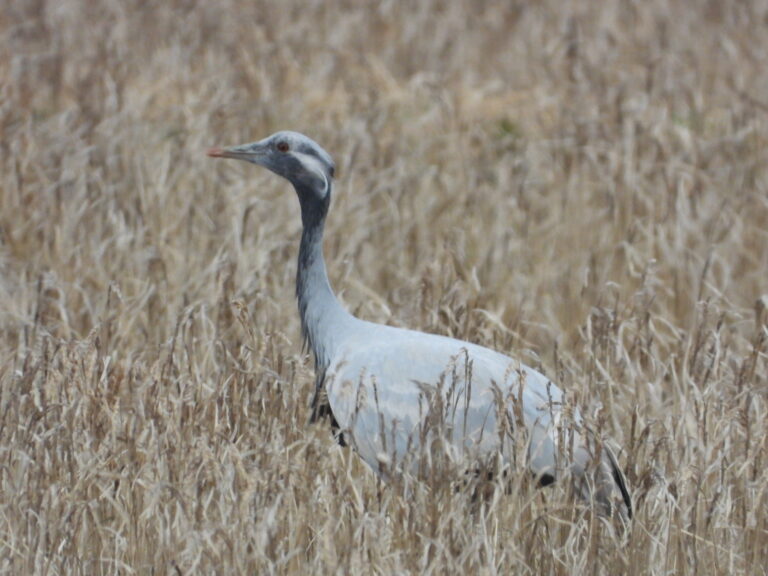
Demoiselle crane
Among foreign birdwatchers visiting Japan, the eagles riding the drift ice in eastern Hokkaido and the vast flocks of cranes in Kagoshima's Izumi Plain are particularly popular. Having heard that the demoiselle crane had arrived for the first time in five years, I went to scout the location. This year, over 13,000 cranes have arrived, but only one of the demoiselle crane. Locals mentioned young one had arrived and that the rice fields it frequented was constantly changing. Just as I thought it might be hopeless, I spotted one quite easily. The dark grey hooded crane dominate the flock, so…
- Birds
- Kagoshima