

Blog
Blog Ishigaki Island
-
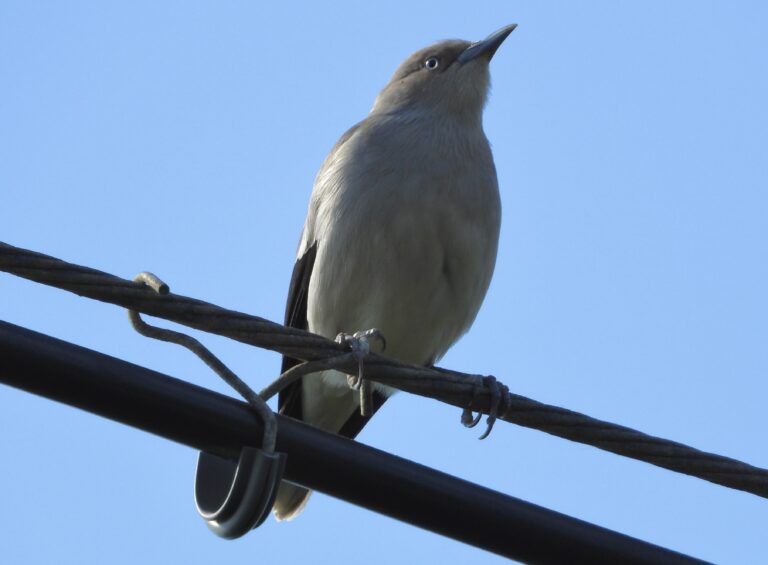
White-shouldered starling
As its Japanese and scientific names suggest, this starling breeds in southern China and northern Vietnam, wintering in Taiwan, Thailand, Malaysia, and other locations. While it is a rare migratory bird with records nationwide, including Hokkaido, a small number overwinter annually on Ishigaki Island. True to its English name, the male has conspicuous white shoulder patches. The female, in contrast, is uniformly pale gray. Though rather plain in appearance, the contrast between the white and glossy black feathers when in flight is striking. Some visitors come to Ishigaki Island in winter specifically to see this, and I am one of…
- Birds
- Ishigaki Island
-
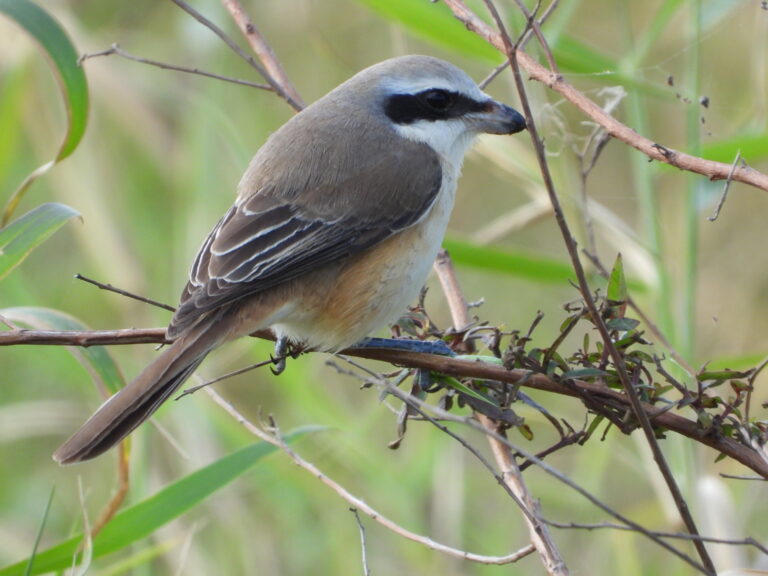
Brown shrike
It is a subspecies of the Brown shrike known in Japan as the Shima Akamozu Lanius cristatus lucionensis. This subspecies of the Brown shrike migrates from eastern China and the Korean Peninsula to the Amami, Okinawa, and Yaeyama Islands as a winter visitor. Whereas the subspecies Lanius cristatus superciliosus, once seen throughout Japan, has reddish-brown upperparts, the subspecies Lanius cristatus lucionensis is considerably more greyish. The subspecies Lanius cristatus has declined dramatically over the last century, with the Honshū population predicted to become regionally extinct by 2026. Conservation efforts, led by the University of Human Environments, are underway. Meanwhile, this…
- Birds
- Ishigaki Island
-

Purple heron
This heron breeds only in Japan's Yaeyama Islands, such as Ishigaki and Iriomote. It is named the Purple Heron due to its reddish-brown plumage tinged with purple on the neck and sides of the body. However, the subspecies found in Japan, Ardea purpurea manilensis, has a generally paler overall colouration with a more strongly greyish upperparts, leading me to wonder, upon first sight, why it is called purple? The Indonesian name Cangak Merah (Red Heron) seems to capture its characteristics more accurately. It has a wide global distribution, with four subspecies known. Although its broad range means it is not…
- Birds
- Ishigaki Island
-
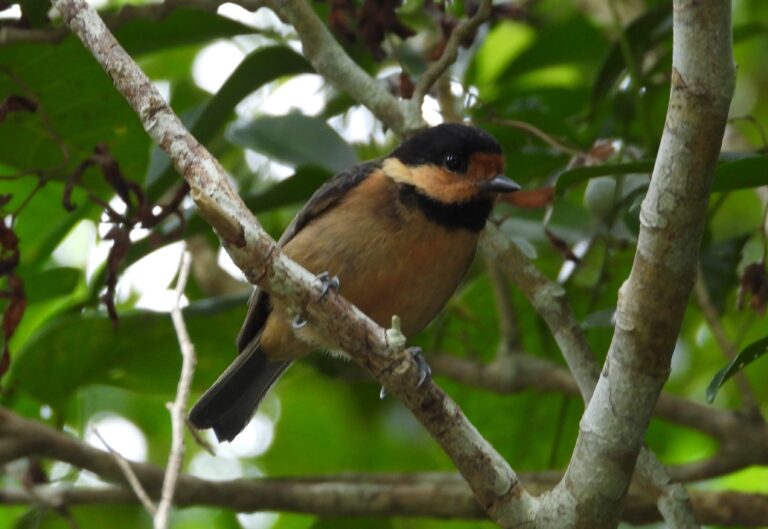
Iriomote tit
Once considered a subspecies of the varied tit commonly found throughout Japan, DNA analysis has now classified it as a distinct species, endemic solely to Ishigaki and Iriomote Islands. This has become one of the reasons European and American birdwatchers visit Ishigaki Island. Whereas the varied tit has a pale cream-coloured forehead, cheeks, and crown, the Iriomote tit displays an orange hue. Its wings should be olive-grey, as suggested by its scientific name olivaceus, though this is difficult to discern in the wild. The Japanese name “Orii” originates from Mr. Orii Hyōjirō, a collector…
- Birds
- Ishigaki Island
-
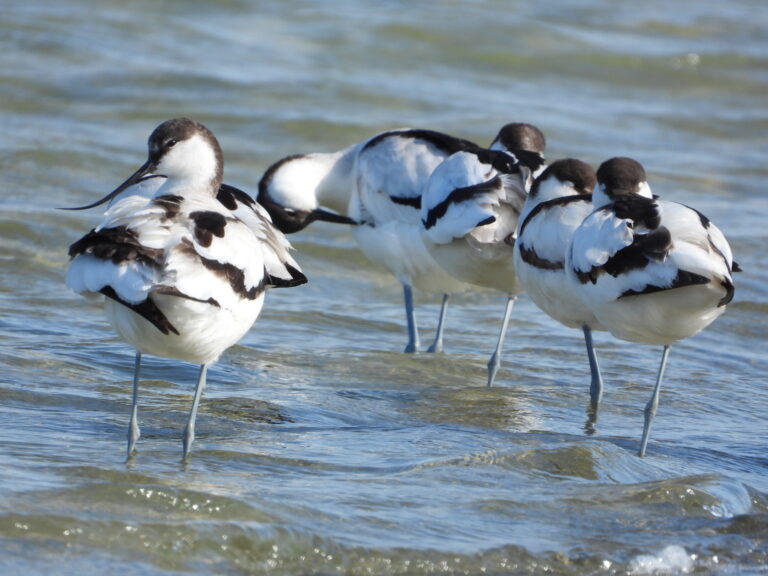
Pied avocet
This wader is the one of most popular species, characterised by its upturned black beak tip and striking black-and-white plumage. It is an extremely rare migratory bird in Japan. It is also known as the symbol of the Royal Society for the Protection of Birds, Britain's largest nature conservation organisation. This year, eight individuals overwintered on Ishigaki Island. According to guide Mr Kobayashi, they remained in the rice fields until year-end but have recently begun gathering in flocks along the coast. Whilst common winter visitors in Senegal where I lived, I had never seen them in such large groups, making…
- Birds
- Ishigaki Island
-

Red-breasted flycatcher
This year, I once again enlisted the help of Mr Kobayashi, the wild bird guide from Ishigaki Island, to visit various observation points. He mentioned that this winter has seen a very low number of small birds, particularly thrushes. Nevertheless, I successfully spotted some rare small birds at the points he recommended. The red-breasted flycatcher, which is increasingly seen somewhere in Japan each year, though the numbers migrating here remain very low. Previously, there was a species called the red-breasted flycatcher, and it was thought there were two subspecies: the red-breasted flycatcher, Flycatcher, inhabiting Europe, and the Taiga flycatcher, migrating…
- Birds
- Ishigaki Island
-
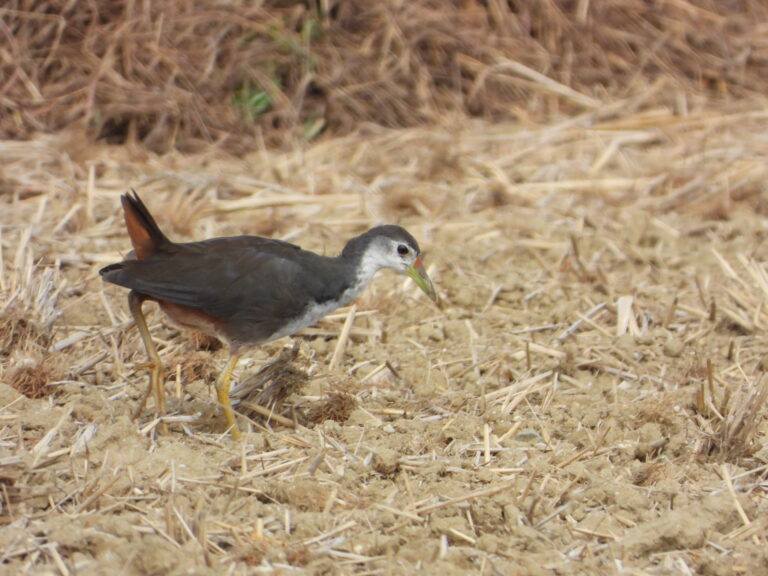
White-breasted waterhen
The White-breasted waterhen is frequently seen along the national road and farm roads of rainy Ishigaki Island. Perhaps because they often cross the roads, one frequently encounters their roadkill carcasses. In Japan, they are primarily resident birds inhabiting Okinawa Prefecture, but they often fly to relatively nearby locations and settle there permanently, with breeding records even on Honshu. Their range appears to be gradually expanding northwards. On Ishigaki Island, they are mainly found in rice paddies, but in the Indian city of Nainital, they breed at elevations as high as 1300 metres. They are birds that can potentially appear in…
- Birds
- Ishigaki Island
-
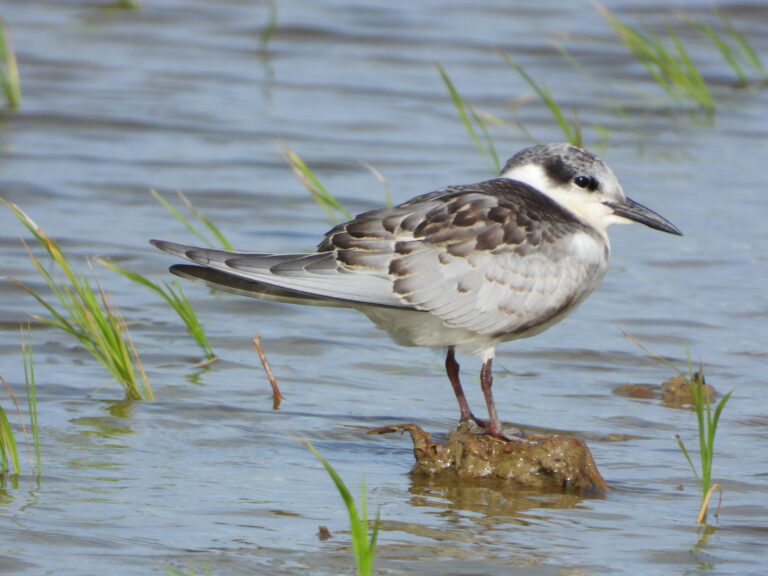
Whiskered Tern
The Whiskered Tern is commonly seen in the Nansei Islands during the spring and autumn migration periods. Its scientific name, Chlidonias, derives from the ancient Greek khelidonios, meaning “swallow-like”, and indeed its flight over rice fields resembles that of a swallow. In summer plumage, as suggested by its Japanese name “Kurohara Ajisashi” (Black-bellied Tern), its underparts turn black. However, in winter plumage, the belly becomes whitish and the head takes on a salt-and-pepper appearance. On Ishigaki Island, they are often seen in small flocks, particularly over flooded rice fields.
- Birds
- Ishigaki Island
-
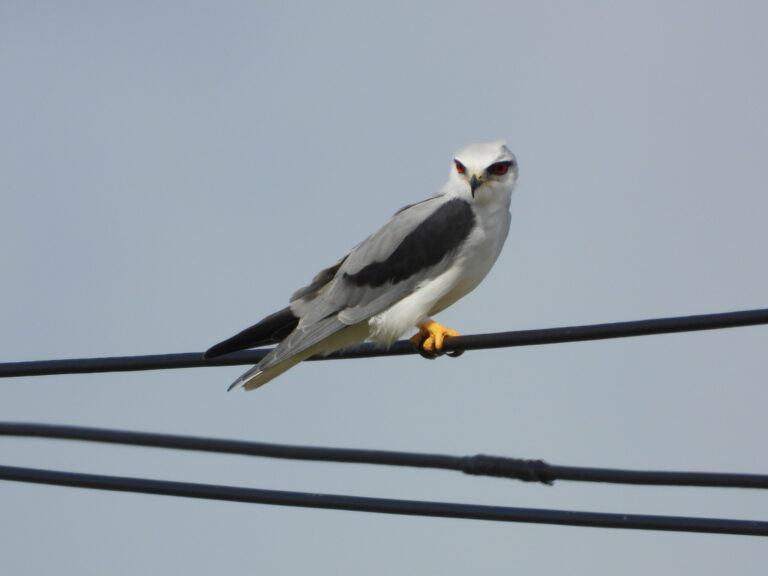
Black-winged kite
The Black-winged Kite, whose numbers have increased on Ishigaki Island in recent years. They tend to appear when it's overcast or near evening, but there's no particular spot known for good viewing; they can apparently be seen anywhere. As they are also known in Japan as the “Black-shouldered Kite”, the shoulder part of their wings is black, making them quite conspicuous when flying. This kite is also found in Senegal, where I lived, and like the individuals on Ishigaki Island, it is highly wary, making it one of the birds most difficult to photograph. For this shoot, I used the…
- Birds
- Ishigaki Island
-
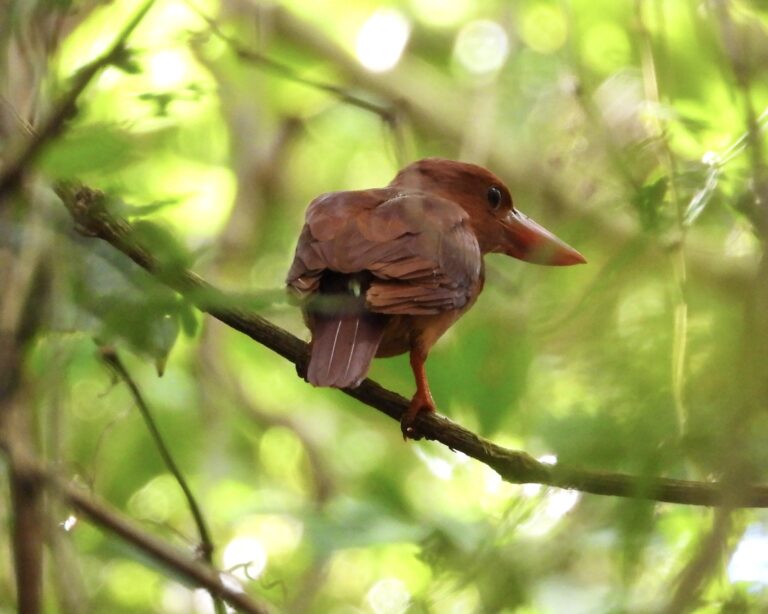
Ryukyu Ruddy kingfisher
The red bird most representative of Japan is the Ruddy kingfisher. South of Amami Ōshima, a subspecies known as the Ryukyu Ruddy kingfisher migrates to the area. Its wings have a purplish tinge, particularly noticeable when illuminated at night. This period marks their southward migration, and by early October they are almost entirely gone. Finding them is extremely difficult as they are also silent, but our veteran guide Kobayashi proved his expertise. Several individuals were observed in the gaps between the trees. Perhaps because its appearance evokes vivid flames, it is sometimes regarded as an ill-omened bird that invites fire…
- Birds
- Ishigaki Island
-
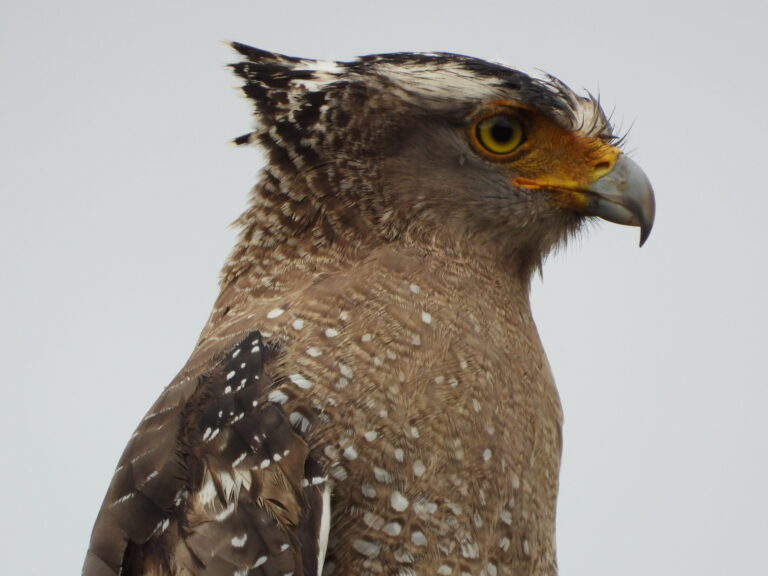
Crested serpent eagle
The Crested Serpent Eagle, representative bird of Ishigaki Island. While this eagle is widely distributed across South and Southeast Asia, the Crested Serpent Eagle inhabiting the Yaeyama Islands, including Ishigaki Island, is an endemic subspecies to Japan and designated as endangered. Its ecology remained largely unknown until its breeding was confirmed by a wildlife photographer in 1981. In recent years, traffic accidents involving young individuals appear to be increasing. During this trip, I observed them perched in roadside trees, hunting frogs and insects. On Ishigaki Island, golf course construction by resort companies is progressing, and resident groups have filed lawsuits…
- Birds
- Ishigaki Island
-
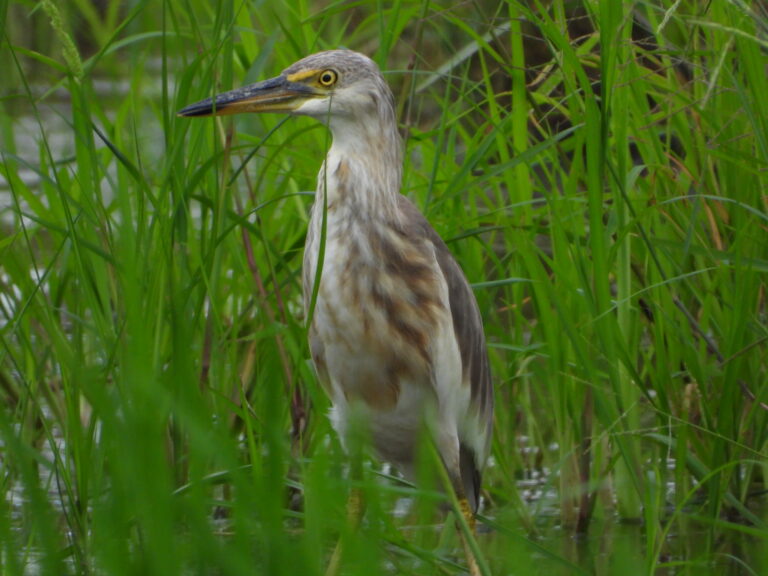
Javan pond heron
September on Ishigaki Island is the peak season for bird numbers; numerous long-toed stints and western yellow wagtails can be seen in rice fields everywhere, creating a lively scene. Among those rice fields we found a Javan pond heron. They seem to be migrating here more often in recent years, and apparently there are four this year. Their winter plumage is rather plain, but in summer their upperparts turn orange, making them quite beautiful herons. While common in Bali, where I used to live, if they arrive on Honshū causes quite a stir.
- Birds
- Ishigaki Island