

Blog
Blog Ishigaki Island
-
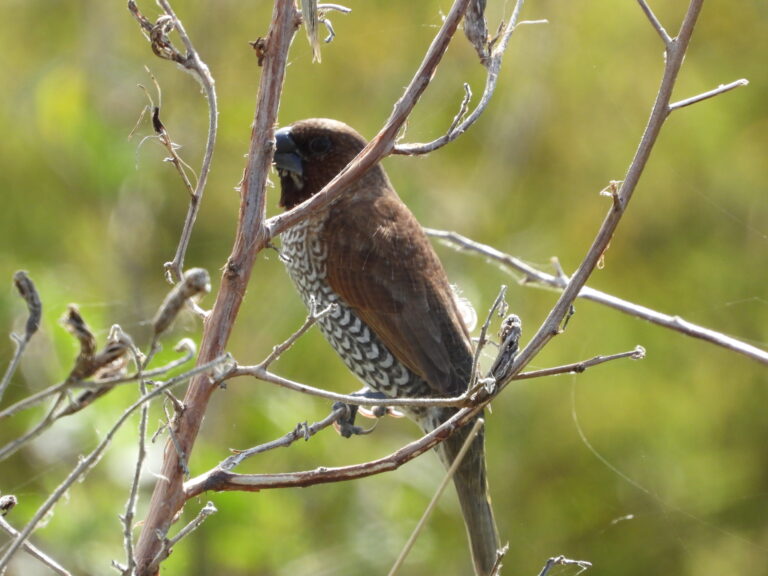
Scaly-breasted munia
The Scaly-breasted munia is widely distributed from southern China to Taiwan, Indonesia, India and other parts of South-East Asia. It is a small bird characterised by the wavy pattern on its belly. Whilst 11 subspecies are recognised, the species has been introduced to the United States and Australia, and individuals inhabiting the Nansei Islands, such as Ishigaki Island, are considered to be non-native species resulting from escaped pet birds. However, as the species is commonly found in Taiwan, the possibility that they may have migrated from there cannot be entirely ruled out. Determining which birds are native and which are…
- Birds
- Ishigaki Island
-
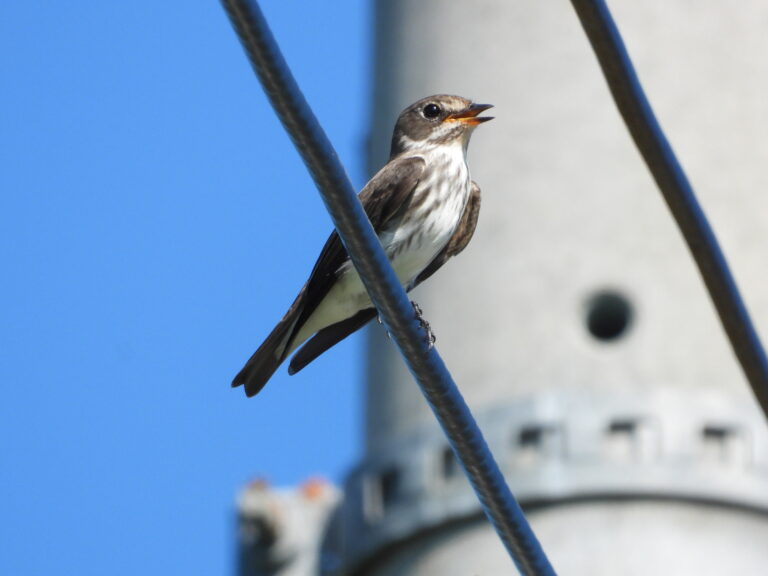
Grey-streaked flycatcher
Come autumn, it is common to spot small birds migrating even in city parks. A prime example of this is the Grey-streaked Flycatcher. From late September to early October, it can be observed at the Kyoto Imperial Palace. It breeds in northern regions such as Siberia and is a migratory bird that passes through Japan during the migration season. Although it also migrates in spring, it is overwhelmingly more commonly seen in autumn. It is characterised by vertical stripes running from its breast to its belly. Like other members of the flycatcher family, it takes off from tree branches, catches…
- Birds
- Ishigaki Island
-
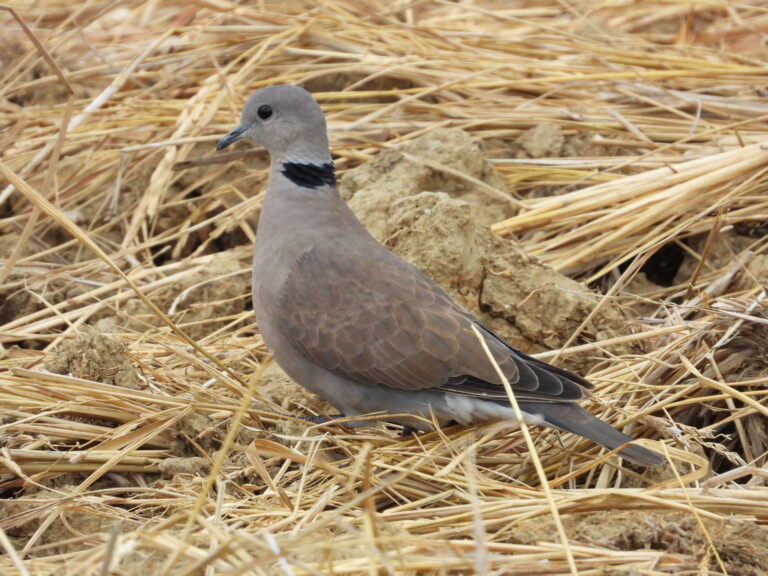
Red collared dove
Although rarely seen on Honshu, the Red collared dove is observed every year from autumn to spring in the Nansei Islands. It is much smaller than other pigeons commonly found in Japan—about the size of a starling—and is often seen mingling with flocks of Oriental turtle doves. The photograph shows a female. As the name suggests, the male has a reddish tinge to its back and belly, whilst the female is a dull, overall greyish-brown colour with no reddish hues. It is an extremely rare bird in Kyoto, with only a single record prior to the war, yet it is…
- Birds
- Ishigaki Island
-
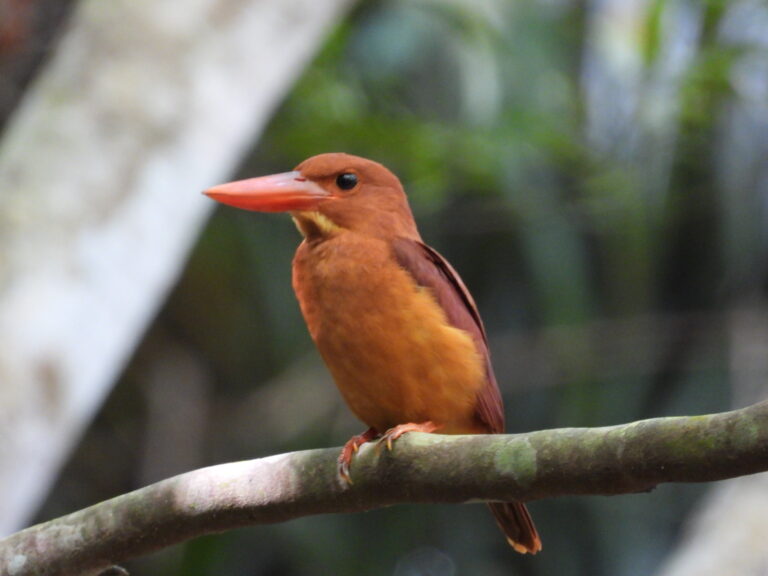
Ryukyu Ruddy Kingfisher still remaining
In late September on Ishigaki Island, the composition of migratory birds changes significantly from day to day. The Ryukyu Ruddy Kingfisher, a subspecies of the Ruddy Kingfisher, breeds in the Nansei Islands, including Ishigaki Island, and is said to disappear from sight by mid-August, but on this occasion I was lucky enough to spot one. As the base of its beak is blackish, it may be a juvenile born this year. Whilst they sing in a distinctive voice during the breeding season, they do not sing at this time of year, so one must search carefully among the branches in…
- Birds
- Ishigaki Island
-

italico
Even on Ishigaki Island, restaurants come and go at a rapid pace, and there are many establishments that have closed down whilst I’ve been away for a while. Amidst this, ‘italico’ has been a beloved Italian restaurant on Ishigaki Island for over 20 years. It is a popular spot that is often visited on tours led by Mr Kobayashi, the birdwatching guide. Dining on the terrace whilst gazing out over the cobalt-blue Sakieda Bay is a truly relaxing experience. What’s more, at 1,100 yen for a starter, a main course of pasta and a drink, it’s remarkably good value—hard to…
- Ishigaki Island
- restaurant
-
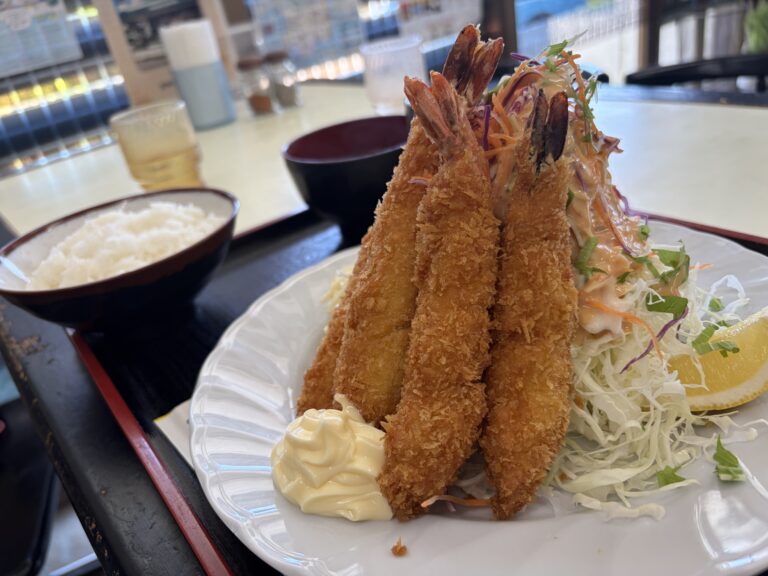
Shiraho Shokudō
About a 10-minute drive from Ishigaki Airport. Shiraho Shokudō has been a favourite with locals for many years. I finally managed to get in. The interior is exactly what you’d expect from a traditional neighbourhood eatery, but the menu offers a good variety, including Napolitan spaghetti and pork cutlet sandwiches. I ordered the deep-fried prawn set meal recommended by Mr Kobayashi, the birdwatching guide. The portion size was astonishing: four deep-fried prawns stood towering on the plate. It filled both my stomach and my heart, but it was a shame I was too full to have a shaved ice dessert.…
- Ishigaki Island
- restaurant
-
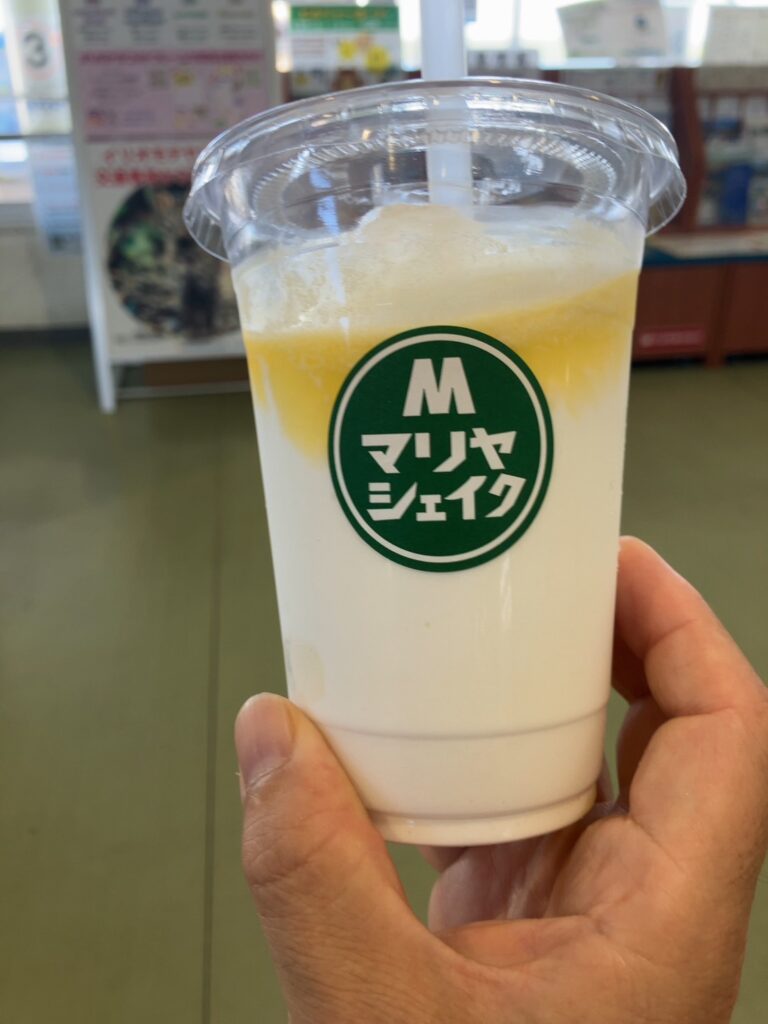
Mariya Shake
September on Ishigaki Island marks the peak of the migratory bird season. Whilst this coincides with typhoon season, bringing the risk of flight cancellations, it is a time that bird lovers simply cannot miss. Unlike a few years ago, foreign tourists can now be seen all over the place. Perhaps Ishigaki Island will eventually change in the same way as Miyako Island has. Whenever I visit Ishigaki Island, I always end up having a Mariya Shake. Produced by Mariya Dairy—which, alongside Yaeyama Genki Dairy, has long been a favourite among locals—this shake is made using fresh milk from the company’s…
- Ishigaki Island
- Japanese dessert
-
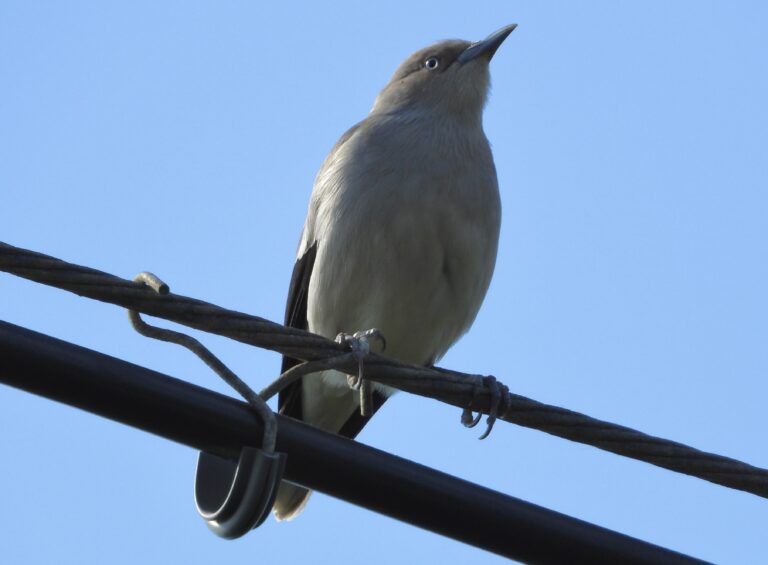
White-shouldered starling
As its Japanese and scientific names suggest, this starling breeds in southern China and northern Vietnam, wintering in Taiwan, Thailand, Malaysia, and other locations. While it is a rare migratory bird with records nationwide, including Hokkaido, a small number overwinter annually on Ishigaki Island. True to its English name, the male has conspicuous white shoulder patches. The female, in contrast, is uniformly pale gray. Though rather plain in appearance, the contrast between the white and glossy black feathers when in flight is striking. Some visitors come to Ishigaki Island in winter specifically to see this, and I am one of…
- Birds
- Ishigaki Island
-
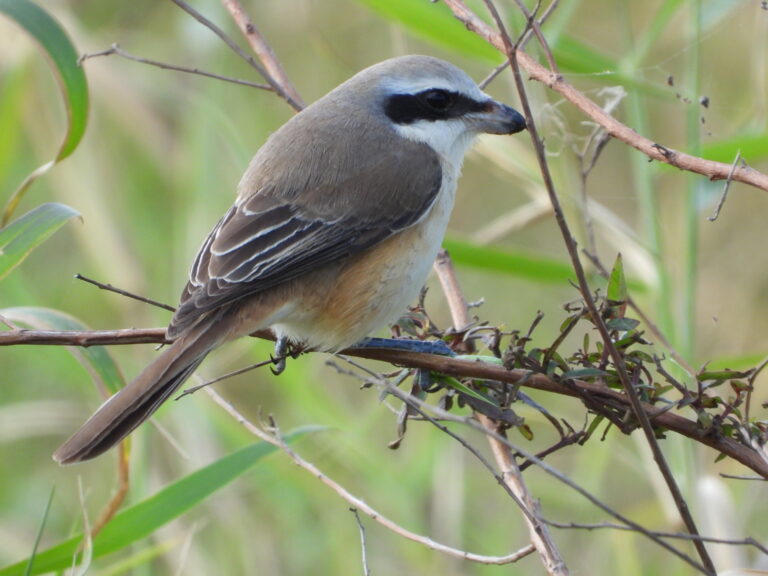
Brown shrike
It is a subspecies of the Brown shrike known in Japan as the Shima Akamozu Lanius cristatus lucionensis. This subspecies of the Brown shrike migrates from eastern China and the Korean Peninsula to the Amami, Okinawa, and Yaeyama Islands as a winter visitor. Whereas the subspecies Lanius cristatus superciliosus, once seen throughout Japan, has reddish-brown upperparts, the subspecies Lanius cristatus lucionensis is considerably more greyish. The subspecies Lanius cristatus has declined dramatically over the last century, with the Honshū population predicted to become regionally extinct by 2026. Conservation efforts, led by the University of Human Environments, are underway. Meanwhile, this…
- Birds
- Ishigaki Island
-

Purple heron
This heron breeds only in Japan's Yaeyama Islands, such as Ishigaki and Iriomote. It is named the Purple Heron due to its reddish-brown plumage tinged with purple on the neck and sides of the body. However, the subspecies found in Japan, Ardea purpurea manilensis, has a generally paler overall colouration with a more strongly greyish upperparts, leading me to wonder, upon first sight, why it is called purple? The Indonesian name Cangak Merah (Red Heron) seems to capture its characteristics more accurately. It has a wide global distribution, with four subspecies known. Although its broad range means it is not…
- Birds
- Ishigaki Island
-
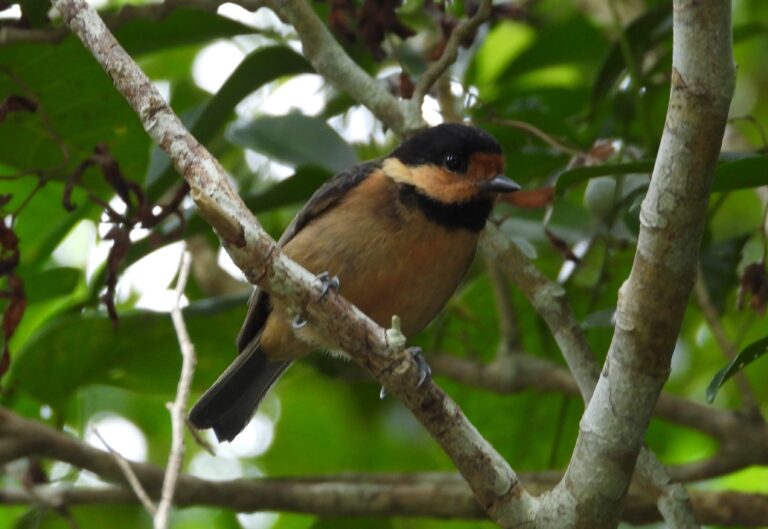
Iriomote tit
Once considered a subspecies of the varied tit commonly found throughout Japan, DNA analysis has now classified it as a distinct species, endemic solely to Ishigaki and Iriomote Islands. This has become one of the reasons European and American birdwatchers visit Ishigaki Island. Whereas the varied tit has a pale cream-coloured forehead, cheeks, and crown, the Iriomote tit displays an orange hue. Its wings should be olive-grey, as suggested by its scientific name olivaceus, though this is difficult to discern in the wild. The Japanese name “Orii” originates from Mr. Orii Hyōjirō, a collector…
- Birds
- Ishigaki Island
-
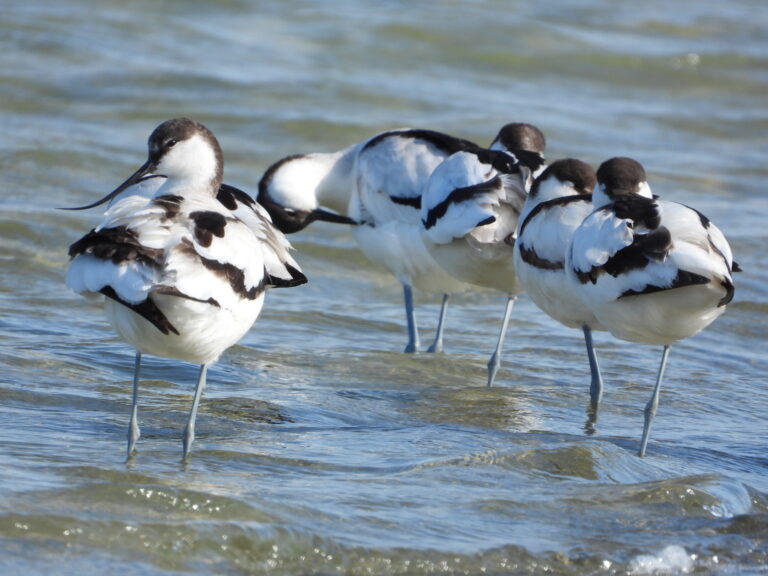
Pied avocet
This wader is the one of most popular species, characterised by its upturned black beak tip and striking black-and-white plumage. It is an extremely rare migratory bird in Japan. It is also known as the symbol of the Royal Society for the Protection of Birds, Britain's largest nature conservation organisation. This year, eight individuals overwintered on Ishigaki Island. According to guide Mr Kobayashi, they remained in the rice fields until year-end but have recently begun gathering in flocks along the coast. Whilst common winter visitors in Senegal where I lived, I had never seen them in such large groups, making…
- Birds
- Ishigaki Island