

- Fukui
- Spot introduction
Chokushi-mon Gate of Eiheiji Temple
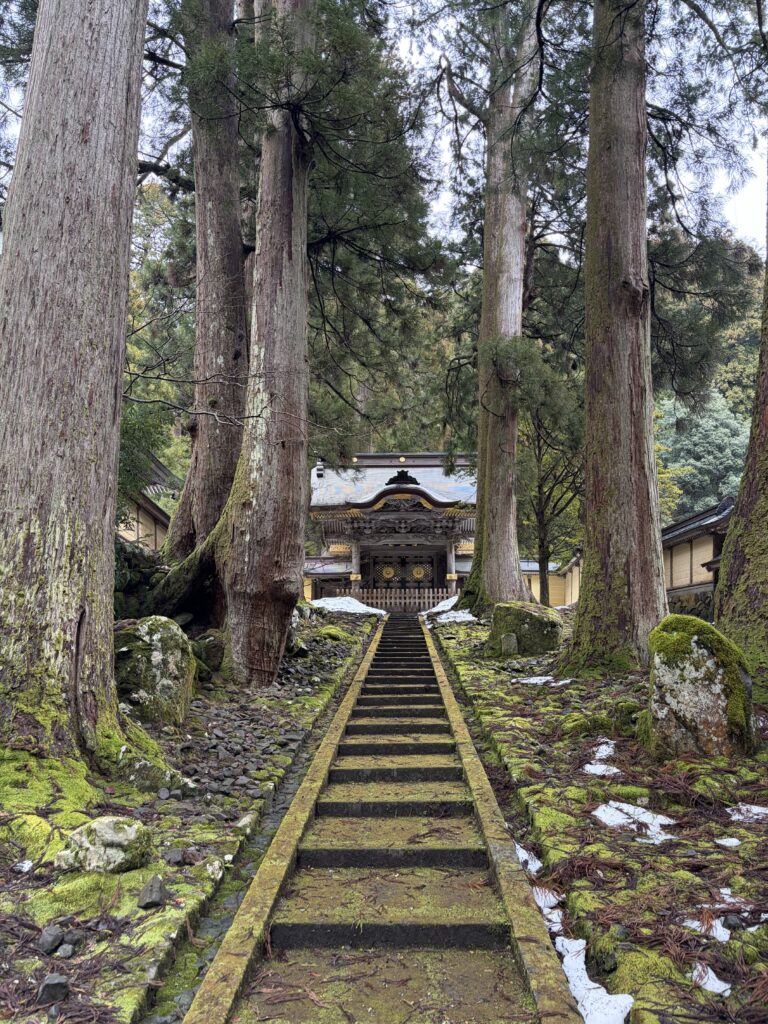
When you visit Eiheiji Temple, the Chokushi-mon Gate is the first thing you see as you approach. This gate was originally reserved exclusively for the Emperor’s envoys (chokushi) and is usually kept closed. For this reason, the imperial chrysanthemum crest, symbolising the Japanese Imperial Family, is displayed on its façade.
It has become such a symbol of Eiheiji Temple that if you search for ‘Eiheiji’, you will find numerous images of this Chokushi-mon Gate rather than the temple complex itself. Eiheiji Temple was founded in 1244, but it was destroyed by fire on several occasions, including during the Ikko-ikki uprisings of the Warring States period; the oldest surviving building is the Sanmon Gate (1749). The Chokushi-mon Gate is a relatively new structure, dating from 1844, the late Edo period. Like other temples and shrines with deep ties to the Imperial Family, it is a four-legged gate featuring karahafu gables, a type of curved gable found in Japanese architecture, at both ends. The approach is lined with cedar trees said to be over 500 years old, creating a solemn atmosphere.