

Blog
Blog Izunuma
-
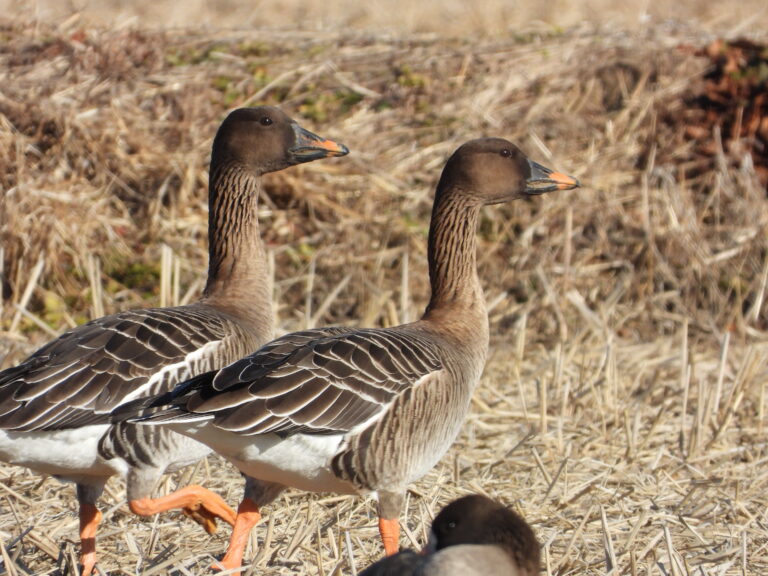
Taiga bean goose
The second most numerous goose to visit Japan after the Greater white-fronted goose. Both the subspecies Anser fabalis serrirostris and the larger subspecies Anser fabalis middendorffii overwinter in Japan, with the Anser fabalis middendorffii said to constitute 80% of the total. Both subspecies can be seen around Lake Izunuma. The individual in the photograph appears to be the subspecies Anser fabalis serrirostris, as it has a thicker, shorter bill and a shorter neck. Whilst not considered endangered globally, concerns exist in Japan regarding the adverse impact of development on its wintering grounds. Following its listing as an endangered species, a key…
- Birds
- Izunuma
-
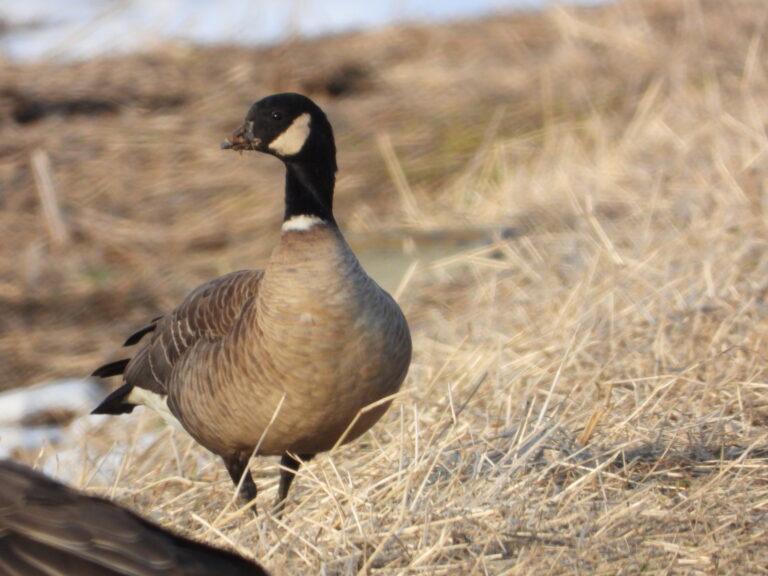
Cackling goose
It was once considered the same species or a subspecies of the larger Canada Goose, primarily inhabiting North America. However, due to differences in size, bill length, and vocalisations, it is now classified as a separate species. Similar to the Canada Goose being classified into numerous subspecies, the Crackling goose is also classified into five or more subspecies. Originally, geese and ducks exhibit greater inter-species hybridisation compared to other birds. The subspecies of the Canada Goose and Cackling goose are groups formed by each subspecies, or un scholar even suggest these groups can be classified into six species and 200…
- Birds
- Izunuma
-
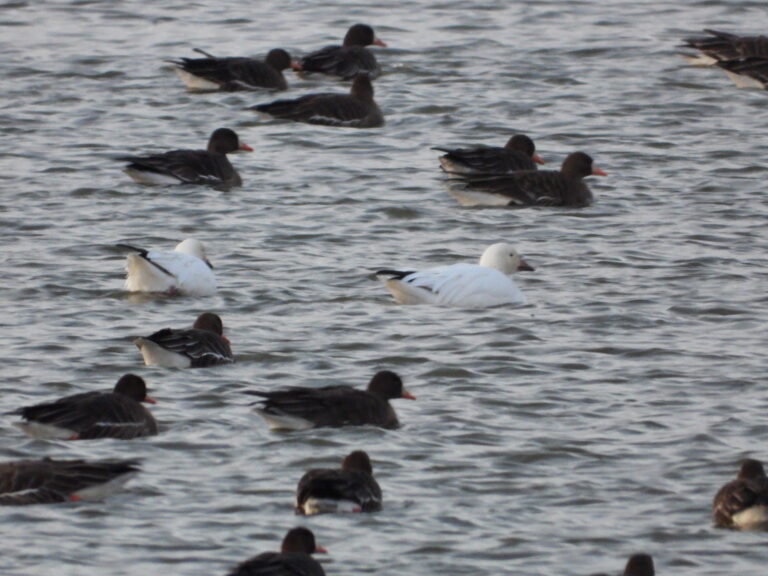
Snow goose
The beautiful white figure of the Snow goose became a target for hunting, dwindling to such an extent that it became known as the very rare bird in Japan. By the early 20th century, its numbers had plummeted to just 3,000 worldwide, not only in Japan. Similar to conservation efforts in America and Canada, persistent efforts by organisations like the Japanese Swan Protection Society led to a recovery in numbers. Today, several hundred birds migrate annually to Ōgata Village in Akita Prefecture, and several dozen to Lake Izunuma. The Snow goose roosting at Lake Izunuma take flight at dawn. With…
- Birds
- Izunuma
-
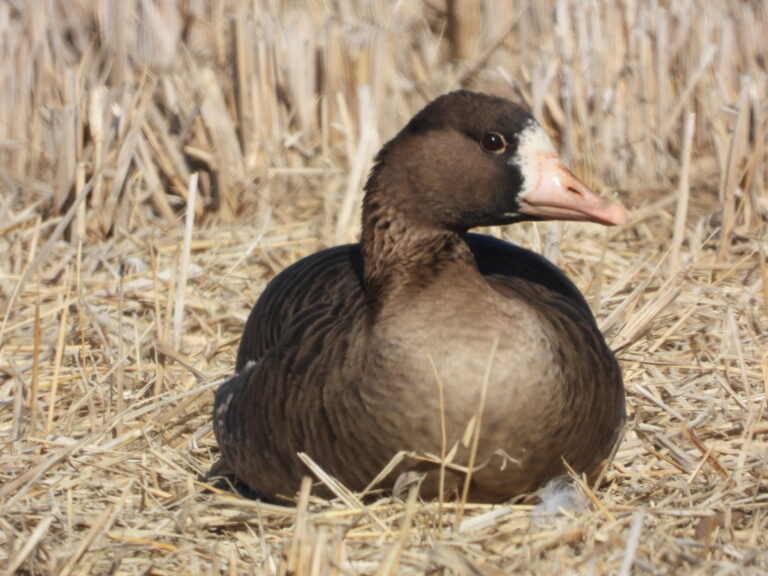
Greater white-fronted goose
The most numerous goose in Japan, with approximately 200,000 individuals migrating here annually. That said, the vast majority overwinter at Lake Izunuma, passing through Miyajima Marsh and Lake Utunai in Hokkaido during spring and autumn. The Greater white-fronted goose and the Lesser white-fronted goose are similar geese. The Lesser white-fronted goose has a conspicuous yellow eye ring, but the Greater white-fronted goose also has a faint eye ring, as shown in the photo, and some individuals have white reaching close to the top of their heads. This geese are classified into five subspecies with different breeding grounds, and the…
- Birds
- Izunuma
-
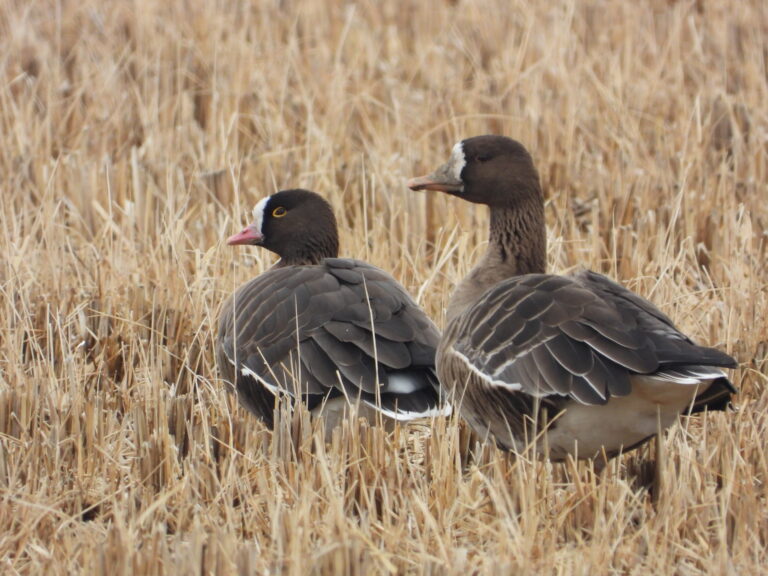
Lesser White-fronted Goose
Reconnaissance trip to Lake Izunuma for the wildfowl guide. This lake hosts Japan's largest wintering population of geese, and the majority of all goose species recorded in Japan can be seen here. That said, spotting a few dozen Lesser White-fronted Goose among over 100,000 geese is quite a challenge. If luck is against you, you might not see any at all. I searched the rice fields south of Lake Naganuma meticulously, but came up empty on the first day. On the second day, just as I was worrying I might miss my flight, I found them. The most…
- Birds
- Izunuma