

Blog
Blog Kyoto 2ページ目
-
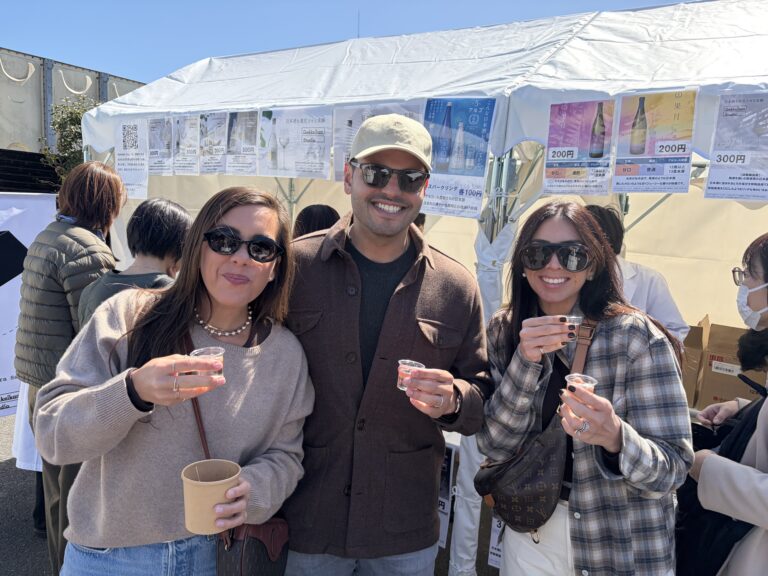
Fushimi Sake Festival 2026
Today marks the annual Fushimi Sake Festival. Twelve sake breweries from the Fushimi district are taking part in this event, where visitors can enjoy tasting the new vintage. There are also stalls offering rare sake available only on this day, as well as snacks to accompany the drinks, and the venue is packed with Japanese people enjoying the tasting. At this time of year, tourist spots throughout Kyoto are bustling with foreign visitors, but this place is in a league of its own. The guests are finally able to savour a quintessentially Japanese scene and delicious sake, leaving them all…
- Kyoto
- Spot introduction
-
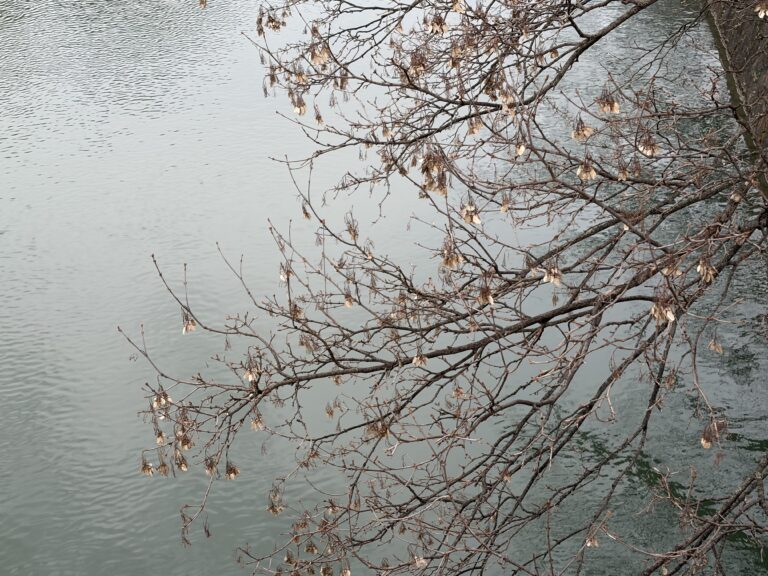
It’s cold…
The Somei Yoshino cherry blossoms in Kyoto are due to bloom next week. The avenue of cherry trees along the Lake Biwa Canal is magnificent. Perhaps due to last week's warmth, some of the Somei Yoshino along the Lake Biwa Canal had begun to bloom. However, the cold snap caused the petals to wither. On top of the cold, large amounts of cedar pollen are being dispersed. Please take good care of yourselves.
- Kyoto
- Spot introduction
-

Kawazu Cherry Blossoms in Ichijō-modoribashi Bridge
Alongside the Yodo Waterway and Sanjō-ōhashi Bridge, Ichijō-modoribashi Bridge is renowned for its early-blooming Kawazu cherry blossoms. They are now almost in full bloom. While Somei-yoshino cherry blossoms can only be enjoyed for about a week, Kawazu cherry blossoms are characterised by their long period from full bloom to petal fall. In 1591, Sen no Rikyū known as the consummate master of the Japanese tea ceremony, was ordered to commit seppuku and his head was displayed at this very spot. Ichijō-modoribashi was once a place where the heads of criminals were publicly displayed. Nearby lies the popular power spot, Seimei…
- Kyoto
- Spot introduction
-
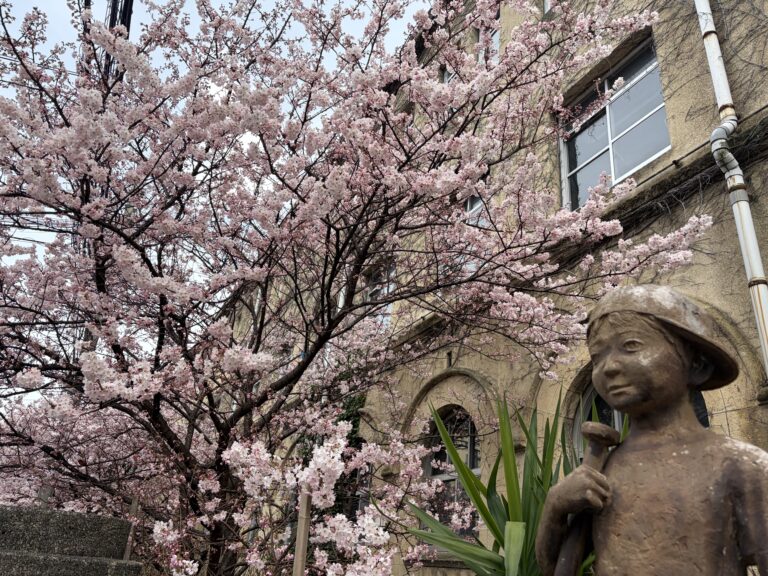
Harumekizakura, cherry blossoms adorning the graduation ceremony
Alongside the Okamezakura at Chōtoku-ji Temple, the Harumekizakura at the former Seitoku Junior High School is a hidden gem for early-blooming cherry blossoms. Planted along Takatsuji Street, it offers a popular spot for locals to take beautiful photographs with the school building, constructed in 1931, as a backdrop. The Harumekizakura displays a colour reminiscent of pale purple-pink with a hint of purple-pink shading, and is also characterised by its strong floral fragrance. As school graduation ceremonies in Japan typically take place from early to mid-March, the early-blooming Harumekizakura is gifted to primary and secondary schools by the Harumeki Foundation as…
- Kyoto
- Spot introduction
-
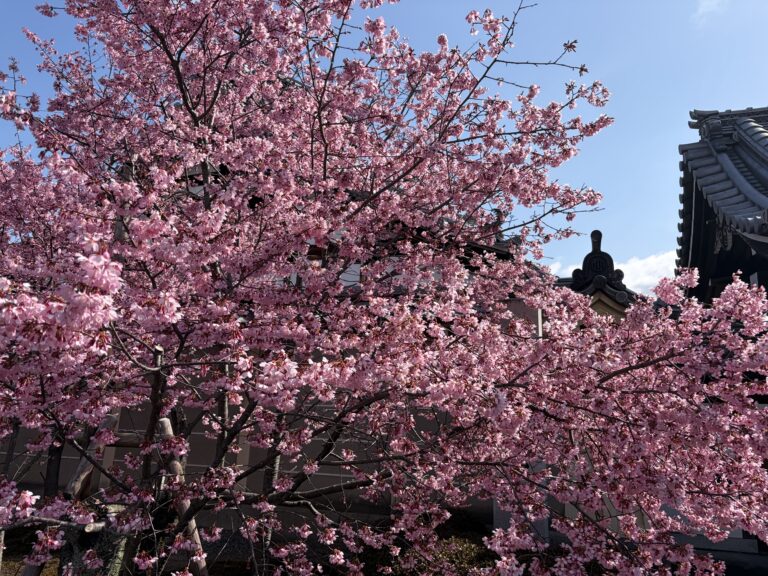
Okame Cherry Blossoms at Chōtoku-ji Temple
The Okame cherry blossoms at Chōtoku-ji Temple, a three-minute walk from Tonton Nobu, are blooming beautifully. Characterised by their deep pink flowers that bloom facing downwards, this variety flowers nearly two weeks earlier than the more common Somei-Yoshino cherry blossoms found throughout Japan. Although last year's blooming was slightly delayed, this year is on par with usual years, so cherry blossoms should be enjoyable in various spots by the end of this month. Chōtoku-ji is a private temple, so entry is not permitted. However, the Okamezakura blooms by the temple gate, attracting crowds of photographers. It's recommended for those wishing…
- Kyoto
- Spot introduction
-
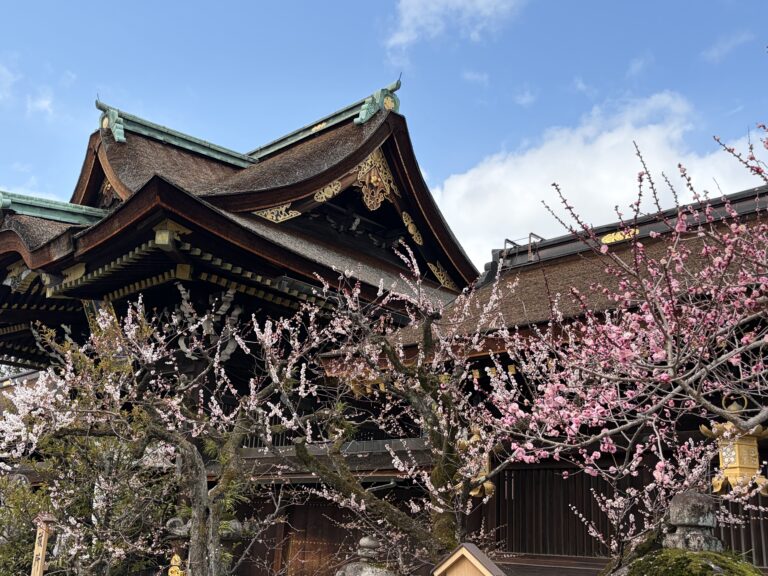
Plum trees in full bloom
Plum trees are in full bloom throughout Kyoto City. At Jonangu and Umemiya Taisha, the blossoms have already finished blooming, but tourist spots such as Kitano Tenmangu, Toji, and Tenryuji, which are currently in full bloom, are all crowded. At this time of year, there are still few tourist groups arriving by bus, suggesting that there are few foreign tourists and that one can enjoy the tourist spots in peace. However, all the tourist spots were very popular with Japanese visitors. In two weeks, the cherry trees will finally bloom. Kyoto will then experience its busiest days.
- Kyoto
- Spot introduction
-
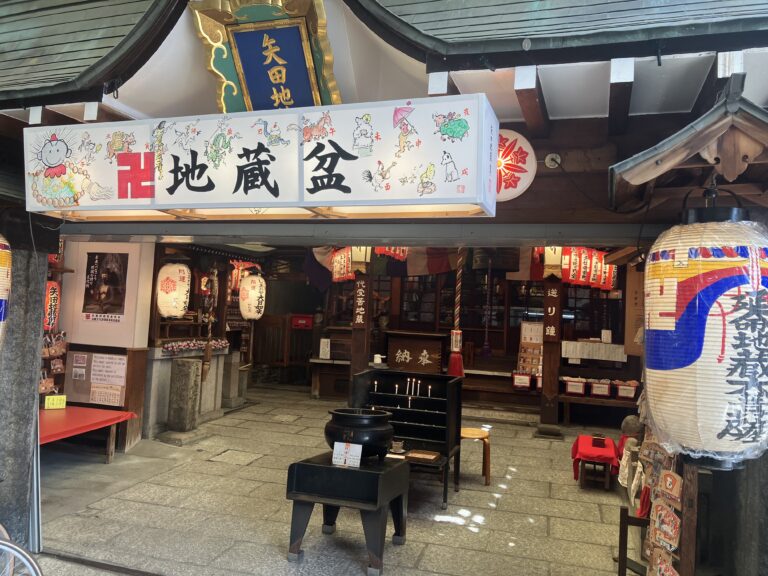
Jizō Bon
After the Gozan Okuribi, Kyoto welcomes Jizō Bon.Jizō Bon is an event held on 24 August, which is associated with Jizō Bosatsu, the guardian deity of children and roadside shrines, to pray for the health of children and the safety of the neighbourhood. Jizō Bosatsu is a bodhisattva who vowed to save people lost in the six realms (six worlds) from the time of Shakyamuni Buddha's death until the appearance of Maitreya Bodhisattva.During Jizō Bon, the Jizō statue is taken out of its shrine, adorned with makeup, and dressed in a new apron before being enshrined on an altar. The…
- Kyoto
- Spot introduction
-
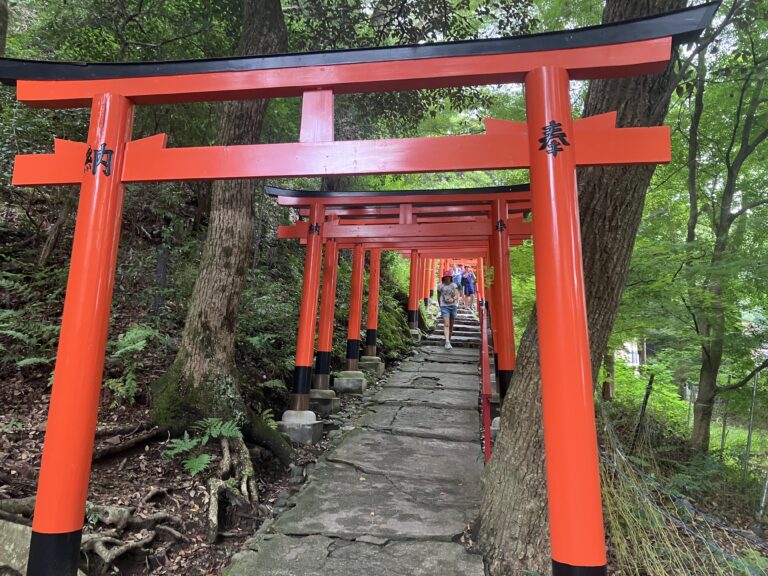
A quiet row of torii gates to enjoy
I sometimes receive requests from customers who want to take photos of torii gates lined up in a place with few people.In such cases, I take them to Futaba Hime Inari Shrine, located right next to Kamigamo Shrine. While many people visit Kamigamo Shrine, a World Heritage Site, few seem to visit this shrine, which is located a little further away.Founded in 820, it was originally the guardian shrine of Jingū-ji Temple, a Buddhist temple that practised Shinto-Buddhist syncretism. Shinto-Buddhist syncretism was a doctrine that sought to harmonise Japan's indigenous Shinto beliefs with imported Buddhist beliefs, and it was widely…
- Kyoto
- Spot introduction
-
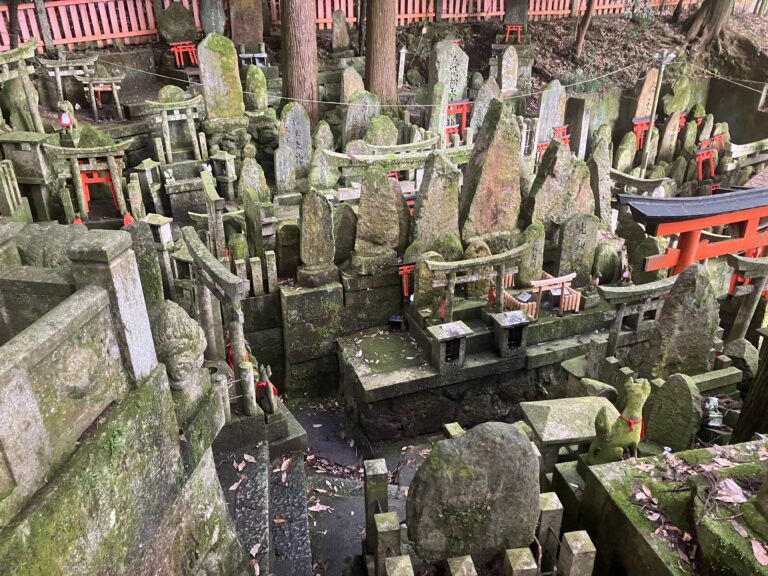
Where can we spend some quiet time at Fushimi Inari?
Fushimi Inari Taisha Shrine is always crowded with people.However, there are a few quiet places where tour groups don't go. My favourite is Kobo-ga-taki Waterfall.After passing through the thousand torii gates, follow the Kyoto Loop Trail from the inner shrine, and you'll come to a bamboo forest. Continue walking through the bamboo forest for about 10 inutes to reach the waterfall. Waterfalls have been places of spiritual training since ancient times. Being struck by the waterfall's flow trains both the mind and body.At Fushimi Inari Waterfall, you can see elements of both Shinto and Buddhism, and feel the fusion of…
- Kyoto
- Spot introduction
-
Fushimi Inari Taisha Shrine: Beware of the crowds
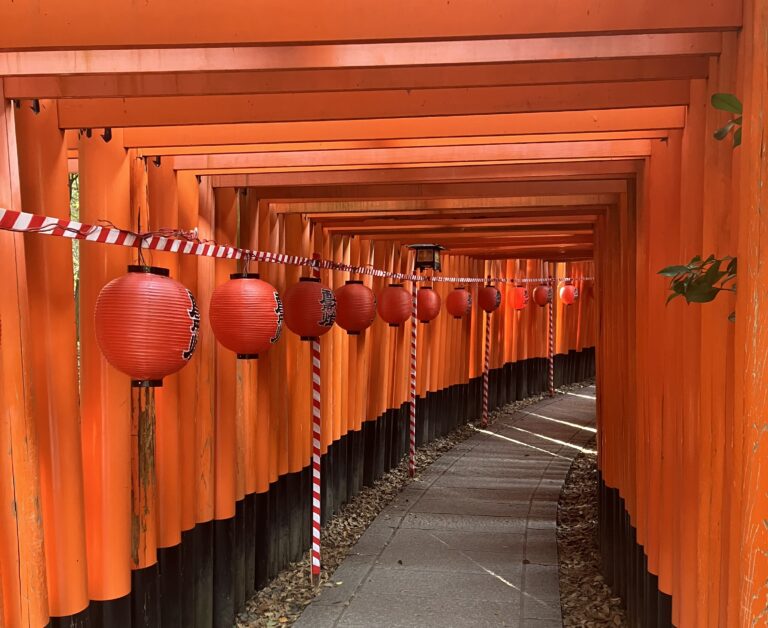
The main attraction for foreign tourists visiting Kyoto is undoubtedly Fushimi Inari Taisha Shrine.The red torii gates lining the approach to the shrine appeared in a scene in the American film Memoirs of a Geisha, and the fantastical scenery makes it an attractive place for foreigners.However, it is also true that the sheer number of foreign tourists can be overwhelming.In particular, it is also a tourist destination that we guides are most reluctant to take tourists. I have been bumped into by ill-mannered tourists three times in the past, so it is a place that requires caution.During the day, buses…
- Kyoto
- Spot introduction
-

Gozan no Okuribi
This year's Okuribi (Sending-Off Fires) ceremony was held without incident.On 13 August, we welcomed the spirits of our ancestors into our homes, and on the night of the 16th, we sent them back to the afterlife with the Okuribi ceremony.Since ancient times, the Japanese have revered mountains as sacred places, and we believed that after death, our souls would ascend to the mountains and reside there.The Sending-Off Fires also serve to comfort the souls of those who died in war, making them a prayer for peace.In the past, the Sending-Off Fires were held separately on five mountains around Kyoto, but…
- Kyoto
- Spot introduction
-
Tea fields of Ishidera
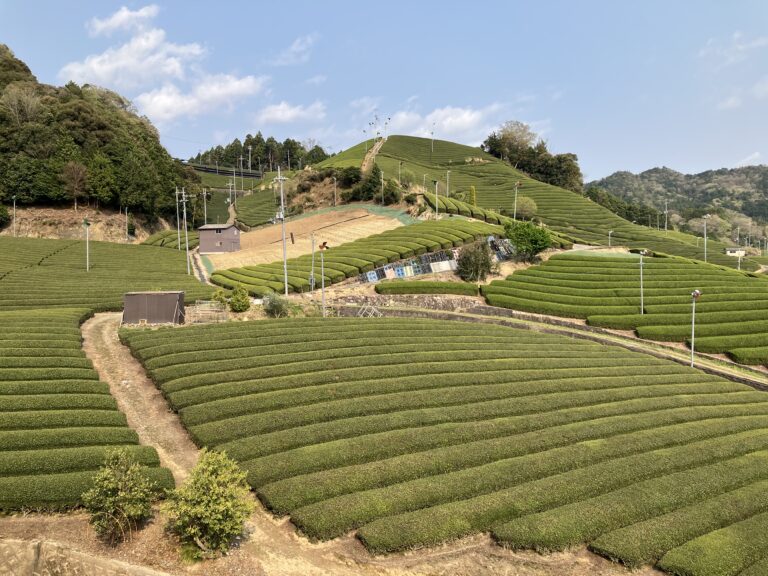
The tea fields of Ishidera are one of Kyoto's most representative landscapes. Wazuka-cho, where the tea fields are located, is the main production area for Uji tea, and the picking of new tea will soon begin. The tea fields are a must-see, but are difficult to access without a car. The roads around the area are extremely narrow, making it difficult for vehicles to pass each other. In addition, there are signs along the road prohibiting parking, as it would be an obstacle to the farm work. Normally, people park their cars at the Wazuka Tea Café run by the Wazuka…
- Kyoto
- Spot introduction