

Blog
Blog Kyoto
-
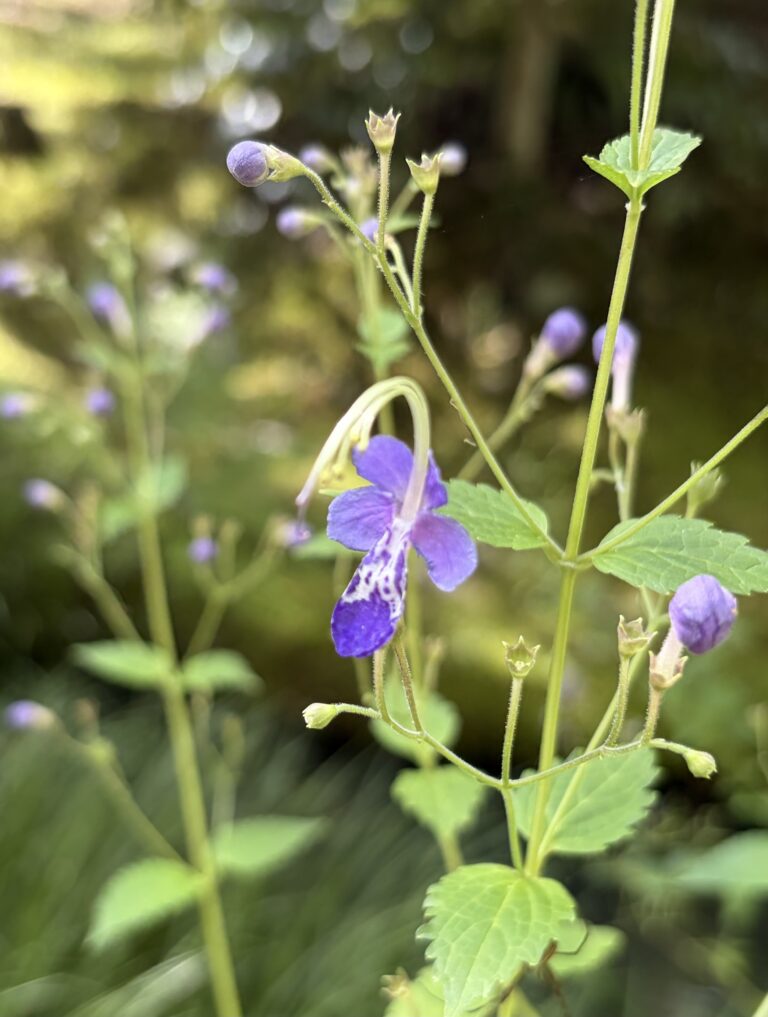
Tripora divaricata, ‘Karigane-sou’
In Japan, there are many plants named after wild birds. *Tripora divaricata, Karigane-sou in Japanese* is one such plant. The *karigane (lesser white-fronted goose)* is a type of goose that migrates to Japan in autumn, characterised by a golden ring around its eyes. In the past, geese in genera were referred to as *karigane*. Whilst there are various theories, the one suggesting that the shape of the flower resembles a goose in flight seems the most convincing. It flowers from summer through to autumn, but as they do not flower much during periods of extreme heat, now that it has…
- Flower
- Kyoto
-
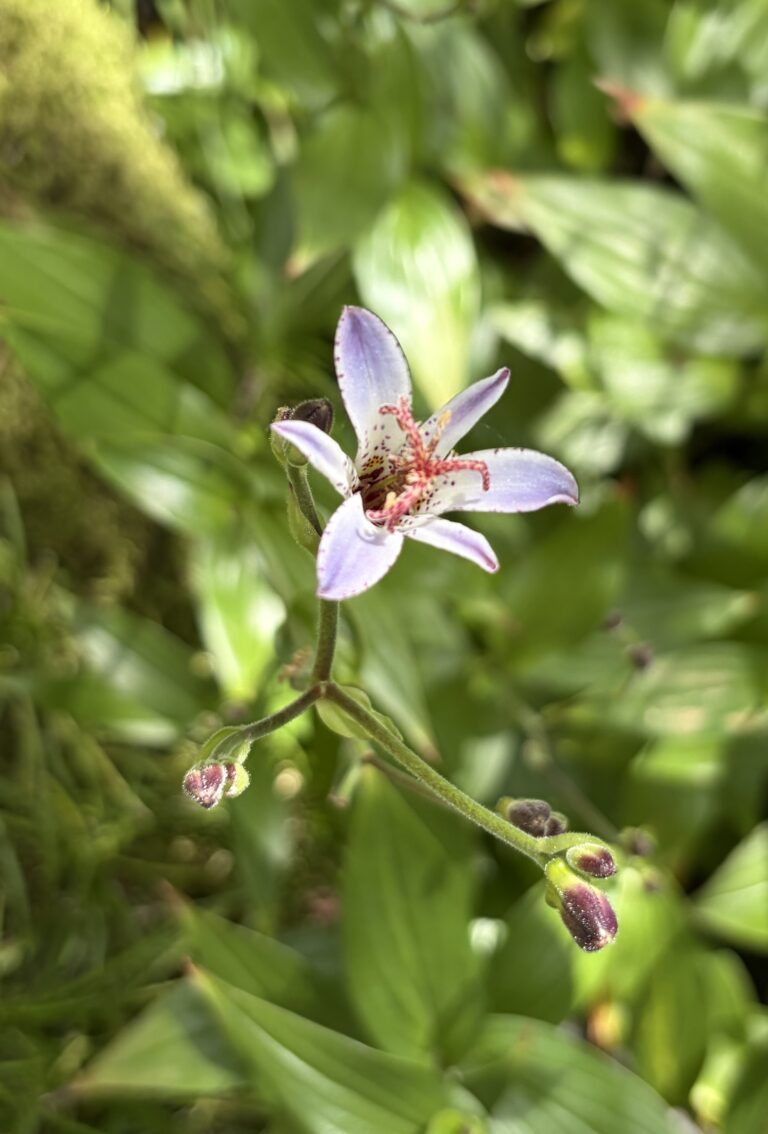
Tricyrtis formosana, ‘Taiwan-Hototogisu’
The autumn flowers at Tenryū-ji are now at their best. Whilst the Sōgen-chi Garden, with its beautiful borrowed scenery, and the ‘Cloud Dragon’ painting in the Dharma Hall are, of course, highlights, this is also a place where one can fully enjoy the flowers of each season. The Tricyrtis formosana (Taiwan-Hototogisu in Japanese) has begun to bloom by the water’s edge. As its Japanese name suggests, it grows wild in great numbers in Taiwan; however, in Japan it is an endangered species found only on Iriomote Island and in very small parts of the main island of Okinawa, with a population…
- Flower
- Kyoto
-
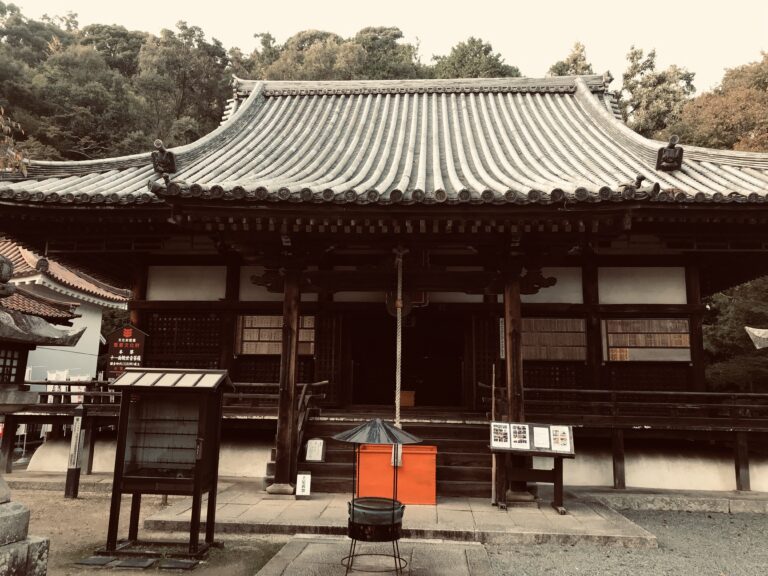
Hōshaku-ji Temple
Hōshaku-ji Temple is situated just to the west of the Ōyamazaki Mountain Villa Art Museum. It is said to have been founded by Gyōki, who played a pivotal role in the construction of the Great Buddha of Nara in the first half of the 8th century. It is said that a dragon deity appeared in a dream to Emperor Shōmu—who had ordered the construction of the Great Buddha—and bestowed upon him a hammer and a small mallet; after offering prayers, he was able to ascend to the throne. The temple grounds house many treasures, including the principal image of the…
- Kyoto
- Spot introduction
-
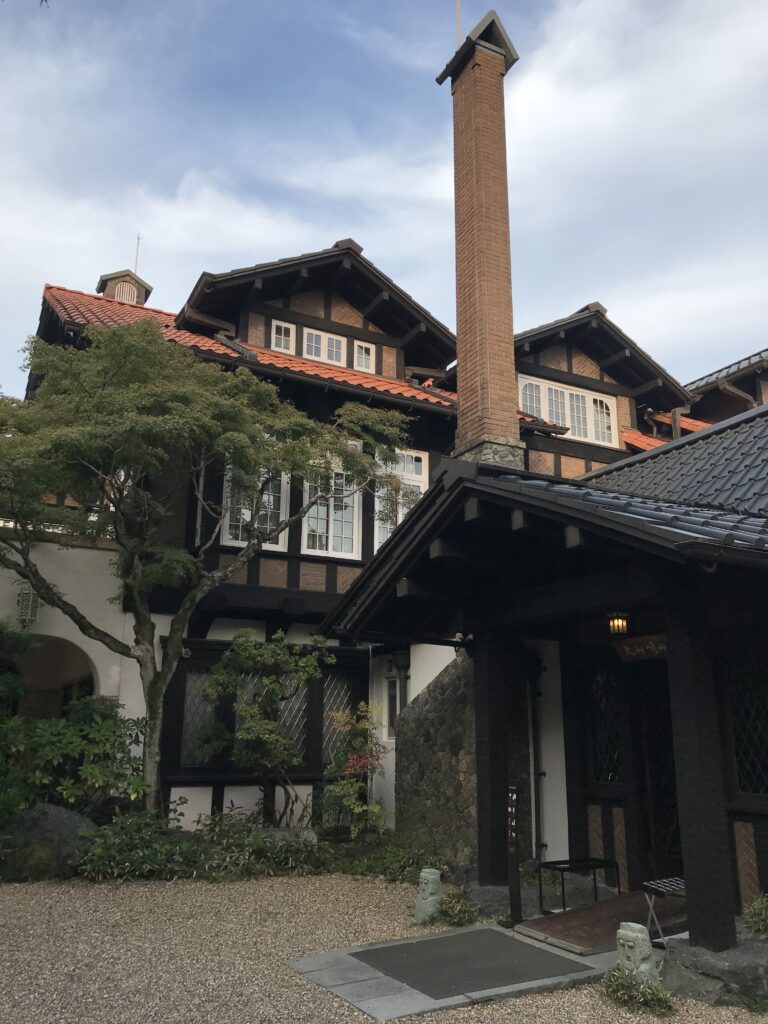
Asahi Group Ōyamazaki Villa Museum of Art
Mount Tennō, situated on the border between Kyoto and Osaka. Just as Hideyoshi Hashiba defeated Mitsuhide Akechi here, this is the place that gave rise to the idiom ‘Tenka-Wakeme-no-Tennōzan (Mount Tennō, the deciding battle for the realm)’. Nestled on the mountainside is the Ōyamazaki Mountain Villa Art Museum. It comprises the main building—a Tudor-style villa built by the early 20th-century industrialist Shōtarō Kaga—along with the Underground Gallery and the Yamate Gallery, both designed by architect Tadao Ando. The museum houses a collection of 1,000 works, including Monet’s *Water Lilies*, collected by the industrialist Tamesaburō Yamamoto, known as the ‘Beer King’.…
- Kyoto
- Spot introduction
-
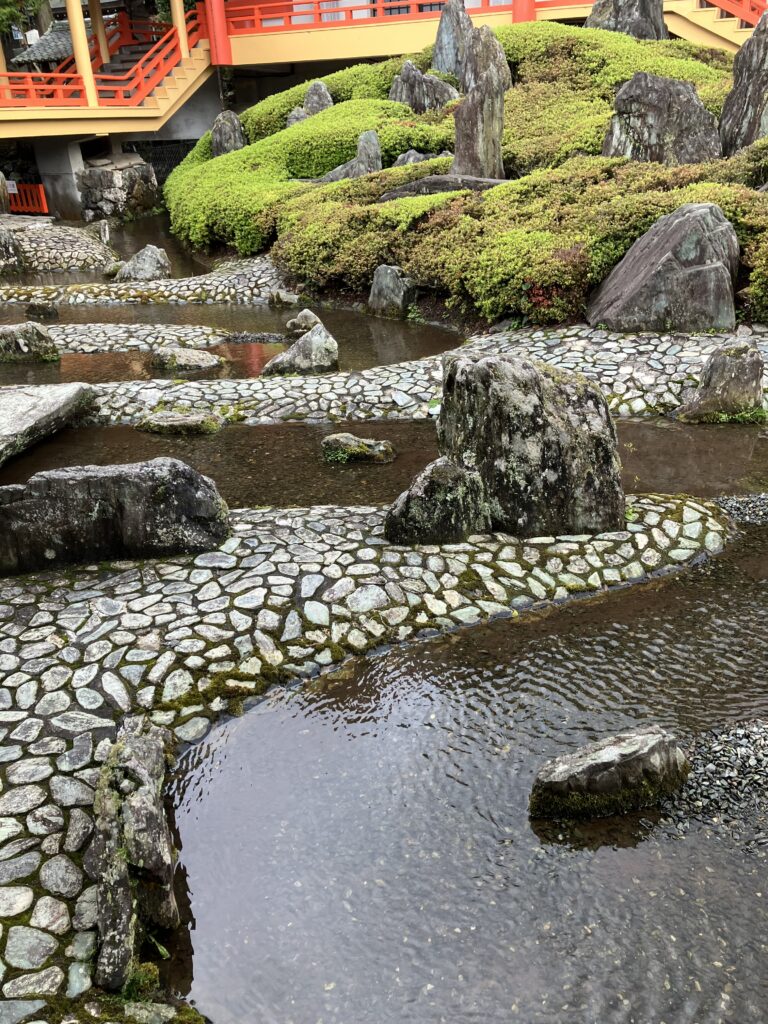
Shōfūen-Santei
Shigemori Mirei, one of the leading landscape architects of the Shōwa era. Alarmed by the increasing formalisation of the karesansui style, he drew upon modern Western art and other influences to create an avant-garde, new aesthetic for Japanese gardens. Considered his greatest masterpiece from his later years are the Shōfūen-santei, situated within the precincts of Matsuo Taisha. The ‘Kokusui-no-en’ (Banquet of the Meandering Stream) was an elegant pastime of Heian-period aristocrats, in which a sake cup was floated down a winding stream within the garden, and participants would compose waka or Chinese poetry before the cup passed before them. Taking…
- Kyoto
- Spot introduction
-
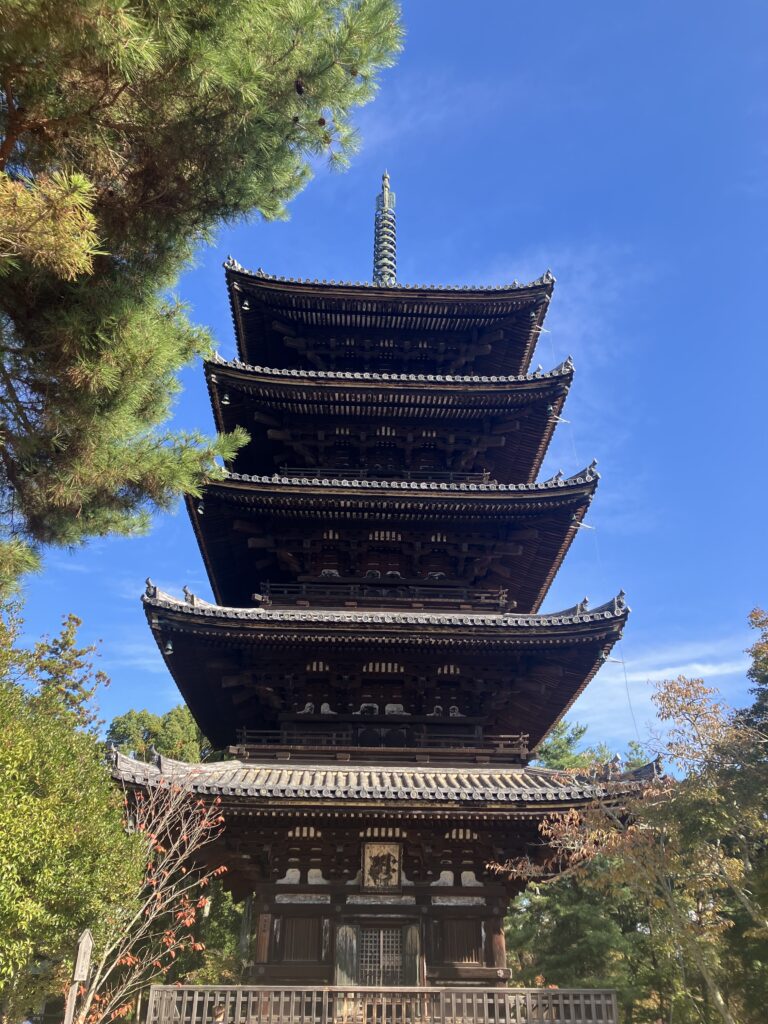
Five-storey Pagoda at Ninnaji Temple
Ninnaji Temple, described in the classic essay *Tsurezuregusa* and a place the writer Yasushi Inoue frequented during his student days, is known amongst Japanese people as a spot where one can enjoy the *Omuro-zakura*—the cherry blossoms that bloom latest in Kyoto. However, despite being designated a World Heritage Site, it remains one of the places visited by relatively few foreign tourists. Within the temple grounds stands a five-storey pagoda over 30 metres tall, and many Japanese visitors come here to photograph the cherry blossoms or autumn foliage in full bloom against the backdrop of this pagoda. Although the interior of…
- Kyoto
- Spot introduction
-
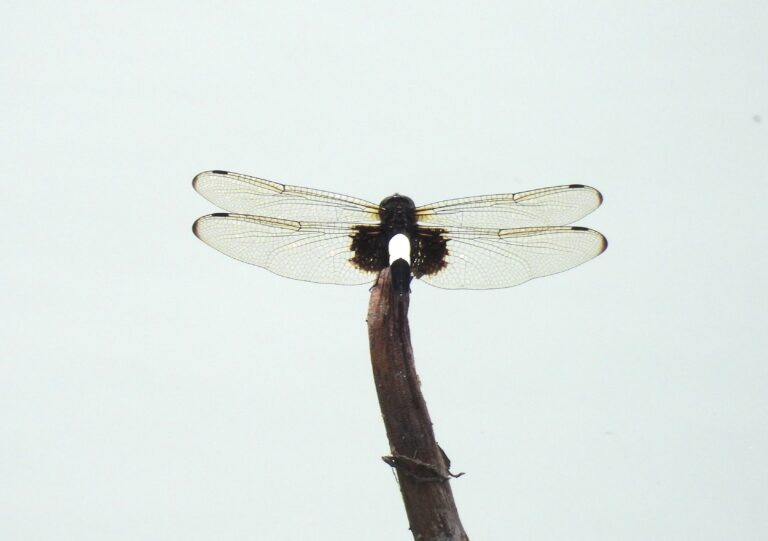
Pied skimmer
As we enter mid-September, temperatures have begun to drop in Kyoto. Whilst the once-loud chirping of the Black giant cicadas has now fallen silent, the Pied skimmers are still a common sight along the riverbanks. As shown in the photograph, the males have a white abdomen, whilst the females and younger individuals are yellow; they can be seen until around October. They are widely distributed across Japan, South Korea, China and as far as Vietnam, and were once a species not found in cold regions such as Hokkaido. However, in recent years, there has been a sharp increase in sightings…
- Insects
- Kyoto
-

Falafel Garden
We have vegetarian and vegan guests staying at our guesthouse. Before the COVID-19 pandemic, there were a fair number of vegetarian and vegan restaurants in Kyoto city, but now there aren’t many that can cater to these dietary requirements. Despite this, Falafel Garden is just a seven-minute walk from our guesthouse. Established in 2004, it is an Israeli restaurant that is a favourite with locals. Our top recommendation is the falafel sandwich—featured in the photo—served in pita bread, which gives the restaurant its name. Falafel is a Middle Eastern dish made by mixing mashed chickpeas or broad beans with spices…
- Kyoto
- restaurant
-
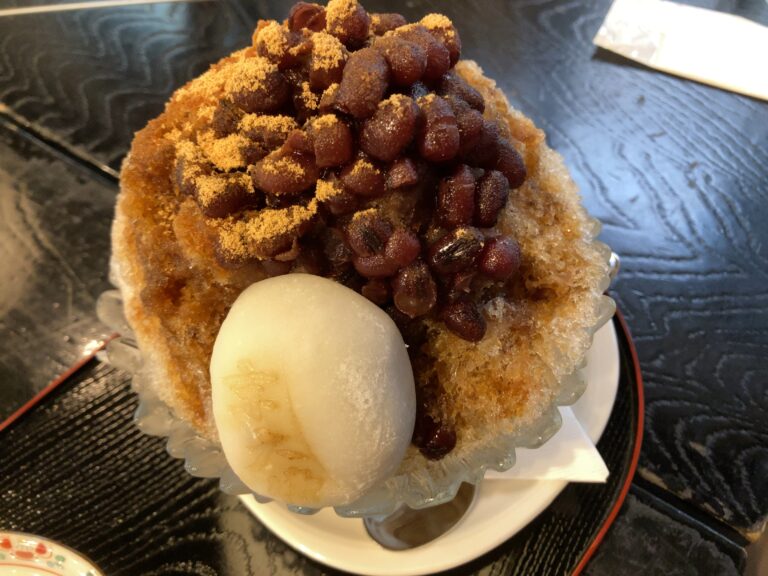
Kanshundō’s Daibutsu Mochi Shaved Ice
The Luośhàn Buddha of Kyoto was erected at Hōkō-ji Temple at the behest of Toyotomi Hideyoshi in the late 16th century, intended to surpass the Great Buddha of Tōdai-ji in grandeur. Although it was destroyed by repeated earthquakes and fires, ‘Daibutsu Mochi’ (Great Buddha rice cakes) were sold at its entrance. Kanshundō’s Daibutsu Mochi is a faithful reproduction of these rice cakes, made using the same traditional method as in those days. A distinctive feature is the ‘Kyō Daibutsu’ brand stamped onto each rice cake. The ‘Daibutsu Mochi Shaved Ice’—shaved ice topped with black sugar syrup, kinako (roasted soya bean flour)…
- Japanese dessert
- Kyoto
-
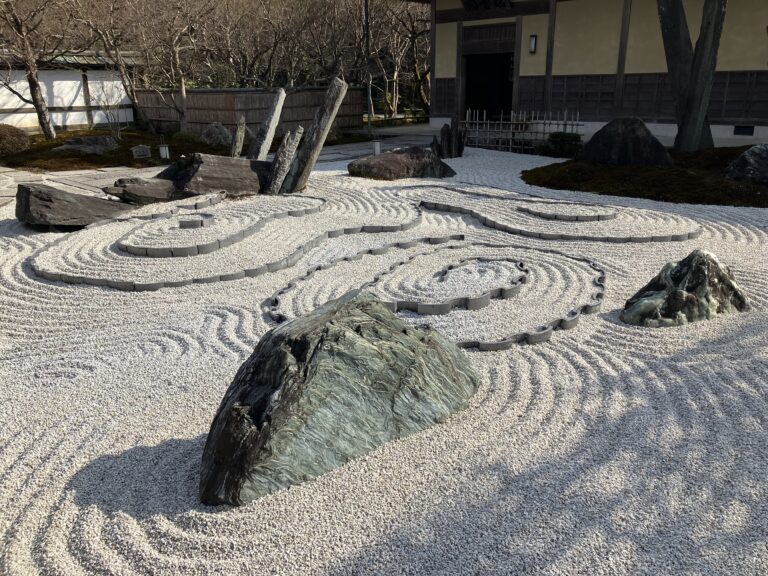
Enkō-ji Temple: Honryū-tei Garden
Enkō-ji Temple is said to have originated as an academy established by Tokugawa Ieyasu in Fushimi, Kyoto; it houses a collection of approximately 50,000 wooden movable type characters that were used for publishing books at the time. During the autumn foliage season, many people visit to catch a glimpse of the ‘Jugyu-no-niwa (Ten ox garden) ’, where the contrast between the moss and the autumn leaves is truly magnificent. Passing through the main gate and walking a short distance along the cobbled path, the ‘Honryū-tei Garden (Running dragon garden)’ comes into view. This contemporary dry landscape garden was created in…
- Kyoto
- Spot introduction
-
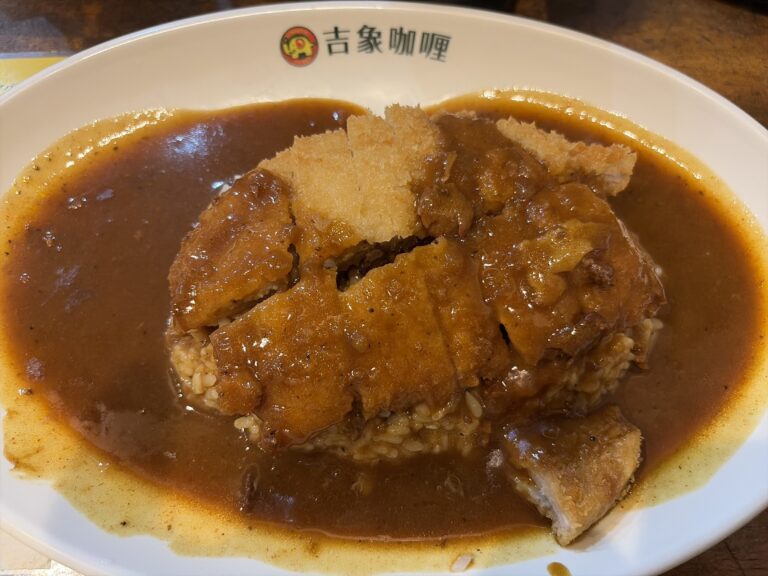
Yoshizō Curry
It’s difficult to find affordable, tasty restaurants around Kyoto Station. That’s why Yoshizō Curry, located on the west side of Kyoto Avanti, is such a gem. The standard curry is an unbelievably cheap 390 yen, yet the quality is consistently good, and there’s always a queue at lunchtime. The restaurant has counter seating only, and as seats are spaced apart, it can’t accommodate more than ten people. However, as the service is quick and customers don’t linger, you won’t have to wait long to be seated. My favourite is the Katsu curry (pork cutlet curry), topped with a freshly fried…
- Kyoto
- restaurant
-
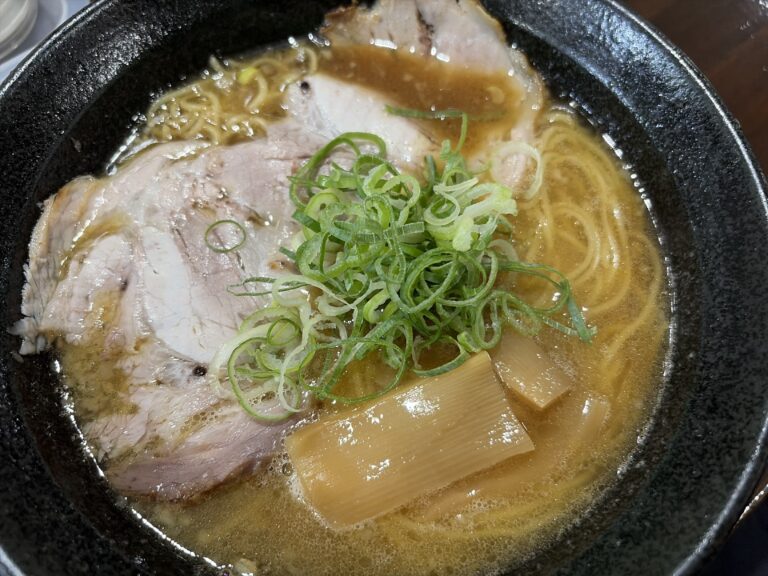
Menya Shōmon
When I ask guests what they’d like for lunch whilst guiding them, the most common answers are sushi, tempura and ramen. Whilst sushi can be enjoyed at conveyor-belt sushi restaurants and tempura at restaurants with table seating—making them suitable for families—ramen often involves shops with counter seating only, which can be a bit of a hassle. In this context, Menya Shōmon is a real lifesaver, as it offers tables seating four. It’s conveniently located between Kinkaku-ji and Daitoku-ji, and the food is delicious. You can choose from a range of broths, including chicken bone broth with aged soy sauce, chicken…
- Kyoto
- restaurant