

Blog
Blog Spot introduction 4ページ目
-
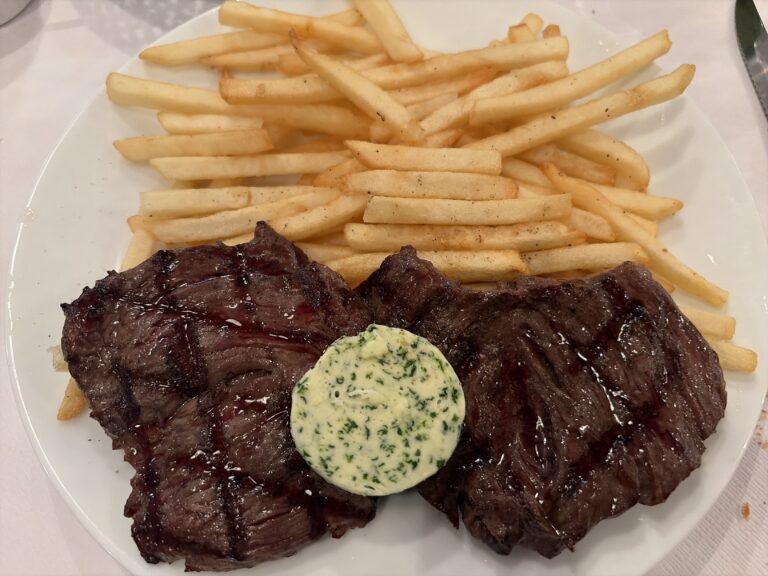
Bistro Le Bouchon
'Le Bouchon’ is one of Kyoto’s leading bistros. Established in 1999, it is a pioneer in casual French cuisine enjoyed at reasonable prices. The restaurant’s name is said to derive from the ‘bouchon’, a traditional Lyonnais eatery serving local specialities such as offal dishes. Grilled harami, served on a red chequered tablecloth known as ‘Vichy check’. Accompanied by a generous portion of chips, it pairs perfectly with a baguette. The way the breadcrumbs are deftly cleared away once you’ve finished eating is truly French. Since you’ve come to Japan, it goes without saying that you should sample Japanese cuisine, but…
- Kyoto
- restaurant
-
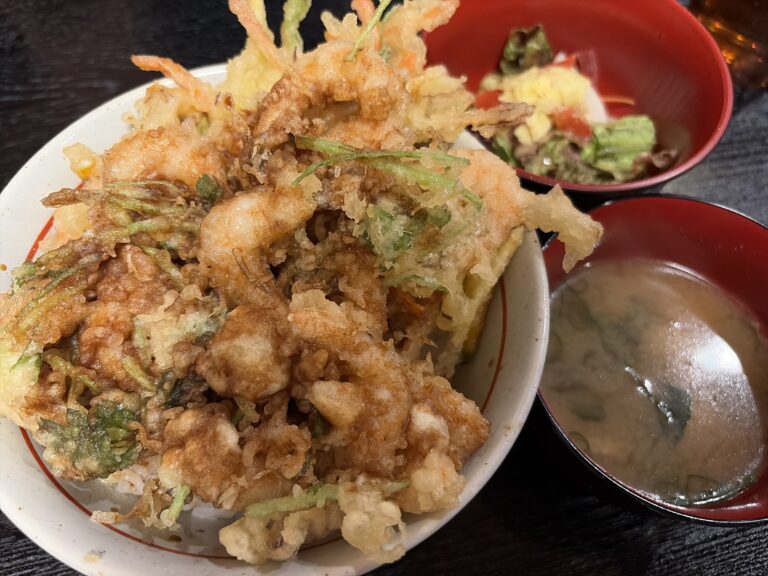
Ten-don Kafū
Tempura is popular with overseas visitors. When I explain to them during guided tours that it’s a dish that originated in Portugal, they’re always surprised. Kafū, which has been situated in front of Kyoto University’s main gate for over 30 years, is a place where you can casually enjoy a delicious, piping-hot ten-don. Apparently, it used to be a kappo restaurant, and the owner always fries the tempura whilst dressed immaculately. It gets crowded with students at lunchtime, and queues can form, but the evening is the best time to visit. The kakiage rice bowl, served exclusively in the evening,…
- Kyoto
- restaurant
-
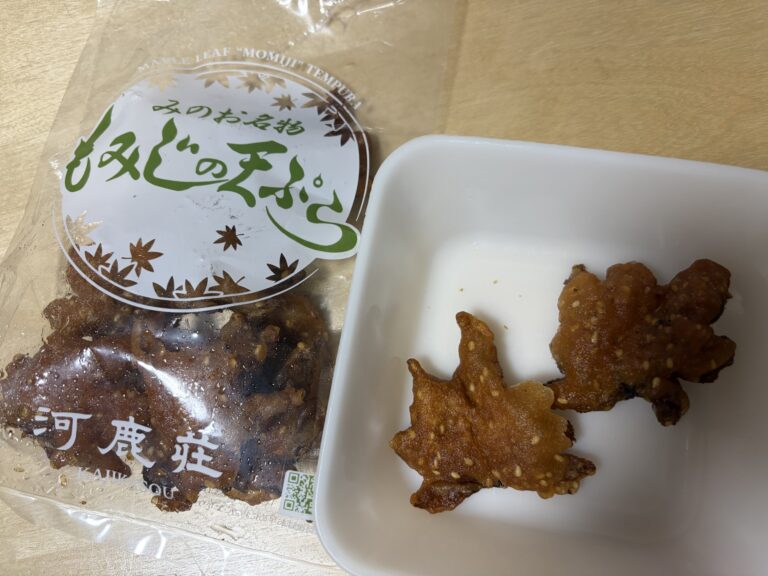
Maple Leaf Tempura
A speciality of Minoh, maple leaf tempura. It is said to have originated when En no Gyōja—the founder of Shugendō, who was active in the 7th and 8th centuries and about whom numerous legends remain—fried maple leaves in lamp oil and served them to visitors. It is made by salt-curing the edible ‘Ichigyō-ji maple’ leaves for a year to remove their astringency, coating them in a batter made from wheat flour mixed with sugar and white sesame seeds, and then deep-frying them in rapeseed oil. It has a subtle sweetness and a flavour reminiscent of karintō, a sweet and deep-fried…
- Japanese dessert
- Osaka
-
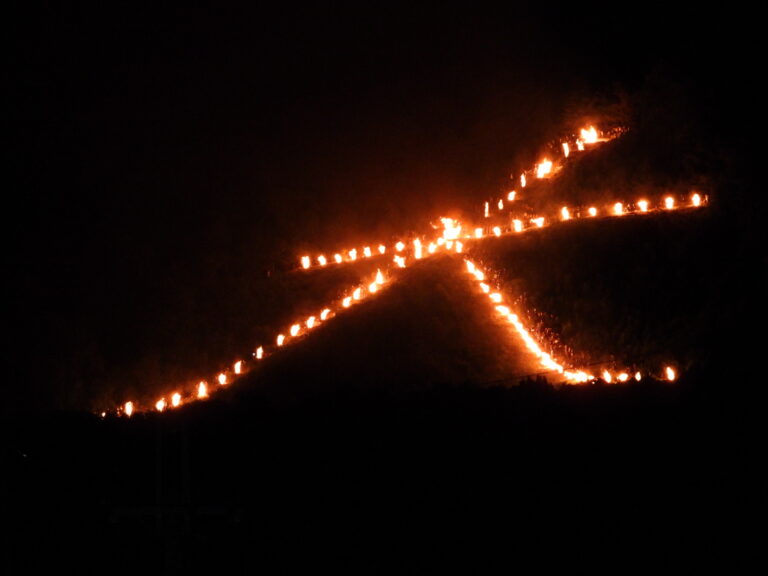
End of Summer-Gozan no Okuribi
Once again this year, we were able to see the spirits off safely together with our guests. During the Gozan no Okuribi, fires are lit as beacons to guide the spirits of our ancestors—known as ‘Oshorai-san’—back safely to the underworld. In particular, the ‘Daimonji’ character visible from our guesthouse is extremely popular; traffic restrictions are in place around Demachiyanagi Station, and the area becomes very crowded. Whilst you can enjoy the view from our guesthouse’s balcony, as the view is obstructed by gaps between the power lines, we are happy to guide you to a spot with a clearer view.…
- Kyoto
- Spot introduction
-
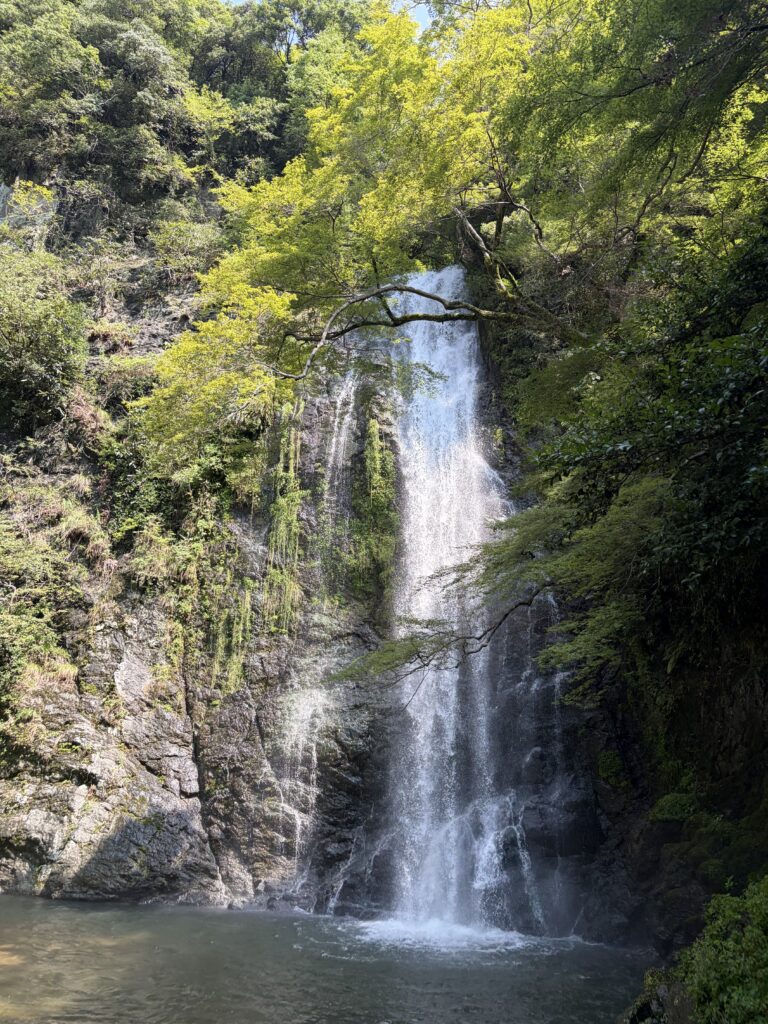
Minoh Otaki Waterfall
With a drop of 33 metres, Minoh Otaki Waterfall is a popular spot for viewing autumn foliage. Located about a 40-minute walk from Minoh Station on the Hankyu Line, the gentle gradient makes it a safe and accessible destination even for families with children. This region is home to the Arima–Takatsuki Fault Zone, an active fault line which, whilst recording an earthquake of seismic intensity 6-lower in June 2018, has also created a unique natural landscape featuring steep cliffs known as ‘fault escarpments’ and deep gorges. Late November is generally considered the peak season for autumn foliage, attracting nearly one…
- Osaka
- Spot introduction
-
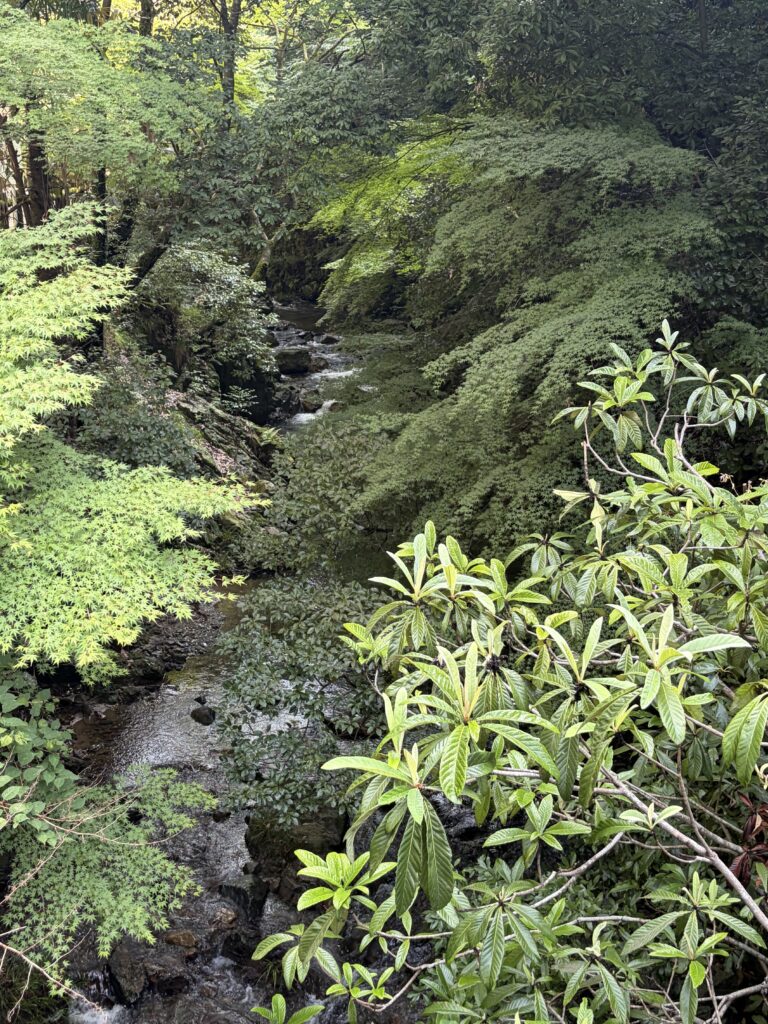
Minoh Park
Guiding visitors around Osaka is surprisingly tricky. Whilst it’s a great place for those who want to enjoy shopping and sampling street food, the options are somewhat limited when it comes to sightseeing. Minoh is proving more popular with visitors than traditional tourist attractions such as Umeda, Shinsekai, Osaka Castle or Dotonbori. Located just 30 minutes or so from the centre of Osaka and offering the chance to stroll through a forest, this park is attracting an increasing number of foreign tourists. At this time of year, the green autumn foliage is beautiful, and many cicadas are chirping busily. For…
- Osaka
- Spot introduction
-
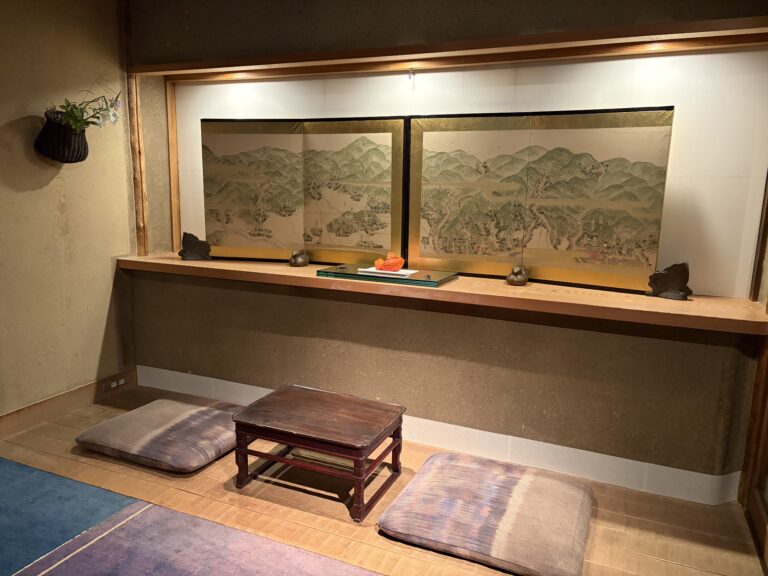
Tawaraya Ryokan
Tawaraya Ryokan was a favourite of Steve Jobs, who made it his regular stay in Kyoto. Founded in 1704, it is the oldest surviving ryokan in Kyoto. Unfortunately, I have never stayed there myself, but as part of my work as a guide, I sometimes go to welcome guests there. On such occasions, I am shown into this waiting room, where I find my mind soothed for a while by the charming furnishings, such as the courtyard and the hanging flower vases. Whilst our inn differs from Tawaraya in both history and concept, our desire for guests to relax and…
- Kyoto
- Spot introduction
-
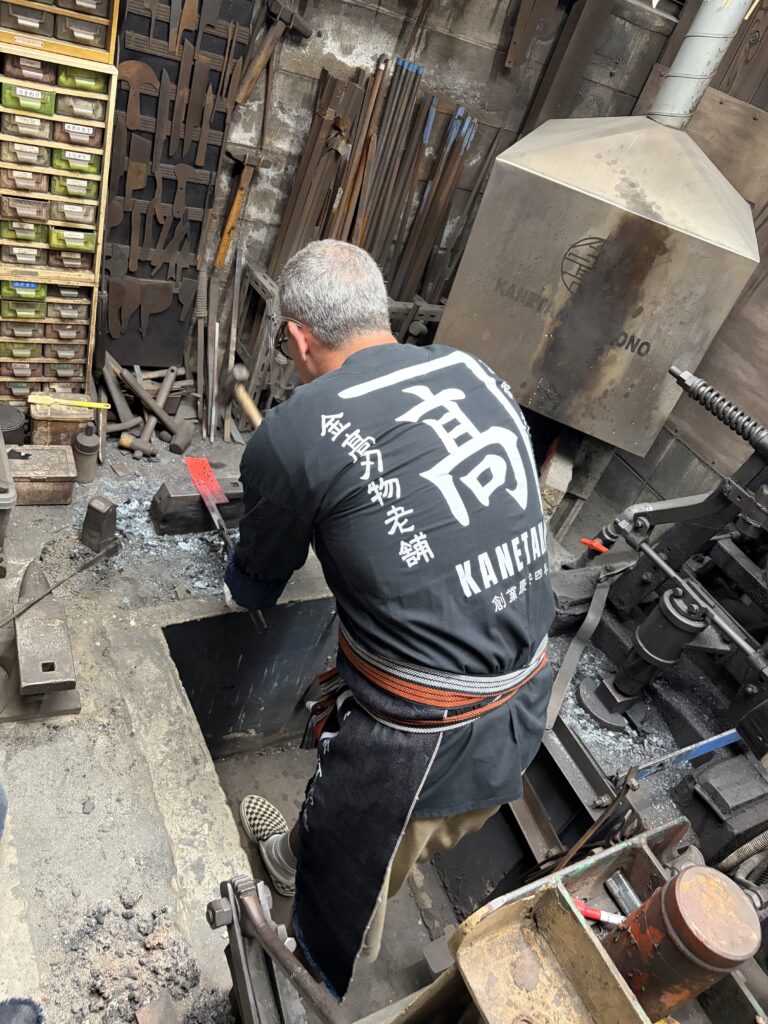
Blacksmithing Experience
The experience workshop is a favourite with French visitors. It’s not just cooking and tea ceremonies that are popular—blacksmithing workshops are also a hit. Located right in the centre of Kyoto, the long-established Kanetaka Hamono Rouho is renowned for offering a forging experience where you can hammer red-hot steel in a blacksmith’s forge. Naturally, the finishing touches are all carried out by skilled craftsmen, who ensure the result is a sharp kitchen knife. The current proprietor is the seventh-generation owner. It is said that he previously worked in other fields, but as he used blades in every job, he came…
- Kyoto
- Spot introduction
-
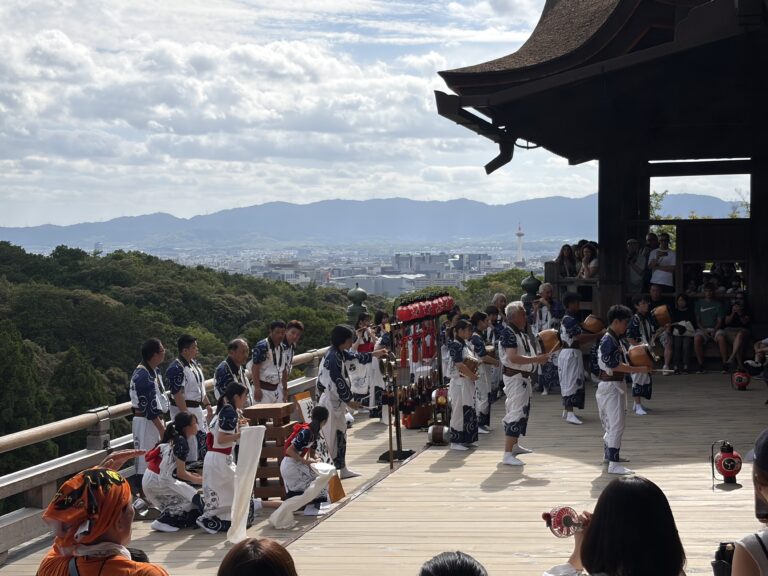
Sen-nichi Mairi at Kiyomizu-dera
The Sen-nichi Mairi takes place at Kiyomizu-dera from 9 to 16 August. During this period, a single day’s visit is said to yield the merit of a thousand days. As visitors can receive a Sen-nichi Mairi amulet and pay their respects in the inner sanctuary—where the Standing Statue of the Eleven-Faced, Thousand-Armed Kannon is enshrined, an area normally off-limits to the public—the temple becomes extremely crowded. Today, perhaps due to it being a public holiday and the Kamitoba Rokusai Nenbutsu taking place, the temple grounds were teeming with people. The Rokusai Nenbutsu is a folk art in which participants dance…
- Kyoto
- Spot introduction
-
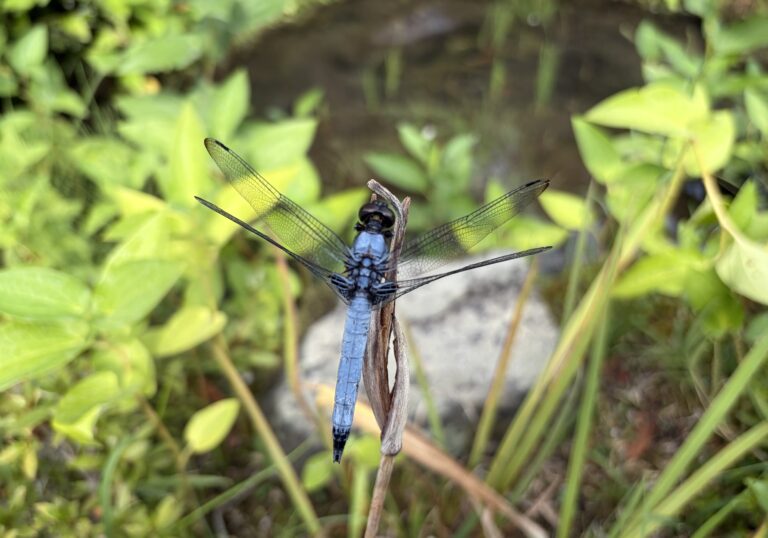
Ooshiokaratonbo, dragonflies that symbolise the Japanese summer
When visiting temples and shrines with release ponds, Orthetrum triangulare melania, one of white-tailed skimmer’s groups is a common sight. In Japan, it is known as the ‘Ooshiokaratonbo’. As the name ‘shiokara’ (meaning ‘salty’) suggests, the males are covered in a blue-and-white powder, much like salted kelp, to protect themselves from strong ultraviolet rays. Ooshiokaratonbo and Shiokaratonbo (Orthetrum albistylum) are dragonflies that are widely found throughout Japan. The can be distinguished from the Shiokaratonbo by its deeper colouring, its dark brown eyes, and the black base of its hind wings with navy-blue veins. Whilst the Shiokaratonbo prefers bright locations, the Ooshiokaratonbo favours…
- Insects
- Kyoto
-
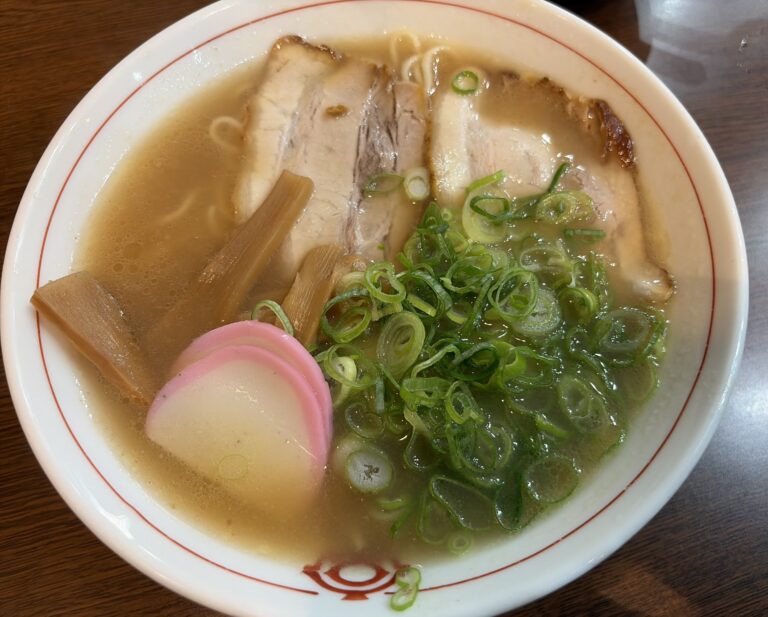
Chūka Soba Kyōichi Honten
I’m often asked where to find dishes that are truly representative of Kyoto, but I find it difficult to recommend any one particular restaurant. Whilst it depends on your budget and personal taste, the restaurants that locals frequent regularly are where you’ll find the true taste of Kyoto. One such place is Chūka Soba Kyōichi Honten in Shijō Ōmiya. Established in 1948, it is a long-established restaurant where the majority of customers are locals. Whilst some chūka soba (Traditional soy-based ramen) shops have a soup with a lingering bitterness, here the broth is rich in dashi and has a subtle…
- Kyoto
- restaurant
-
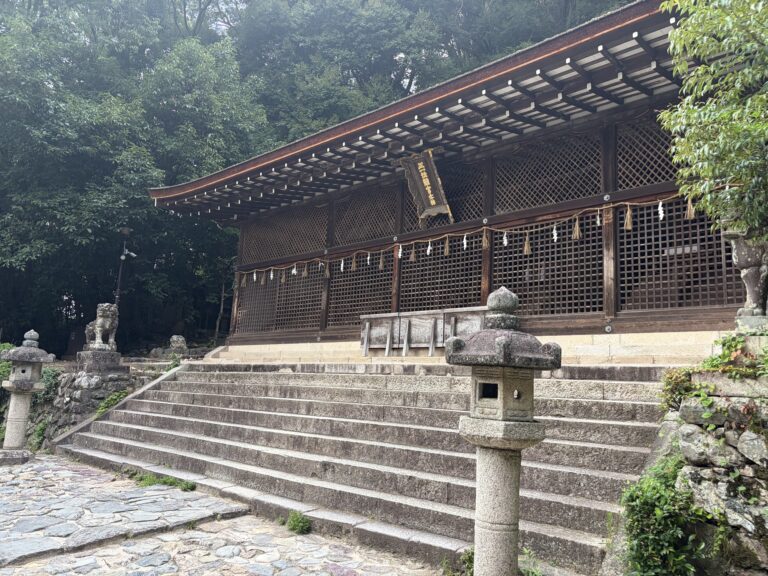
Ujigami Shrine
The main hall of Ujigami Shrine is considered to be the oldest surviving shrine building in Japan. It is said to have been built in the late 11th century, around the same time as the Phoenix Hall at Byōdō-in. It is not far from Byōdō-in—just over a 10-minute walk across the bridge—and, as a World Heritage Site, is attracting an increasing number of foreign tourists. Within the shrine grounds, rabbit-themed amulets, fortune slips and ema (votive tablets) are on sale. It is said that if you write your wish on a rabbit ema, pay your respects to the ‘Looking-Back Rabbit’…
- Kyoto
- Spot introduction