

Blog
Blog
-
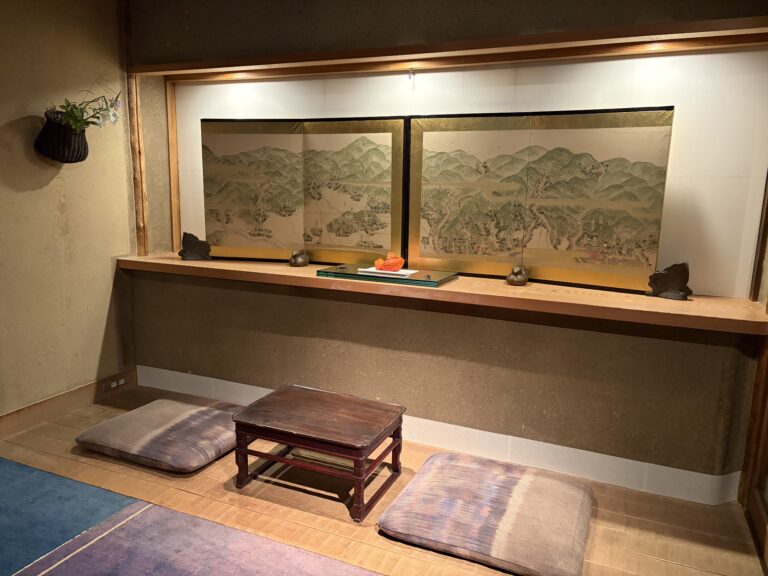
Tawaraya Ryokan
Tawaraya Ryokan was a favourite of Steve Jobs, who made it his regular stay in Kyoto. Founded in 1704, it is the oldest surviving ryokan in Kyoto. Unfortunately, I have never stayed there myself, but as part of my work as a guide, I sometimes go to welcome guests there. On such occasions, I am shown into this waiting room, where I find my mind soothed for a while by the charming furnishings, such as the courtyard and the hanging flower vases. Whilst our inn differs from Tawaraya in both history and concept, our desire for guests to relax and…
- Kyoto
- Spot introduction
-
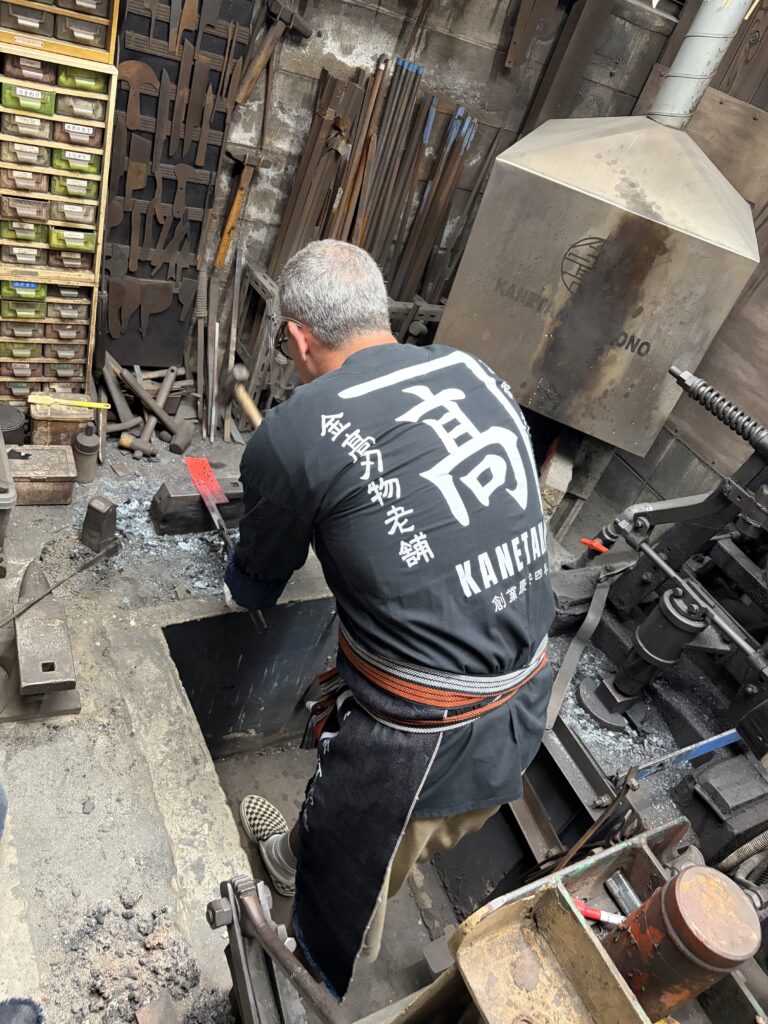
Blacksmithing Experience
The experience workshop is a favourite with French visitors. It’s not just cooking and tea ceremonies that are popular—blacksmithing workshops are also a hit. Located right in the centre of Kyoto, the long-established Kanetaka Hamono Rouho is renowned for offering a forging experience where you can hammer red-hot steel in a blacksmith’s forge. Naturally, the finishing touches are all carried out by skilled craftsmen, who ensure the result is a sharp kitchen knife. The current proprietor is the seventh-generation owner. It is said that he previously worked in other fields, but as he used blades in every job, he came…
- Kyoto
- Spot introduction
-
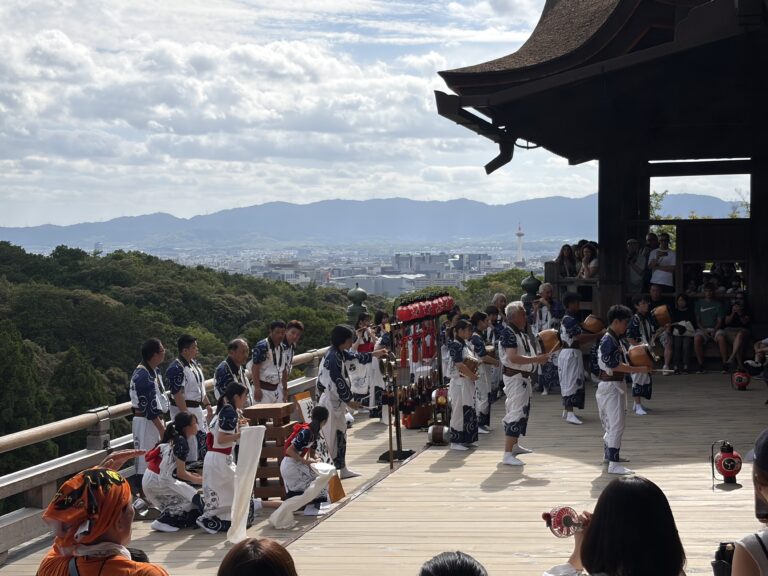
Sen-nichi Mairi at Kiyomizu-dera
The Sen-nichi Mairi takes place at Kiyomizu-dera from 9 to 16 August. During this period, a single day’s visit is said to yield the merit of a thousand days. As visitors can receive a Sen-nichi Mairi amulet and pay their respects in the inner sanctuary—where the Standing Statue of the Eleven-Faced, Thousand-Armed Kannon is enshrined, an area normally off-limits to the public—the temple becomes extremely crowded. Today, perhaps due to it being a public holiday and the Kamitoba Rokusai Nenbutsu taking place, the temple grounds were teeming with people. The Rokusai Nenbutsu is a folk art in which participants dance…
- Kyoto
- Spot introduction
-
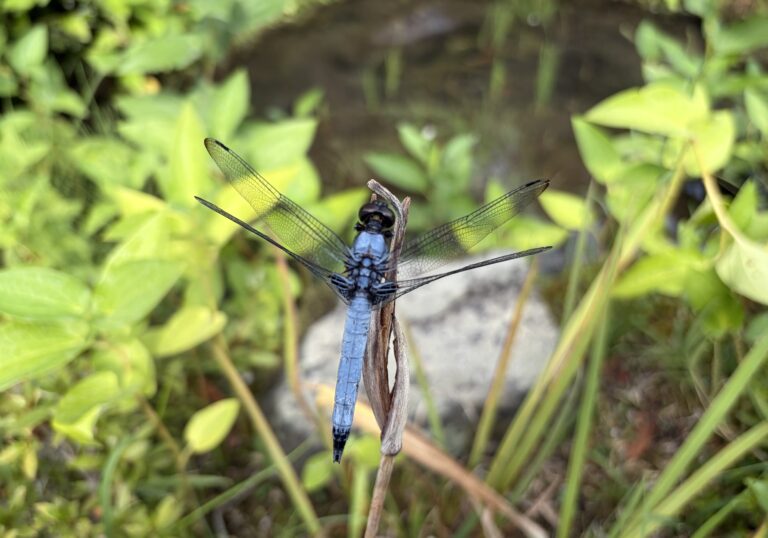
Ooshiokaratonbo, dragonflies that symbolise the Japanese summer
When visiting temples and shrines with release ponds, Orthetrum triangulare melania, one of white-tailed skimmer’s groups is a common sight. In Japan, it is known as the ‘Ooshiokaratonbo’. As the name ‘shiokara’ (meaning ‘salty’) suggests, the males are covered in a blue-and-white powder, much like salted kelp, to protect themselves from strong ultraviolet rays. Ooshiokaratonbo and Shiokaratonbo (Orthetrum albistylum) are dragonflies that are widely found throughout Japan. The can be distinguished from the Shiokaratonbo by its deeper colouring, its dark brown eyes, and the black base of its hind wings with navy-blue veins. Whilst the Shiokaratonbo prefers bright locations, the Ooshiokaratonbo favours…
- Insects
- Kyoto
-
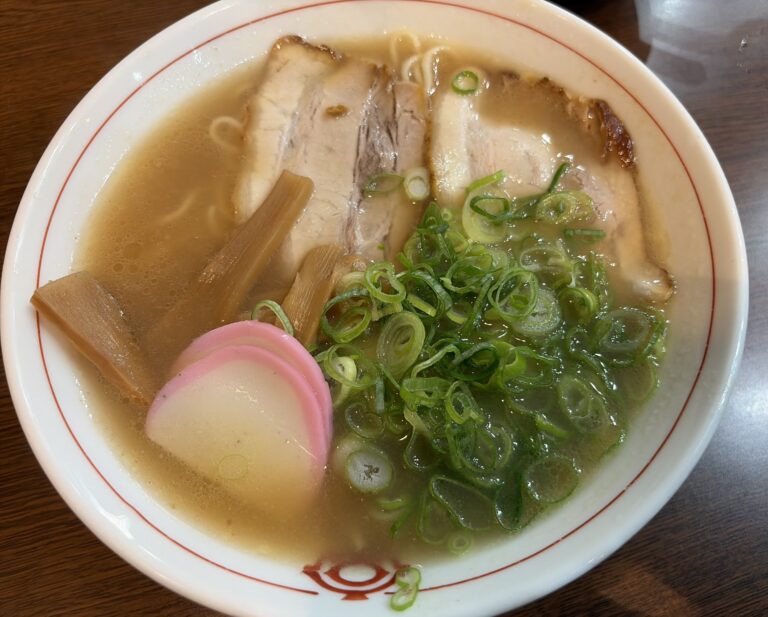
Chūka Soba Kyōichi Honten
I’m often asked where to find dishes that are truly representative of Kyoto, but I find it difficult to recommend any one particular restaurant. Whilst it depends on your budget and personal taste, the restaurants that locals frequent regularly are where you’ll find the true taste of Kyoto. One such place is Chūka Soba Kyōichi Honten in Shijō Ōmiya. Established in 1948, it is a long-established restaurant where the majority of customers are locals. Whilst some chūka soba (Traditional soy-based ramen) shops have a soup with a lingering bitterness, here the broth is rich in dashi and has a subtle…
- Kyoto
- restaurant
-
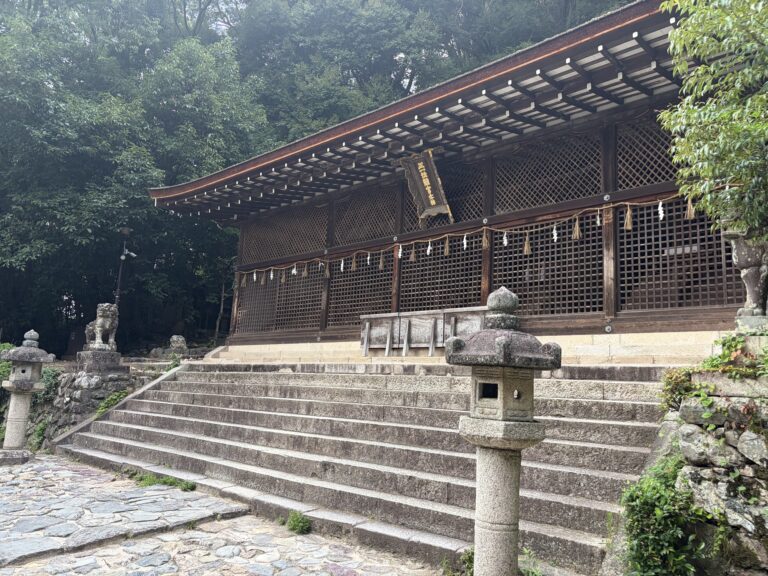
Ujigami Shrine
The main hall of Ujigami Shrine is considered to be the oldest surviving shrine building in Japan. It is said to have been built in the late 11th century, around the same time as the Phoenix Hall at Byōdō-in. It is not far from Byōdō-in—just over a 10-minute walk across the bridge—and, as a World Heritage Site, is attracting an increasing number of foreign tourists. Within the shrine grounds, rabbit-themed amulets, fortune slips and ema (votive tablets) are on sale. It is said that if you write your wish on a rabbit ema, pay your respects to the ‘Looking-Back Rabbit’…
- Kyoto
- Spot introduction
-
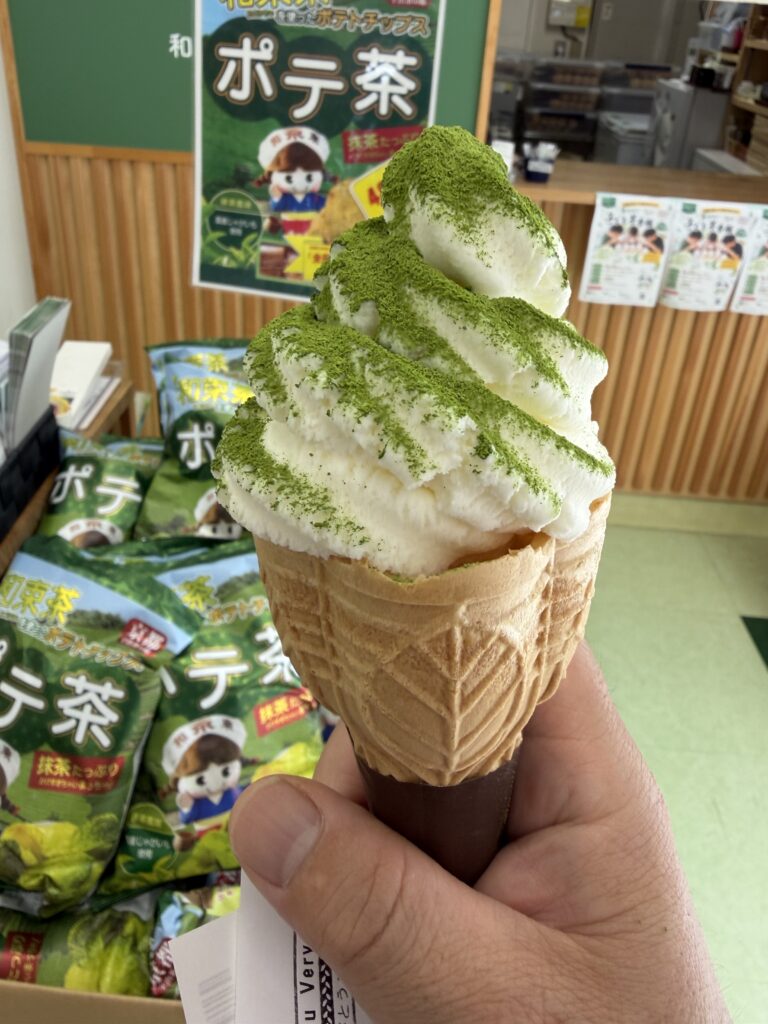
Wazuka Tea Café
Half of the tea leaves produced in Kyoto come from Wazuka Town, which is said to have a history stretching back 800 years. The ‘Wazuka Tea Café’ is a direct sales outlet where you can purchase tea produced in Wazuka Town at great value. You can also sample the tea on request. My personal favourite here is the ‘Salted Milk Soft-serve’. The balance between sweetness and saltiness is exquisite. In the background of the photo is ‘Pote-cha’, Wazuka Town’s latest must-try treat. It consists of potato crisps sprinkled with matcha powder; you can try a sample, so do give it…
- Japanese dessert
- Kyoto
- Spot introduction
-
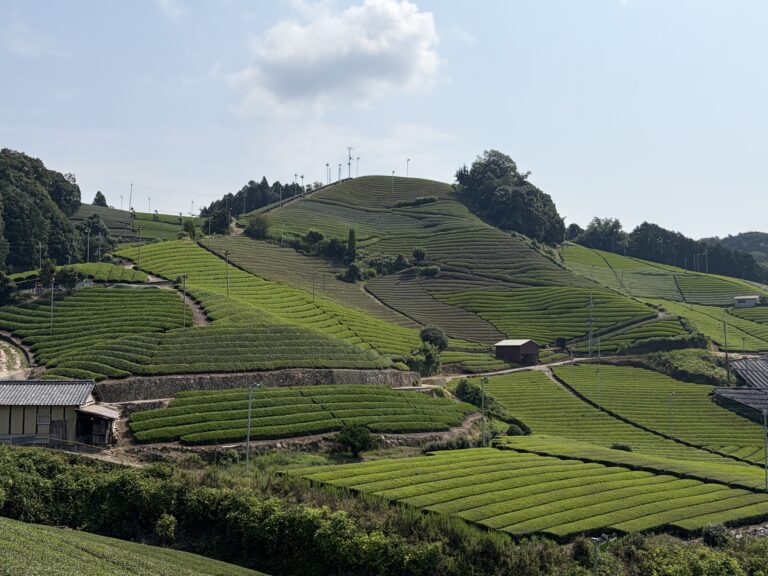
Ishidera Tea Fields
The tea fields at Ishidera are a hallmark of Kyoto’s landscape. Previously, the only car park was at a nearby café, but a tourist car park with toilet facilities has now been built, making the area much more accessible. The peak tea-picking season in Wazuka Town is from late April to early May, when the tea is said to have the best aroma and flavour. In late June, the new shoots that have grown back are picked. Depending on the tea field, a third harvest may take place as late as October. Whilst the tea fields are a popular attraction,…
- Kyoto
- Spot introduction
-
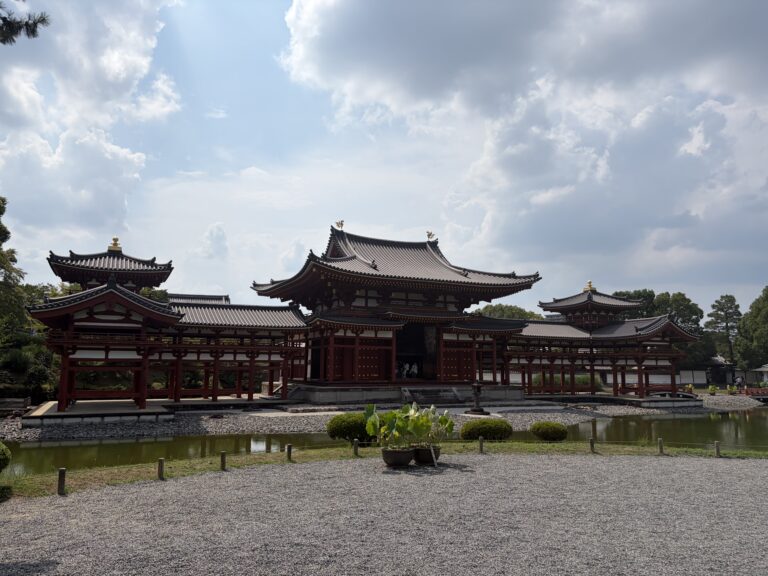
Phoenix Hall, with few visitors
The sweltering heat continues in Kyoto as ever. The Phoenix Hall at Byōdō-in is usually crowded with people taking souvenir photos. As the Phoenix Hall is depicted on the obverse of the 10-yen coin, you often see people taking selfies with a 10-yen coin in one hand. This is the scene we’ve been seeing recently. As the gravel reflects the sunlight and is quite dazzling, although this is the prime spot for photos, there is no one here at all. That said, the air-conditioned Hōshōkan Museum is packed with visitors. A must-see is the National Treasure, the ‘Bodhisattva in the…
- Kyoto
- Spot introduction
-
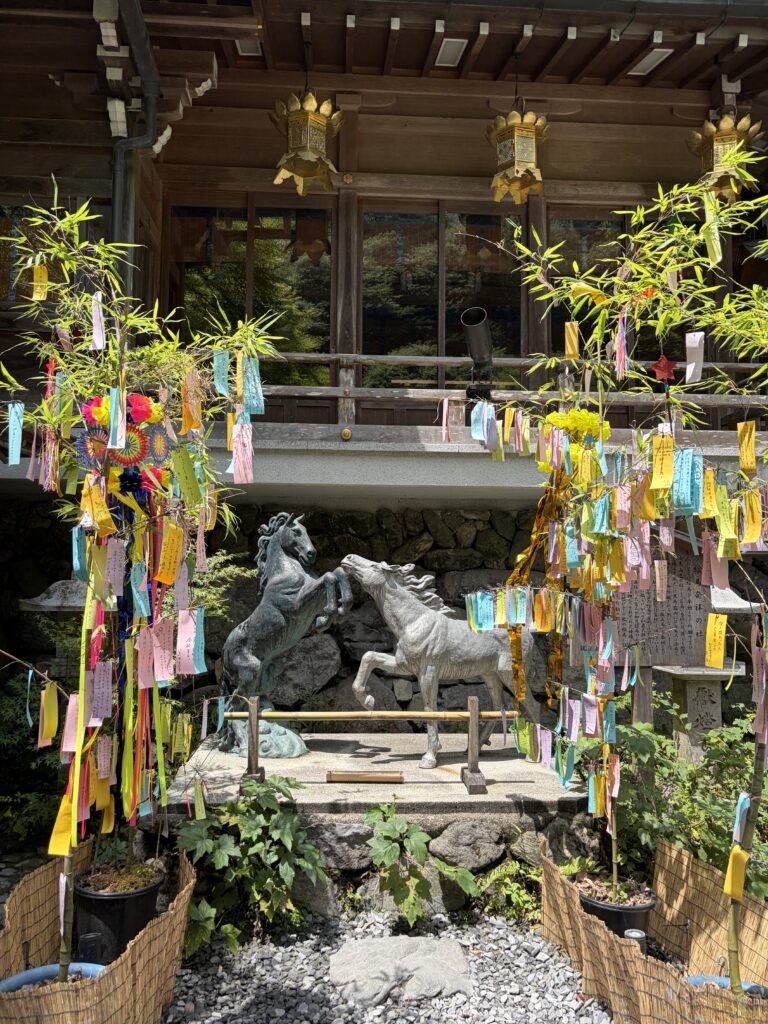
Birthplace of Ema
Ema are wooden plaques on which people write their wishes and dedicate them to a shrine. In the past, people would offer live horses—which were regarded as the deities’ mounts—to pray for rain or for the rain to stop; however, these were eventually replaced by horse figurines or wooden plaques painted with images of horses. Although they are traditionally offered at shrines, as they are small wooden items, an increasing number of foreign tourists are purchasing them as souvenirs. Kifune Shrine is considered to be the birthplace of these ema. Within the shrine grounds stand statues of a white horse…
- Kyoto
- Spot introduction
-
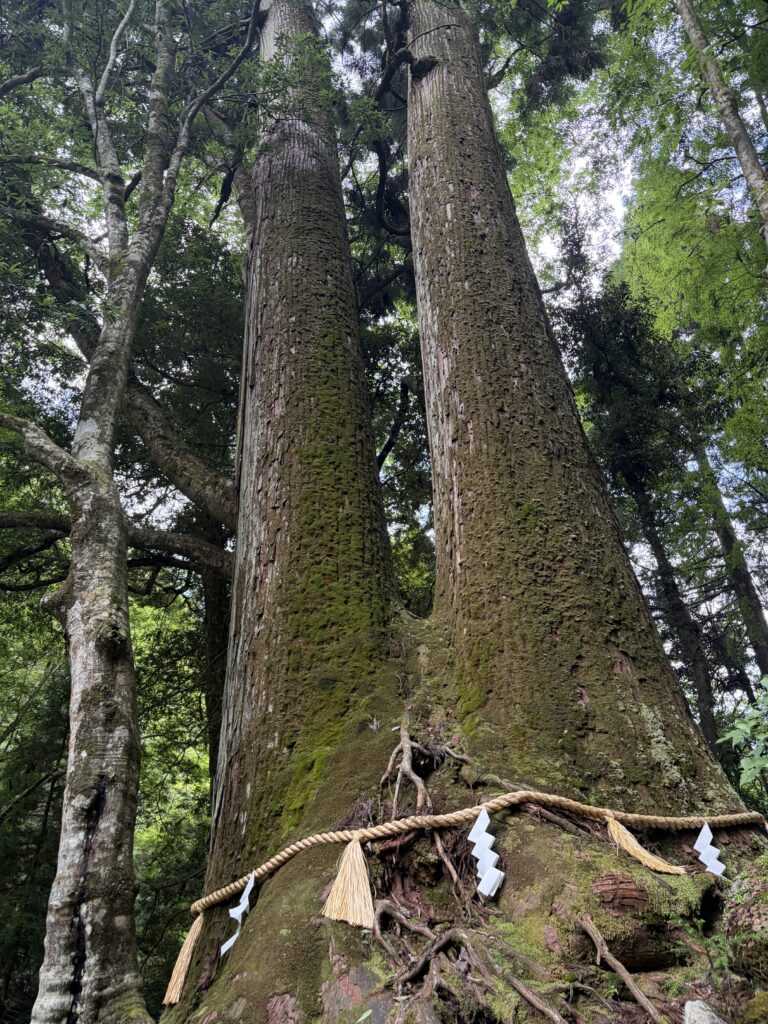
Aioi Cedar
The Aioi Cedar stands within the precincts of the Okumiya (Inner Shrine) at Kifune Shrine. Whilst Kifune Shrine is home to other sacred trees, such as the katsura, this one is the most impressive of them all, causing many worshippers to pause in its presence. Two trunks rise straight towards the sky from a single root, and the tree is said to be 1,000 years old. As its appearance has been likened to an elderly couple living in harmony, the kanji characters ‘相老’ (meaning ‘to grow old together’) were applied to it; furthermore, the characters ‘相生’—which share the same pronunciation…
- Kyoto
- Spot introduction
-
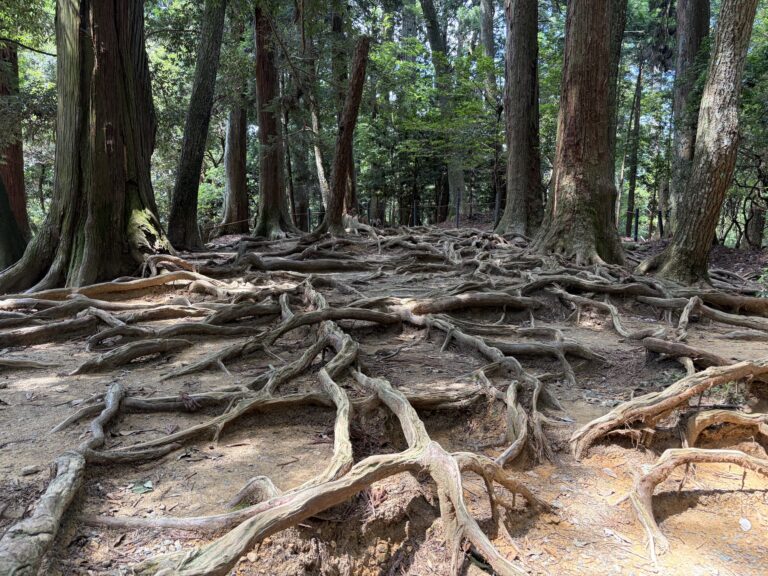
Path of Tree Roots
A short walk along the approach leading from the main hall of Kurama-dera Temple towards Kifune Shrine takes you to the ‘Kinonemichi (Path of Tree Roots)’, where the roots of cedar trees protrude from the ground as far as the eye can see. It is said that magma seeped into the sandstone and cooled in place, creating a layer of rock so hard that the roots cannot break through to the surface. This is the spot where, according to legend, Minamoto no Yoshitsune undertook ascetic training with a tengu, a type of legendary creature found in Shinto belief during his…
- Kyoto
- Spot introduction