

- Kyoto
- Spot introduction
Funaya in Ine
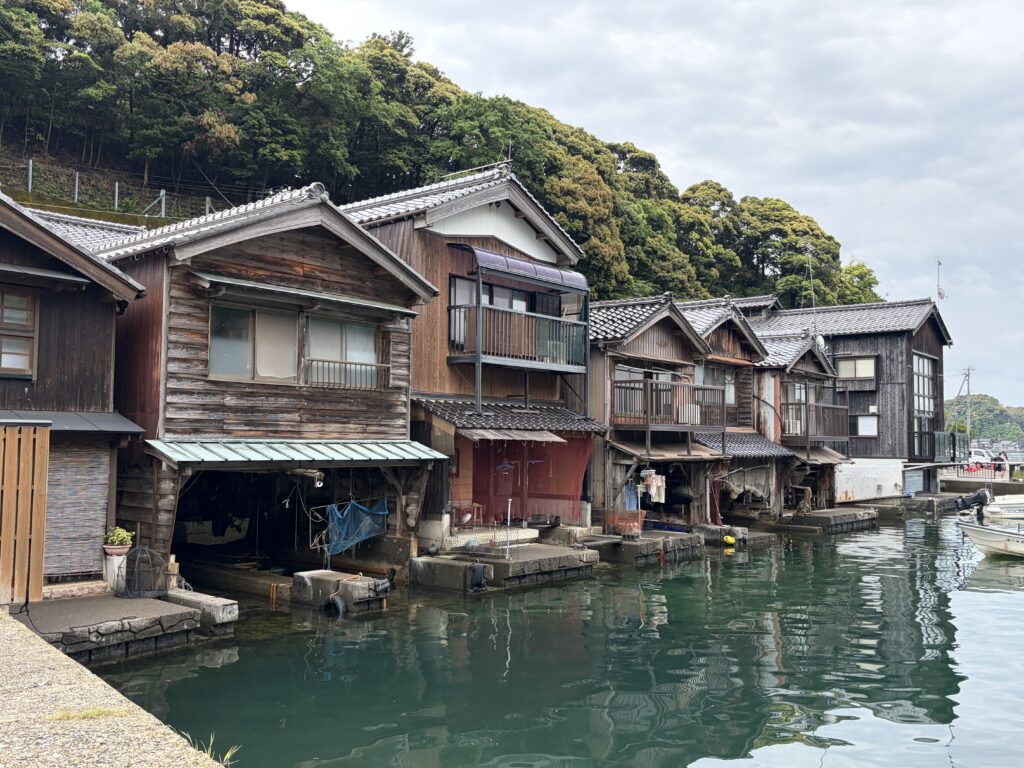
Ine, the fisherman’s village by water, boasts a long history, with its name appearing in documents dating back to the late 12th century. During the Muromachi period, gillnet fishing for yellowtail began, and Ine Bay is now known as one of Japan’s three major yellowtail fishing grounds.
Unusually for the Sea of Japan coast, the bay opens to the south; as the waters are calm and the tidal range is small—just 50 cm—more than 200 boat houses, known as ‘funaya’, line the bay. Originally built to store small boats used for whaling and yellowtail fishing, these boat houses evolved into two-storey structures from the Meiji period onwards. The ground floor was used to store the small boats, whilst the upper floor served as a storeroom for fishing gear.
Today, windows have been fitted to the upper floors, transforming them into living spaces. Some boat houses have been converted into guesthouses offering whole-house rentals, and they are so popular that securing a booking can be difficult.
They are particularly popular with tourists from Asia, but there are constant issues with people trespassing on private property to take photographs without permission. I earnestly hope that visitors will explore the area with a sense of respect, bearing in mind that they are guests in someone else’s home.