

Blog
Blog
-
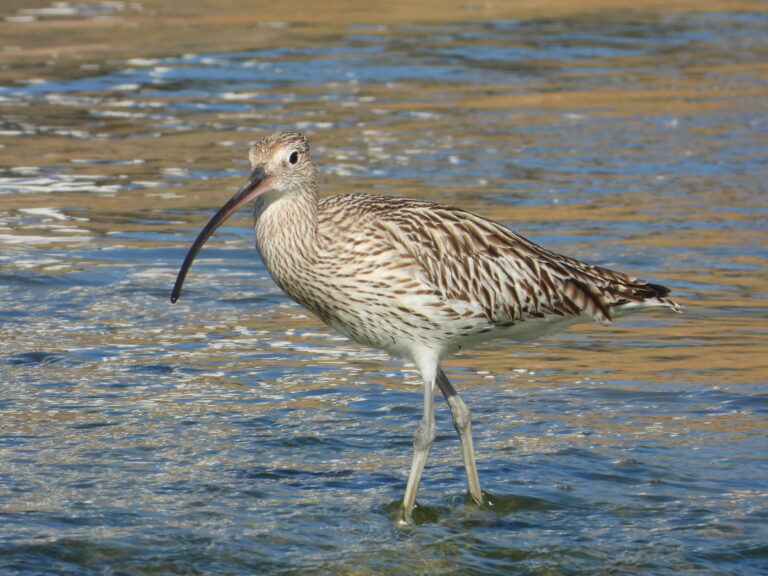
Eurasian curlew
The Eurasian curlew is a large sandpiper that migrates to estuaries and mudflats on Honshu, where it can be seen in spring and autumn. Whilst it is rarely seen in Kyoto, which lacks large mudflats, a small number overwinter in the Nansei Islands. On Honshu, they are, unfortunately, usually too far away. However, on Ishigaki Island, they can be observed from a relatively close distance. The Eurasian curlew is characterised by its large, downward-curving bill. In Japan, the only other large sandpiper with a large bill is the Far Eastern curlew. Although the two species are very similar, the Eurasian…
- Birds
- Ishigaki Island
-
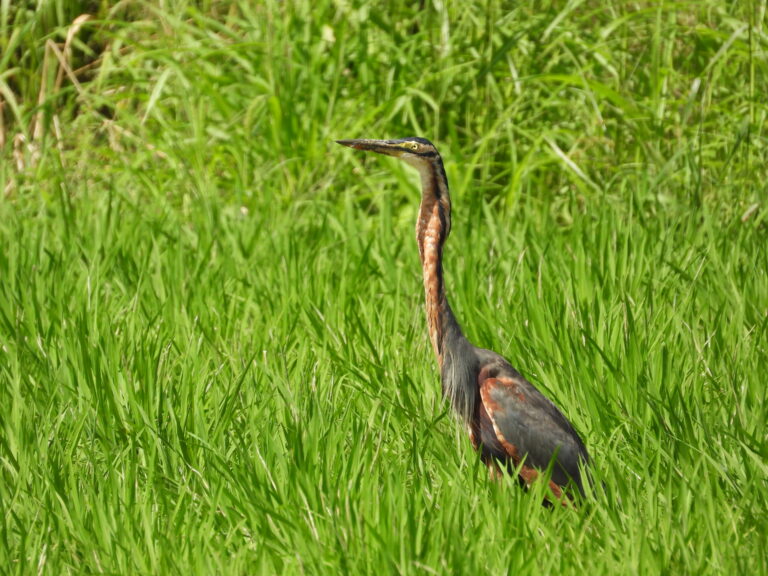
Is the Purple Heron really purple?
The Purple Heron takes its name from the slightly purplish reddish-brown colour of its face, neck and breast. There are differences in colour perception between Japanese and non-Japanese people; for example, whilst in Japan a torii gate is described as vermilion or red, European people seem to find the term ‘orange’ more fitting. However, the Purple Heron is a rare bird whose name—whether in English, French or its scientific name—includes the word ‘purple’, suggesting it was named according to a universal perception of colour. Whilst it is a subtle shade when asked whether it is actually purple, the contrast with…
- Birds
- Ishigaki Island
-
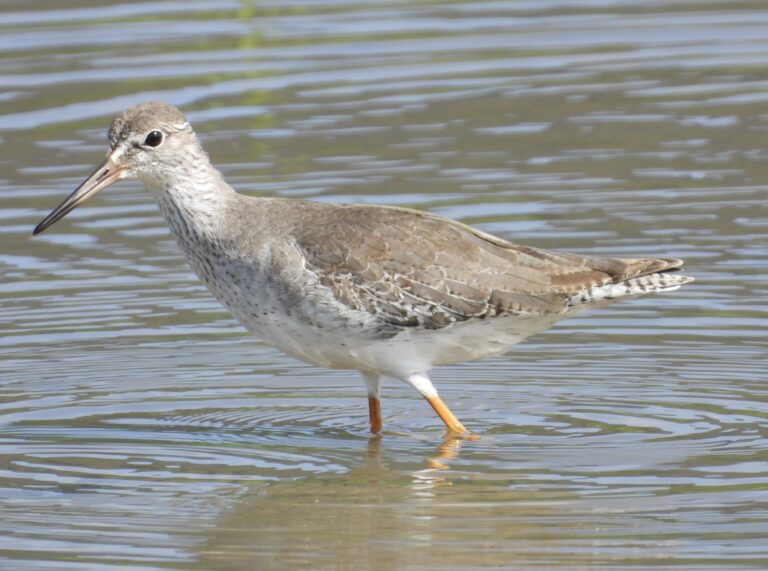
Common redshank
Although a small number breed in eastern Hokkaido, the Common redshank is rarely seen on Honshu. It is a rather plain-looking bird overall, but, as its name suggests, its red legs are a striking feature. In the Nansei Islands, including Ishigaki Island, it is commonly seen in rice paddies and similar habitats—except during the summer—and calls with a distinctive ‘puui’ sound. It is a bird with a wide global distribution, and individuals that breed in Europe migrate as far as central Africa during the winter. When I was working in Senegal, I was often surprised to see them even in…
- Birds
- Ishigaki Island
-
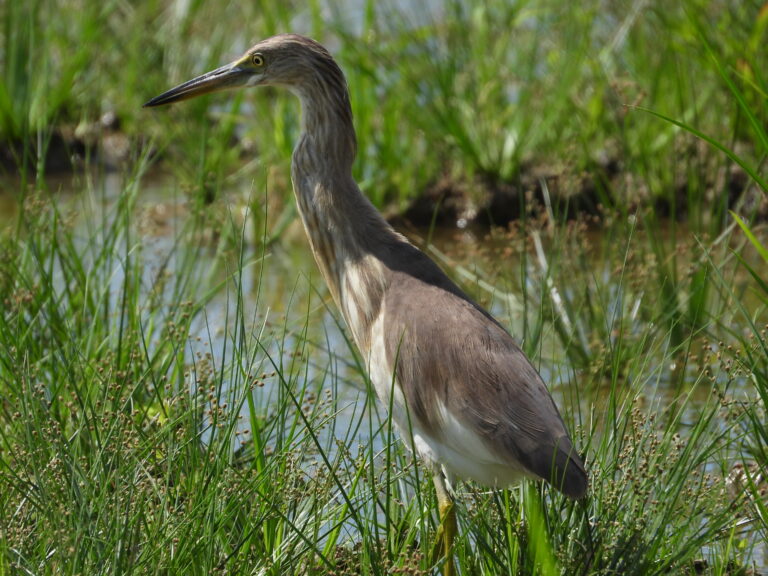
Growing population of Javan pond heron
The Javan Javan pond heron has become a frequent sight on Ishigaki Island. As its name suggests, this heron is native to Southeast Asia, including the island of Java. In recent years, several birds have been overwintering on Ishigaki Island, and they are often seen taking flight from the edges of rice paddies. It is reported that this year, they have been seen sporting their beautiful orange summer plumage from the head down to the neck. The winter plumage seen at this time of year is rather drab. As the Chinese pond heron also overwinters here, it can be difficult to distinguish…
- Birds
- Ishigaki Island
-
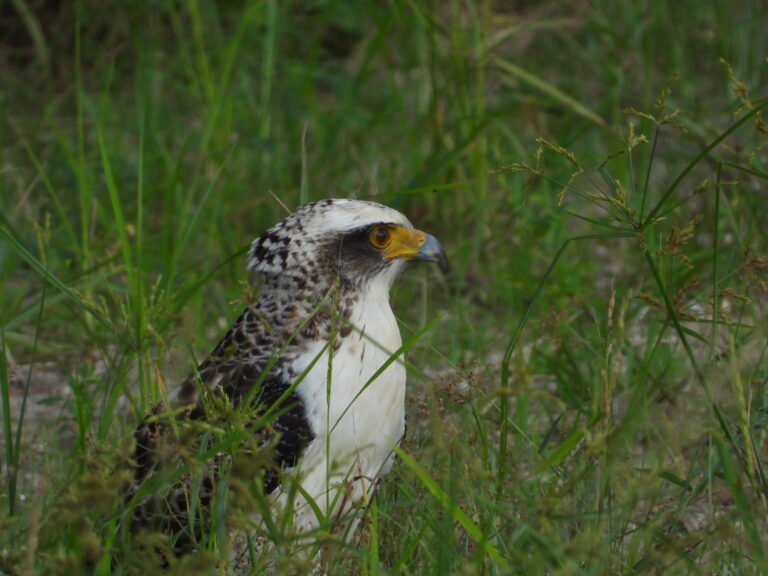
Young Crested serpent eagle
Although the Crested serpent eagle is widely distributed across South-East Asia, in Japan it breeds only on Ishigaki Island and Iriomote Island, and is designated as an endangered species. Adult birds have feathers on the back of their heads that stand on end when excited, giving them the appearance of a crown—hence the name. Whilst adults are generally brownish-grey in colour, newly hatched chicks are white right down to their bellies and gradually turn brownish-grey as they grow. Juveniles less than a year old are entirely white, and it is said that they begin to be spotted in autumn. As…
- Birds
- Ishigaki Island
-
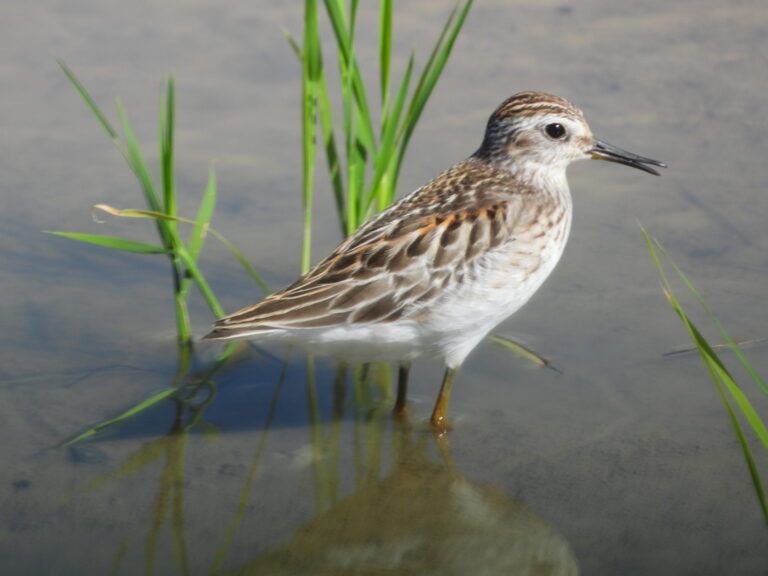
Long-toed stint
The Long-toed Stint is one of the smallest sandpipers to migrate to Japan. Its scientific name, Calidris subminuta, literally means ‘small sandpiper’. It passes through Japan in spring and autumn, but is particularly common in autumn. In the rice paddies of Hiratabaru—a renowned birdwatching spot on Ishigaki Island—large numbers of Long-toed Stints can be seen from September to October, and many overwintering individuals also reside there. Although not a rare bird, the sight of dozens of them pecking for food in the rice paddies is a spectacle almost unheard of on Honshu. On the other hand, as it migrates from…
- Birds
- Ishigaki Island
-
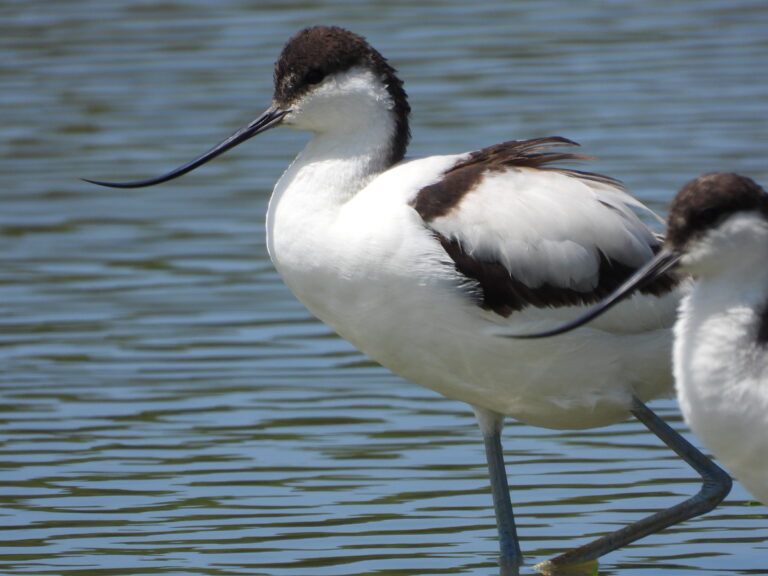
Graceful Pied avocet
When I first took up birdwatching over 40 years ago, the Pied avocet was synonymous with ‘rare birds’. With its upward-curving bill and the beautiful contrast between its white and black plumage, I had always hoped to catch a glimpse of it in Japan one day. However, although numbers remain low even on Honshu, they have been migrating here almost every year in recent times and are no longer considered an extremely rare sight. That said, my heart still leaps whenever I spot one. When I was in Senegal, I often saw individuals wintering in the wetlands from September to…
- Birds
- Ishigaki Island
-
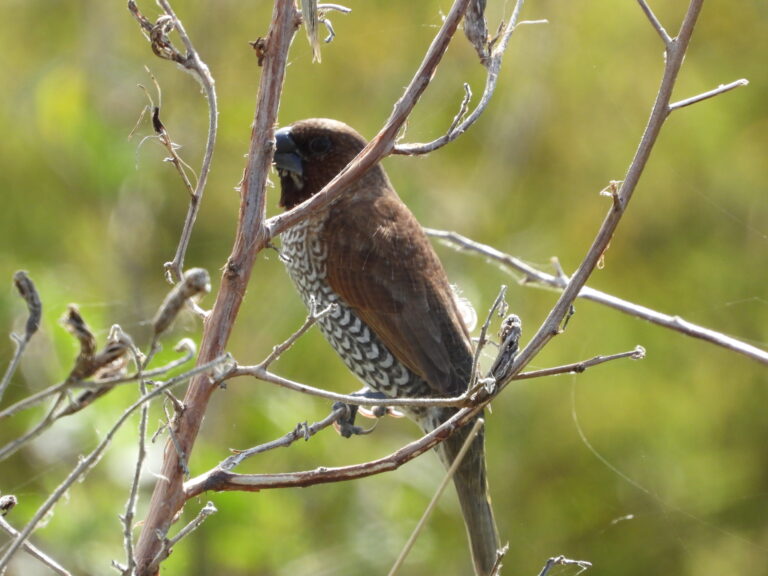
Scaly-breasted munia
The Scaly-breasted munia is widely distributed from southern China to Taiwan, Indonesia, India and other parts of South-East Asia. It is a small bird characterised by the wavy pattern on its belly. Whilst 11 subspecies are recognised, the species has been introduced to the United States and Australia, and individuals inhabiting the Nansei Islands, such as Ishigaki Island, are considered to be non-native species resulting from escaped pet birds. However, as the species is commonly found in Taiwan, the possibility that they may have migrated from there cannot be entirely ruled out. Determining which birds are native and which are…
- Birds
- Ishigaki Island
-
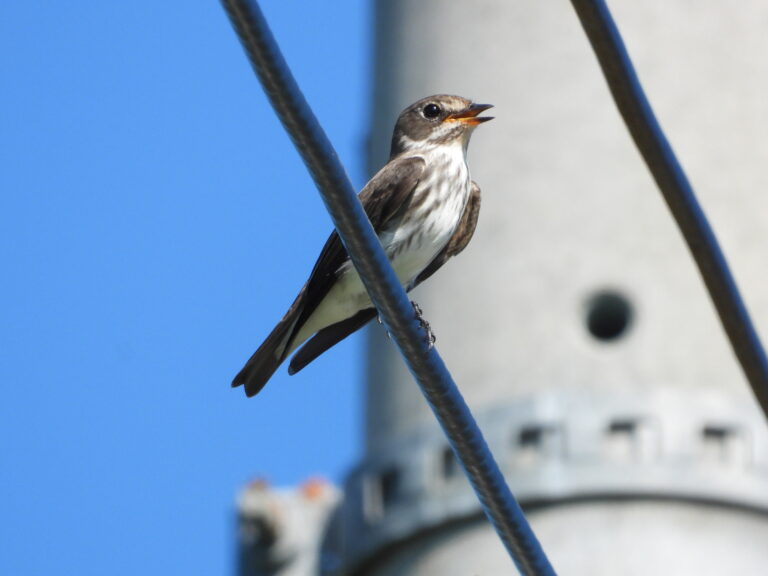
Grey-streaked flycatcher
Come autumn, it is common to spot small birds migrating even in city parks. A prime example of this is the Grey-streaked Flycatcher. From late September to early October, it can be observed at the Kyoto Imperial Palace. It breeds in northern regions such as Siberia and is a migratory bird that passes through Japan during the migration season. Although it also migrates in spring, it is overwhelmingly more commonly seen in autumn. It is characterised by vertical stripes running from its breast to its belly. Like other members of the flycatcher family, it takes off from tree branches, catches…
- Birds
- Ishigaki Island
-
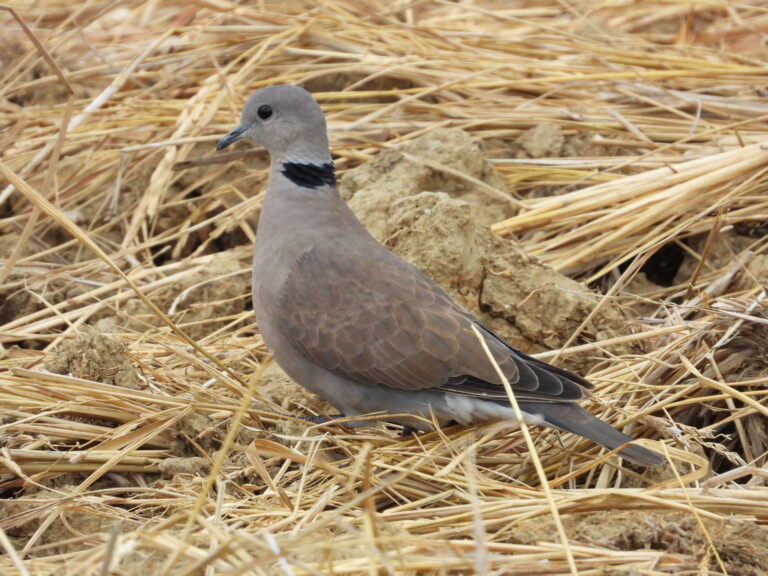
Red collared dove
Although rarely seen on Honshu, the Red collared dove is observed every year from autumn to spring in the Nansei Islands. It is much smaller than other pigeons commonly found in Japan—about the size of a starling—and is often seen mingling with flocks of Oriental turtle doves. The photograph shows a female. As the name suggests, the male has a reddish tinge to its back and belly, whilst the female is a dull, overall greyish-brown colour with no reddish hues. It is an extremely rare bird in Kyoto, with only a single record prior to the war, yet it is…
- Birds
- Ishigaki Island
-
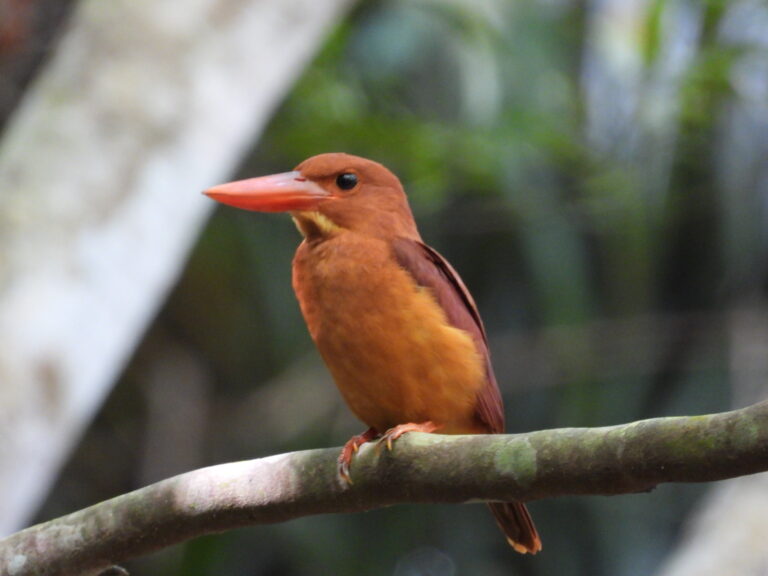
Ryukyu Ruddy Kingfisher still remaining
In late September on Ishigaki Island, the composition of migratory birds changes significantly from day to day. The Ryukyu Ruddy Kingfisher, a subspecies of the Ruddy Kingfisher, breeds in the Nansei Islands, including Ishigaki Island, and is said to disappear from sight by mid-August, but on this occasion I was lucky enough to spot one. As the base of its beak is blackish, it may be a juvenile born this year. Whilst they sing in a distinctive voice during the breeding season, they do not sing at this time of year, so one must search carefully among the branches in…
- Birds
- Ishigaki Island
-

italico
Even on Ishigaki Island, restaurants come and go at a rapid pace, and there are many establishments that have closed down whilst I’ve been away for a while. Amidst this, ‘italico’ has been a beloved Italian restaurant on Ishigaki Island for over 20 years. It is a popular spot that is often visited on tours led by Mr Kobayashi, the birdwatching guide. Dining on the terrace whilst gazing out over the cobalt-blue Sakieda Bay is a truly relaxing experience. What’s more, at 1,100 yen for a starter, a main course of pasta and a drink, it’s remarkably good value—hard to…
- Ishigaki Island
- restaurant