

Blog
Blog
-
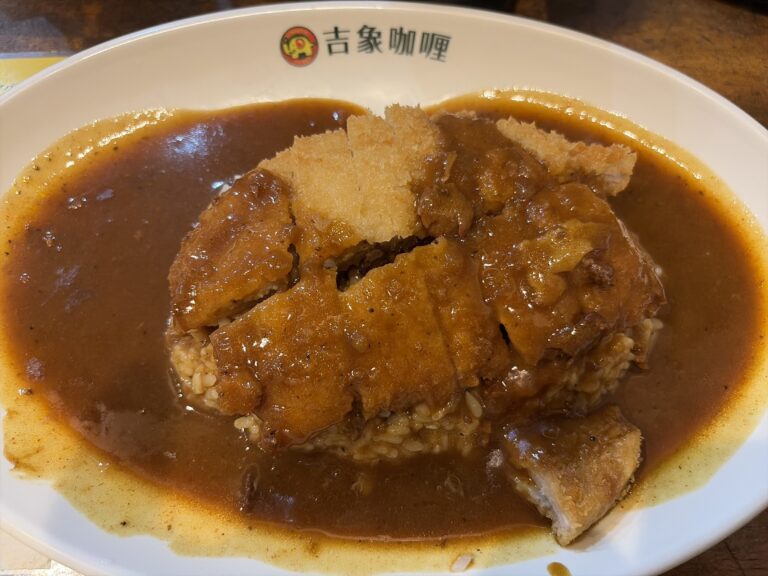
Yoshizō Curry
It’s difficult to find affordable, tasty restaurants around Kyoto Station. That’s why Yoshizō Curry, located on the west side of Kyoto Avanti, is such a gem. The standard curry is an unbelievably cheap 390 yen, yet the quality is consistently good, and there’s always a queue at lunchtime. The restaurant has counter seating only, and as seats are spaced apart, it can’t accommodate more than ten people. However, as the service is quick and customers don’t linger, you won’t have to wait long to be seated. My favourite is the Katsu curry (pork cutlet curry), topped with a freshly fried…
- Kyoto
- restaurant
-
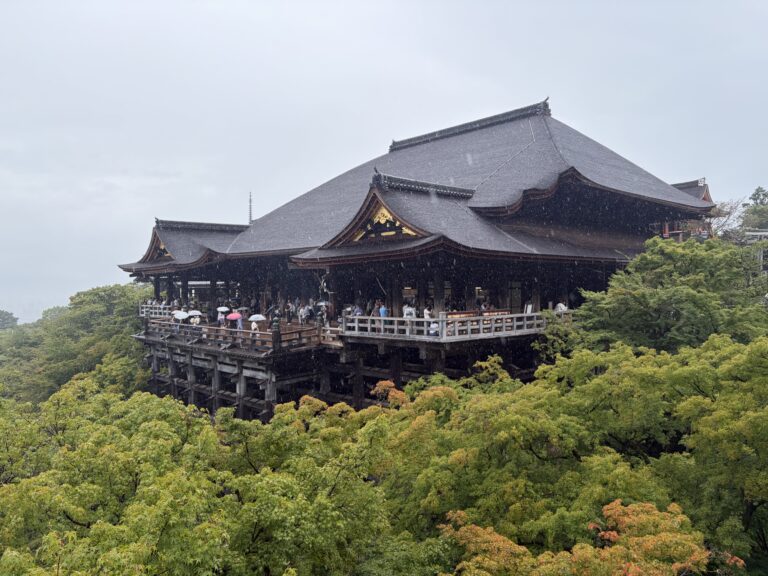
Vacation Rental Accommodation under the Hotel Business Act
Kansai TV recently broadcast a programme about a loophole that allows people to open vacation rental accommodation (Minpaku) by registering as a hotel business. In Osaka, there was a ‘Special Zone Rental Vacation (Tokku Minpaku)’ scheme which, unlike the statutory vacation rental scheme—which typically imposes an annual operating limit of 180 days—allowed year-round operation. However, due to issues such as litter and noise, as well as the fact that vacation rental had been misused to facilitate the acquisition of residence visas, the scheme has now ceased accepting new applications. Consequently, the method of operating vacation rental as a ‘common lodging…
- Column
-
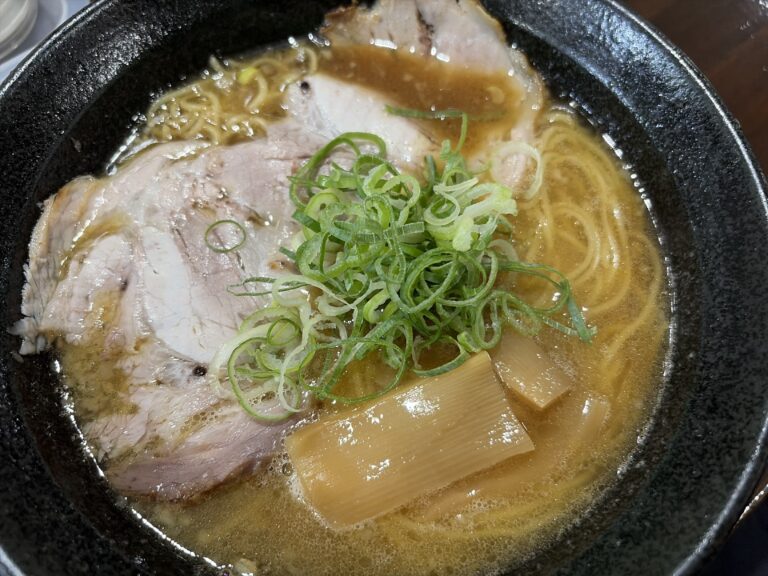
Menya Shōmon
When I ask guests what they’d like for lunch whilst guiding them, the most common answers are sushi, tempura and ramen. Whilst sushi can be enjoyed at conveyor-belt sushi restaurants and tempura at restaurants with table seating—making them suitable for families—ramen often involves shops with counter seating only, which can be a bit of a hassle. In this context, Menya Shōmon is a real lifesaver, as it offers tables seating four. It’s conveniently located between Kinkaku-ji and Daitoku-ji, and the food is delicious. You can choose from a range of broths, including chicken bone broth with aged soy sauce, chicken…
- Kyoto
- restaurant
-
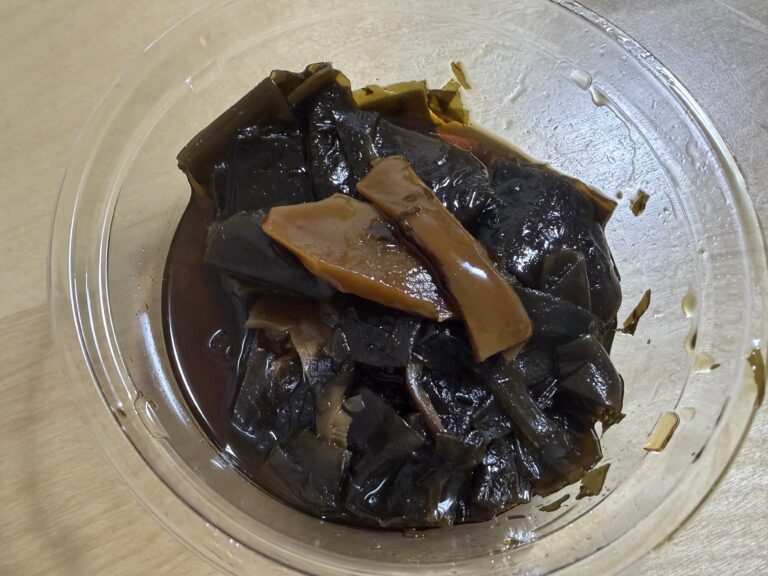
Matsutake-Konbu
‘Toba Ume Grocery Shop’ remains a greengrocer that embodies the spirit of Kyoto. With the arrival of September, Matsutake-Konbu has taken the place of chirimen sansho (dried baby sardines with sansho pepper) on the shop shelves. This dish is made by slowly simmering matsutake mushrooms and kelp in dashi stock, soya sauce, mirin, sake and sugar. It is the perfect accompaniment to plain white rice and is sure to whet your appetite. It is said that Matsutake-Kombu originated in Arima Onsen, Hyogo Prefecture, where local matsutake mushrooms were combined with kombu from Hokkaido—transported to the Kansai region by Kitamae ships—to…
- Food
- Kyoto
-
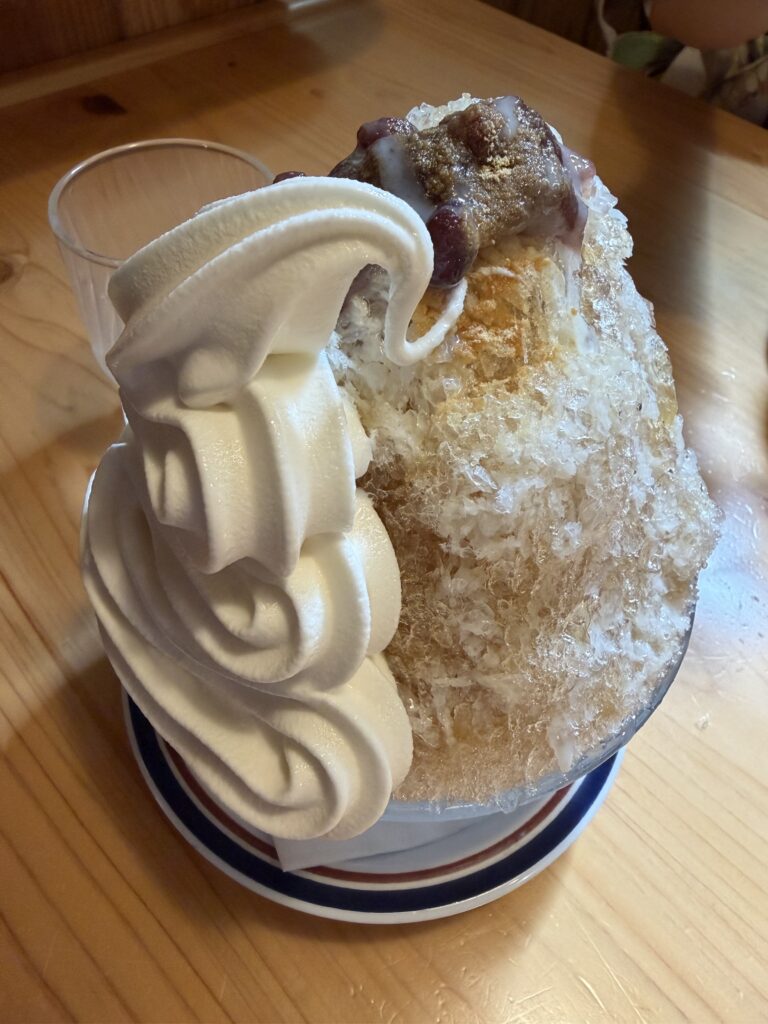
Komeda Coffee Shop’s Shaved Ice
Komeda Coffee Shop has now become a nationwide chain. It first opened in Kyoto in 2010. I used to pop down to the shop in front of Nijo Station quite often, as I could enjoy menu items I’d grown fond of back in my hometown of Gifu. Shaved ice is a summer staple at Komeda Coffee Shop. Whilst new menu items are announced every year, this year the ‘Kuro-mitsu Kinako Zenzai Ice’ is available as a limited-edition offering in the Western Japan region. This shaved ice combines the gentle sweetness of Hokkaido adzuki beans with a rich black sugar syrup…
- Japanese dessert
- Kyoto
-
Regulations on Vacation Rental Accommodation in Kyoto City
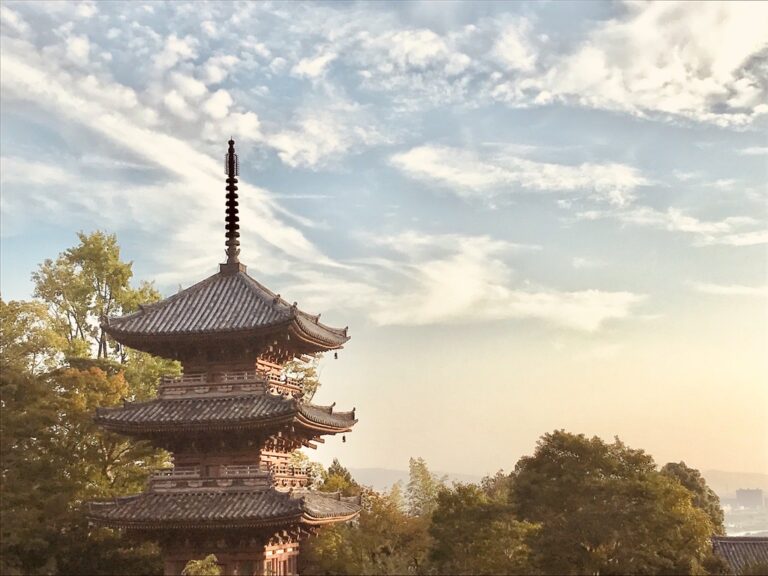
Kyoto City has finally begun taking steps to regulate vacation rental accommodation (minpaku in Japanese). A draft amendment to the by-laws, which would effectively ban new businesses from opening in residential-only and industrial zones, is expected to be debated in the city council next financial year. In addition, amendments are expected to be made requiring existing vacation rental providers and guesthouse such as ours to have staff permanently stationed either on the premises or in an adjacent building. The key difference between vacation rental and guesthouse lies in the licensing requirements. Whilst vacation rental requires only a notification, guesthouse is…
- Column
-

Dotonbori: Where the Japanese Have Disappeared
It is frequently reported in the media that the Japanese have disappeared from the so-called ‘Minami’ district—comprising Shinsaibashi, Dotonbori, Kuromon Market and Namba—the very places that epitomise Osaka. Even Dotonbori, the very symbol of ‘kuidaore’ (eating until you drop), is now lined with Chinese, Korean and Vietnamese shops and food stalls—apart from the flashy neon signs—and one hardly ever sees any locals walking around. Some of these are illegal street stalls operating on public roads, which has become a cause for concern. Guided tours in Osaka used to typically cover Kita, Minami and Shinsekai, but since the COVID-19 pandemic, I…
- Column
- Osaka
-

Golden Ring at Chion-in Temple
Chion-in is the head temple of the Jōdo-shū sect. Built in 1621 on the orders of Hidetada, the second shogun of the Tokugawa shogunate, its Sanmon gate—50 metres wide and 24 metres high—is often featured in Japanese history textbooks. Upon passing through the Sanmon Gate, a large golden ring monument comes into view. It is the work of Irish artist Joseph Walsh and was previously exhibited at the Irish Pavilion during the Osaka World Expo. Although it struck me as somewhat out of place when I first saw it, it strangely grows on you. As it is scheduled to remain…
- Kyoto
- Spot introduction
-

Radio-Controlled Japanese Style Boat in Arashiyama
Kameyama-ya, a Japanese restaurant on the left bank of the Katsura River in Arashiyama. Nearby, you can occasionally spot a radio-controlled Japanese style boat carrying a Rika-chan doll. Apparently, it is a radio-controlled model built by a man named Mr Takahashi; I had already seen it when I first came to Kyoto, so he may have been operating it for nearly 15 years. Every now and then, it passes a real Japanese style boat, which makes for a great photo opportunity, but as it operates on an irregular basis, it’s all down to luck. I’d always wondered how he managed…
- Kyoto
- Spot introduction
-

Ryūgū-mon gate at Zendō-ji
Walking north along the Takase River, near Ichino-Funairi, main temple gate that looks just like the Dragon Palace appears between the buildings. This is the Ryūgū-mon of Zendō-ji Temple, of the Jōdo sect. It is said to have been built in the mid-16th century and, after being destroyed in the Great Tenmei Fire of 1788, to have been rebuilt in 1817; however, the exact details remain unclear. The Ryūgū Gate is characterised by its white plasterwork and arched passageway. Although this architectural style, influenced by Chinese traditions, can be found throughout the country, such structures appear to be relatively rare.…
- Kyoto
- Spot introduction
-

Sparkling Dreams Shinkansen
When I went to meet guests at Kyoto Station, I spotted women standing in the queue on the platform, smartphone in hand. They were there to catch the ‘Sparkling Dreams Shinkansen’, which is running from June this year until March next year. To mark the 25th anniversary of Tokyo DisneySea, the carriages are wrapped in designs featuring familiar characters such as Mickey Mouse and Chip and Dale. With only two to four services running per day, and as the train arrived at Kyoto Station just after midday on this particular day, it was an ideal time to take photographs, and…
- Kyoto
- Spot introduction
-
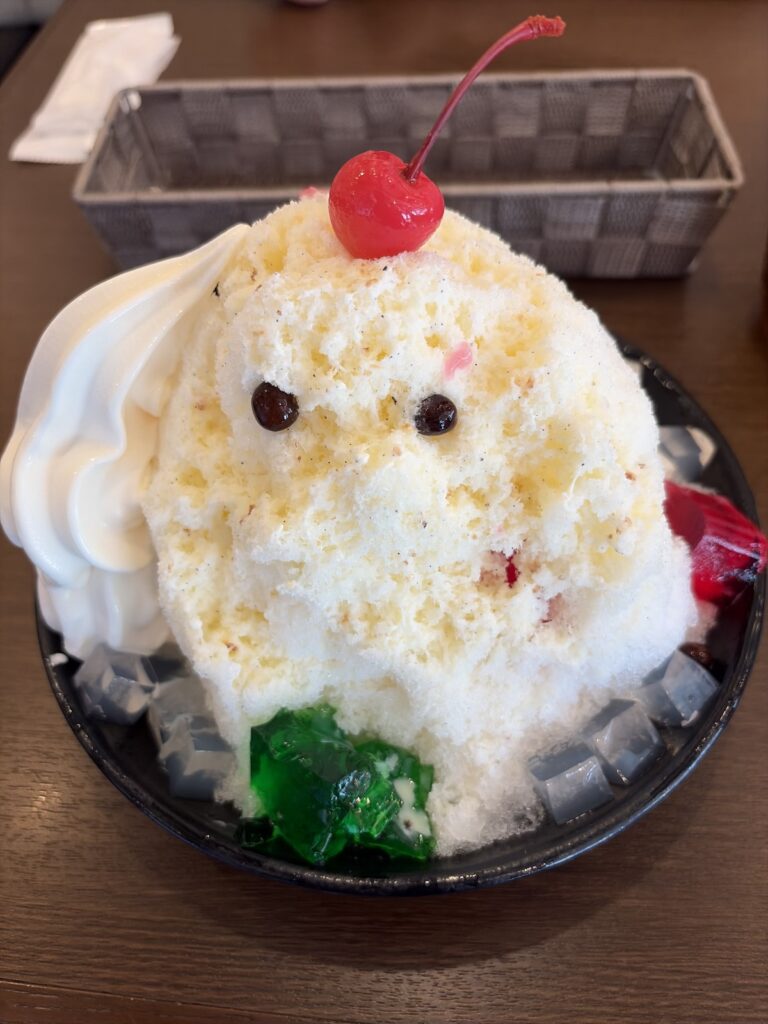
Karafune-ya Coffee’s Shirokuma Shaved Ice
August is drawing to a close, yet the sweltering heat shows no sign of letting up. At times like this, when I eat shaved ice, I’m glad to be in Japan. With more and more shops taking pride in the quality of their ice and ingredients, shaved ice now costs around 2,000 yen. It’s gradually ceasing to be a casual treat, but at Karafune-ya Coffee, you can enjoy a generous portion for under 1,000 yen. This summer, they’ve introduced the ‘Shirokuma’ shaved ice. It’s a speciality from Kagoshima, featuring shaved ice generously drizzled with condensed milk and topped with fruit…
- Japanese dessert
- Kyoto