

- Birds
- Ishigaki Island
Common moorhen and its Chick
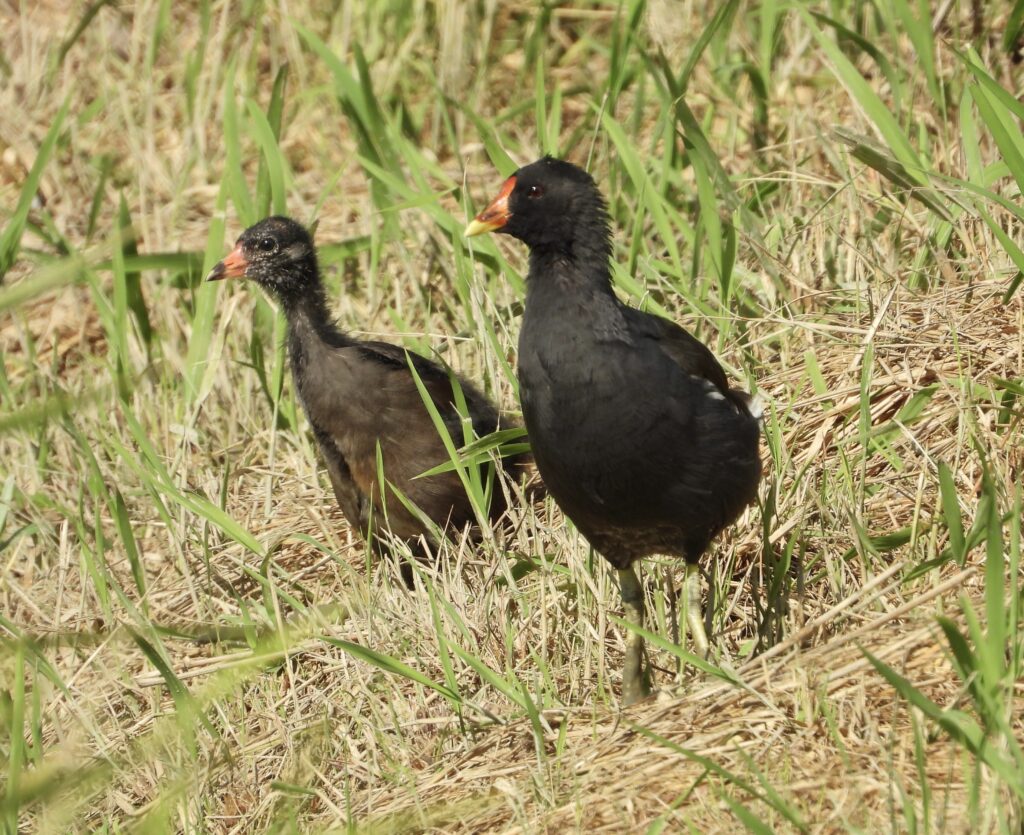
It is said that the Japanese name ‘Ban’—derived from the kanji meaning ‘guardian’ and ‘bird’—may have been chosen to signify the bird as the ‘guardian of the rice paddies’. Meanwhile, its English and French names, ‘wetland chicken’ and ‘waterfowl’ respectively, strike me as rather apt descriptions.
A distinctive feature is their large, thick legs, even in chicks. They breed twice a year from May to September (with some pairs breeding up to four times a year), and in autumn on Ishigaki Island, it is not uncommon to see them accompanied by their young. As shown in the photograph on the left, their plumage gradually turns black, whilst the reddish colour on their foreheads and beaks becomes more prominent. They are also known for the chicks from the first brood helping to look after the young during the second breeding season.
Perhaps because they are plain, black birds in Japan, they are not particularly popular here; however, they are frequently used as motifs on postage stamps in the Caribbean and European countries.