

- Fukui
- Spot introduction
Kitamae-bune
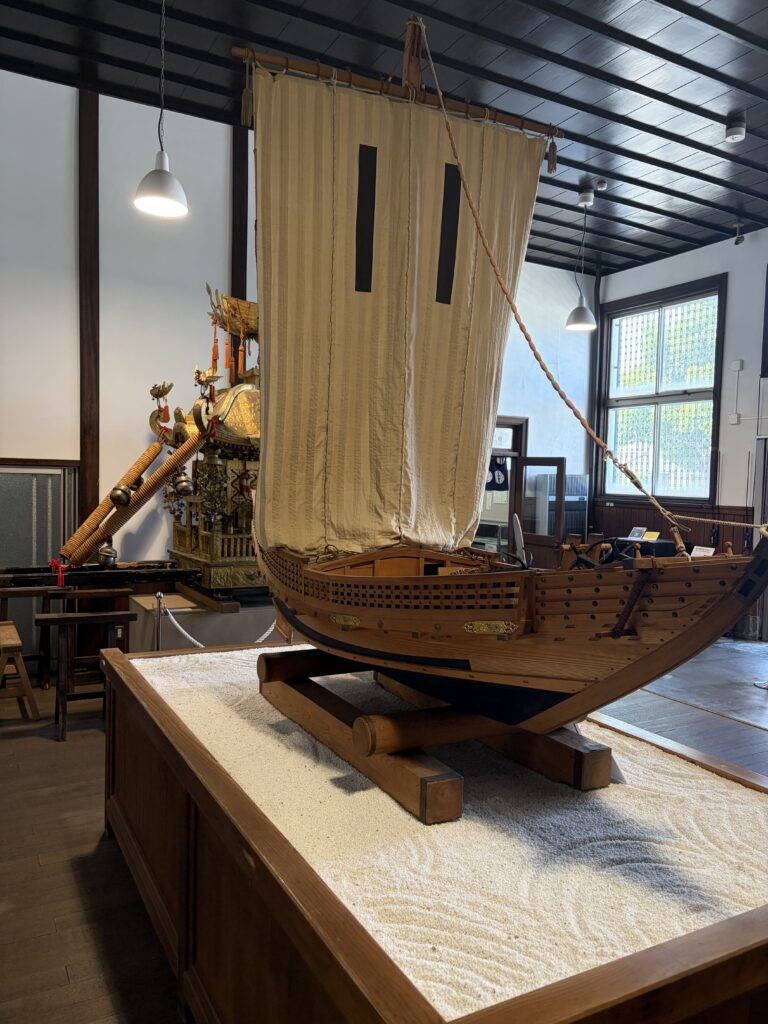
From the mid-18th century through to the Meiji era, the Kitamae-bune sailed from Hokkaido to Osaka via the Sea of Japan, bringing wealth and culture to various regions. These vessels did more than simply transport goods; shipowners would purchase goods cheaply at ports of call and sell them at a profit in ports where prices were higher, thereby amassing vast fortunes. Owada Shōshichi, who founded the Owada Bank, was one such shipowner.
Had it not been for the Kitamae-bune, Kyoto cuisine—based on dashi made from Hokkaido kelp—might never have become established. Furthermore, safflower from Yamagata was transported as a dye, contributing to the development of Nishijin-ori textiles.
The Kitamae ships were not merely hubs for the economy and logistics; luxurious shipowners’ residences and shrines dedicated to the safety of voyages still stand along the coasts of the Sea of Japan and the Seto Inland Sea. As they also had a significant influence on local food culture and festivals, the ‘Kitamae-bune Port Towns and Shipowners’ Settlements’, comprising 52 towns, have been registered as a Japan Heritage site.