

Blog
Blog 2026年5月 2ページ目
-
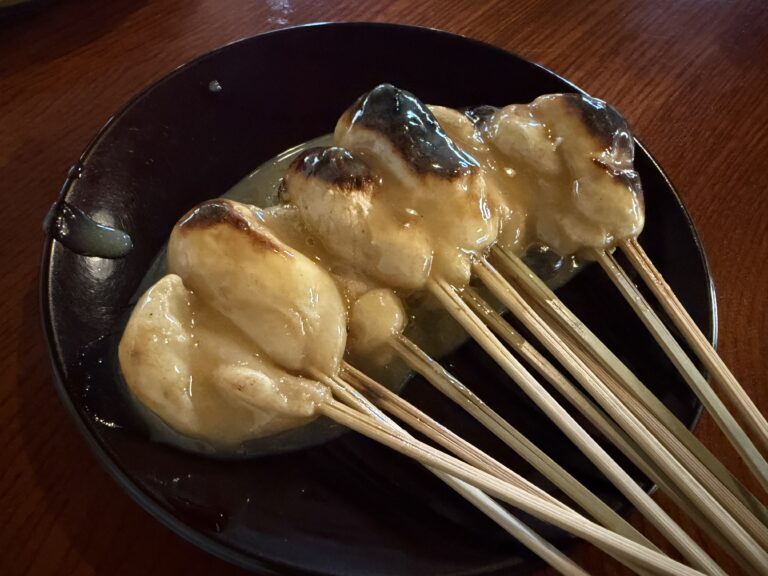
Aburi-mochi
Aburi-mochi is one of Kyoto’s most iconic traditional sweets. It consists of mochi coated in kinako (roasted soya bean flour), skewered on a bamboo stick, lightly grilled, and then brushed with a sweet and savoury sauce made from white miso and sugar. Imamiya Shrine is particularly famous for this treat. It is popular for warding off illness and misfortune, and many people stop by after paying their respects. On the eastern side of the shrine grounds, two shops—Ichimonjiya Wasuke (Ichiwa) and Kazariya—stand facing each other. Ichiwa is said to be Japan’s oldest traditional confectionery shop, having been founded as far…
- Japanese dessert
- Kyoto
- Spot introduction
-
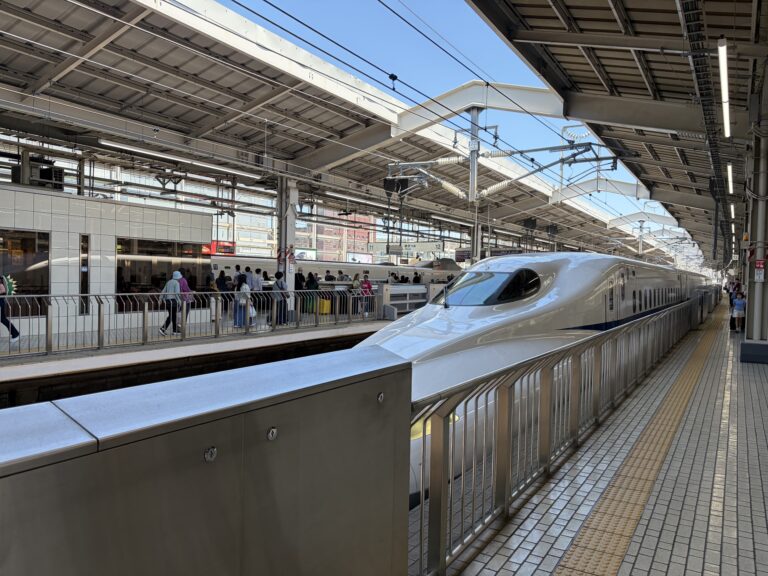
Chaos at Kyoto Station
The crowds at Kyoto Station show no sign of abating. There is a constant stream of foreign tourists who, at the Shinkansen ticket gates, tap their smartphones without displaying a QR code, or attempt to pass through using their EX Reservation Details (EX利用票) only to be blocked. On top of that, there are long queues at the ticket machines. Today, I had to wait for nearly 20 minutes. Online bookings for the Tokaido, Sanyo and Kyushu Shinkansen lines can be made via smartphone. https://smart-ex.jp/en/index.php Recently, there has also been an increase in incidents involving large suitcases. There have been cases…
- Column
- Travel tips
-
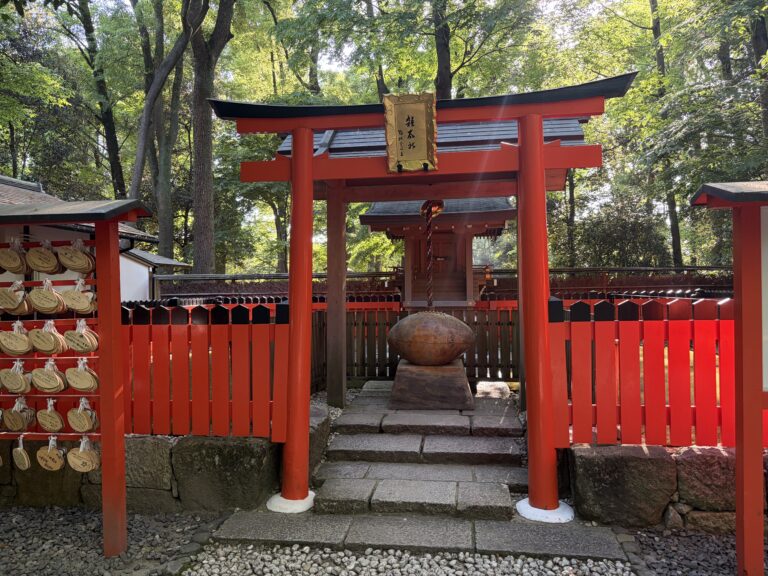
Sawata Shrine
Sawata Shrine, commonly known as the ‘Rugby Shrine’. Located in the Tadasu Forest of Shimogamo Shrine, it had been demolished but was rebuilt in 2017 to coincide with the Rugby World Cup draw. Originally a standard shrine, it became a symbol of the sport in 2019 when a rugby ball-shaped offering box was donated. The ema plaques displayed here are also shaped like rugby balls. It has become a place where many rugby players come to pray for victory.
- Kyoto
- Spot introduction
-
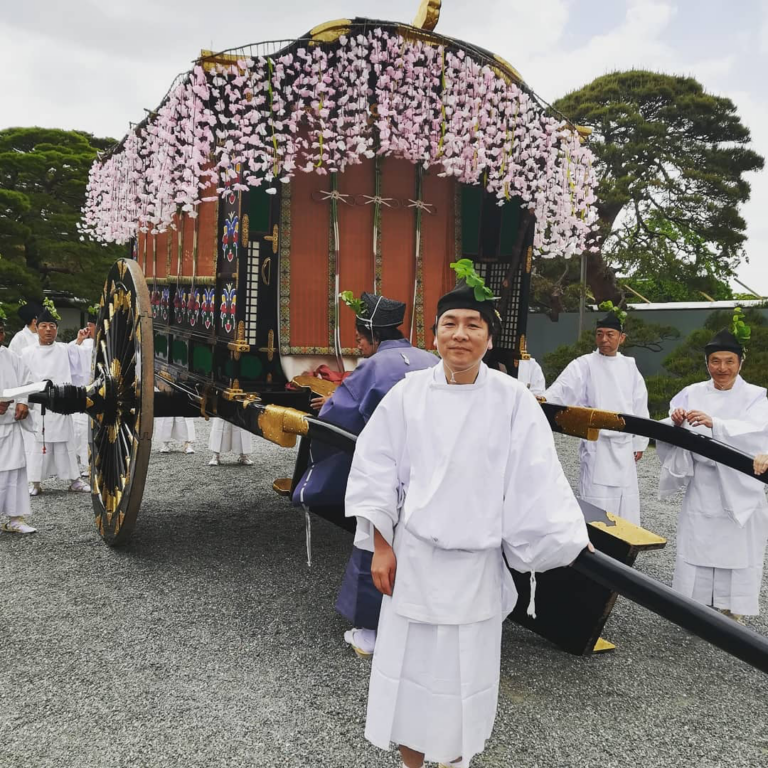
Aoi Matsuri
Today saw the street procession of the Aoi Matsuri, one of Kyoto’s three great festivals. Dressed in Heian-period costumes, over 500 people set off from the Kyoto Imperial Palace, passing by Shimogamo Shrine on their way to Kamigamo Shrine. I also took part as a volunteer a few years ago, , wearing white robes and straw sandals as I helped pull an ox-drawn cart. As this is a Heian-period event, modern accessories such as dyed hair and piercings are prohibited, so it was quite difficult to find young people, and even middle-aged people were asked to help. May is usually…
- Kyoto
- Spot introduction
-
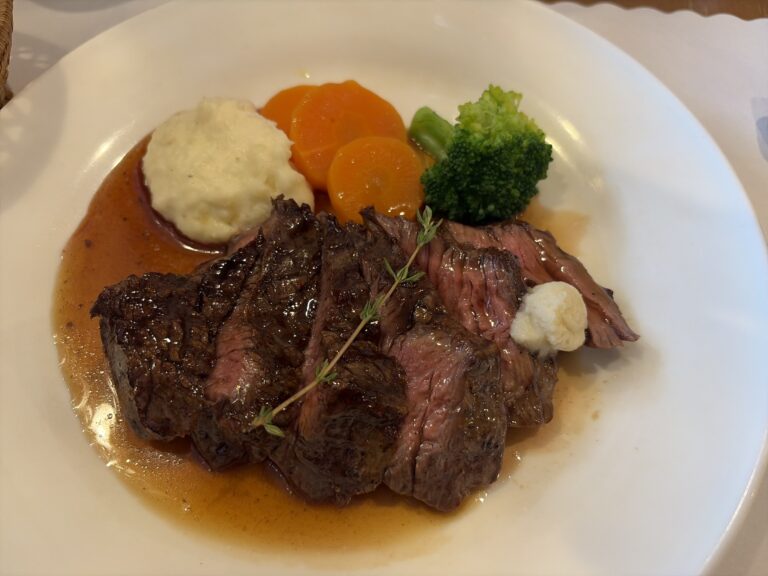
Chez KiKuSui
I first visited Chez KiKuSui when my supervisor took me there during my postgraduate studies. I’ve been going there for over 15 years now. Lunch starts at 2,000 yen and includes a salad, soup, bread, a main course of fish or meat, and a choice of coffee or tea. In particular, the homemade bread is served in unlimited portions; they’ll keep bringing it out until you’re absolutely stuffed. Today I had a bavette steak made from flap meat. In Japan, due to its shape, it is known as ‘kainomi (shellfish meat)’. Although this is a traditional dish from Lyon, the…
- Kyoto
- restaurant
- Spot introduction
-
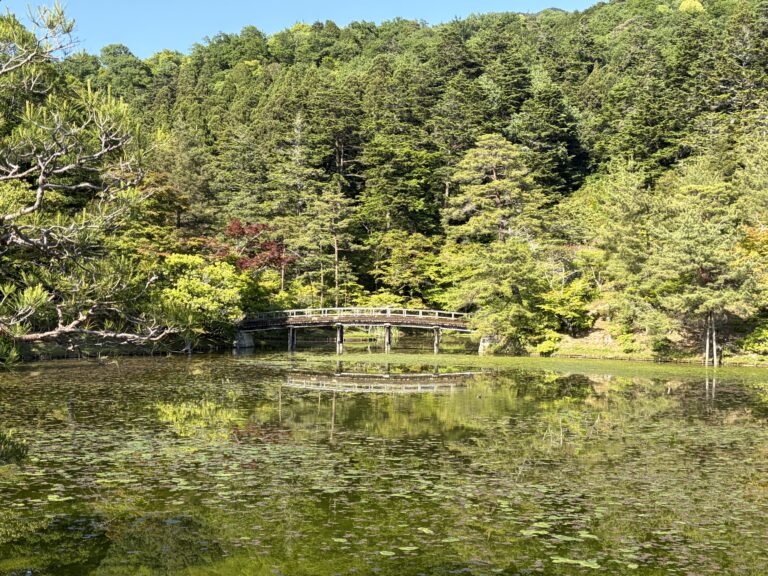
Kaede-bashi Bridge (Shugakuin Imperial Villa)
The Kaede-bashi Bridge spans the central island of Yokuryuchi Pond. Whilst the area around Yokuryuchi Pond is dominated by evergreen trees such as evergreen spindle and sakaki, the area surrounding this bridge is, as its name suggests, surrounded by autumn foliage. The wooden bridge looks particularly striking in November, when the autumn colours begin to appear and it is covered in crimson leaves. That said, the season of green autumn leaves is also well worth a visit. The wooden bridge reflected on the surface of the lake creates a scene reminiscent of an Impressionist painting.
- Kyoto
- Spot introduction
-
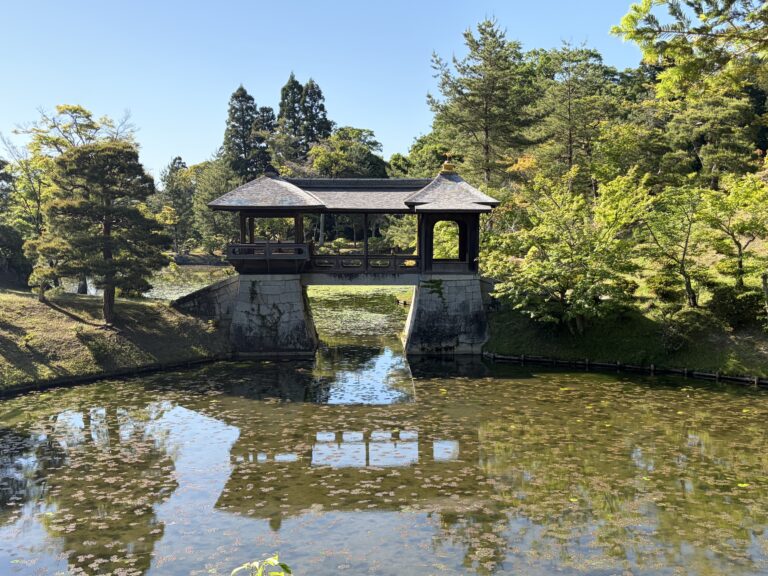
Chitose Bridge at Shugakuin Imperial Villa
Chitose Bridge spans the water between the central island and the Banshō-u pavilion in the Yokuryuchi Pond at Shugakuin Imperial Villa. It is said to have been donated by Naito Nobuatsu, the Kyoto Shoshidai, during the villa’s renovation in the first half of the 19th century. The Kyoto Shoshidai was a key post established by the Edo Shogunate in Kyoto, primarily responsible for monitoring the Imperial Court and the court nobility, as well as exercising control over the daimyō of the western provinces. Whilst the Edo Shogunate exercised control over the Imperial Court, it also guaranteed the Court’s living expenses;…
- Kyoto
- Spot introduction
-
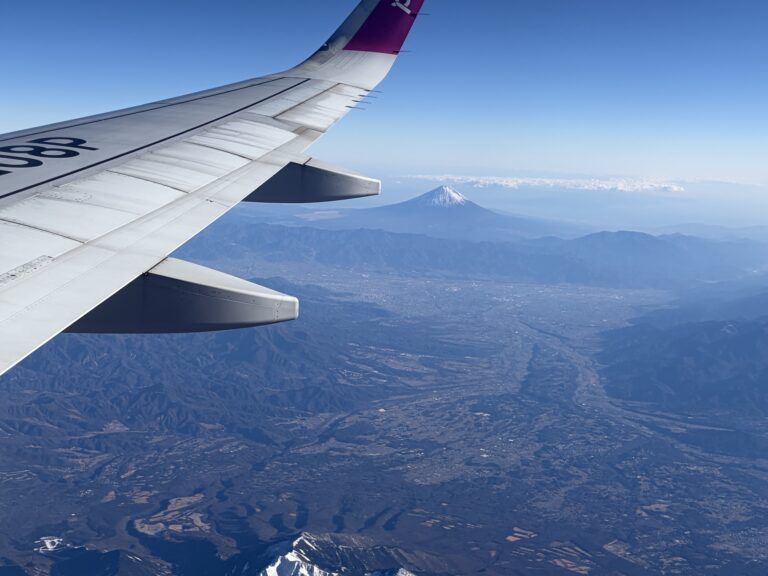
Mount Fuji
Although Mount Fuji is popular with foreign tourists, the guests I was guiding on this occasion could only see the base of the mountain; the summit was shrouded in cloud. According to a local guide, the chances of seeing a clear view of Mount Fuji are about one in three days. It seems that the view is often clearer from the Shizuoka side along the Pacific coast than from the Yamanashi side, such as Lake Kawaguchi, but this depends entirely on the mountain weather. The mountain usually opens for the season in early July and remains accessible until early September,…
- Shizuoka
- Spot introduction
-
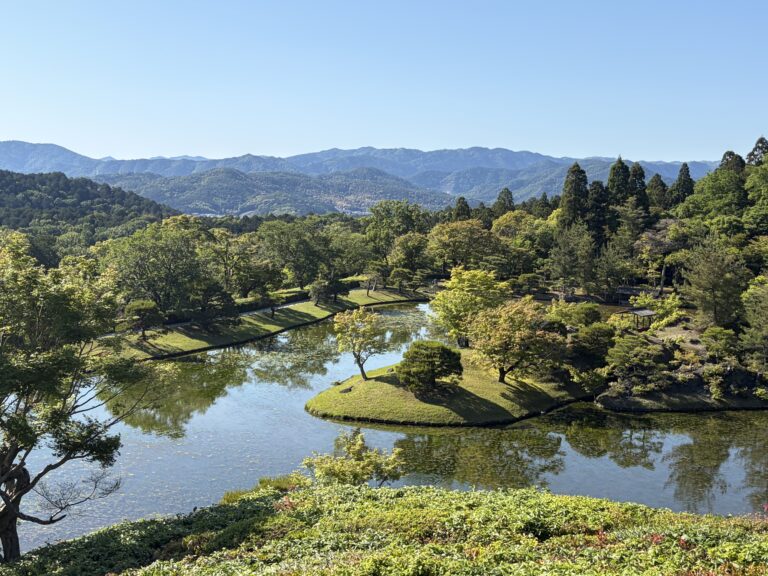
Shugakuin Imperial Villa
Although Kyoto is teeming with people everywhere you look, there are still places where you can enjoy beautiful scenery without getting overwhelmed by the crowds. One such place is Shugakuin Imperial Villa. Whilst advance booking is generally required, you can visit on the day if there are any available slots. Compared to Katsura Imperial Villa, which is very popular with foreign visitors, it tends to be less crowded. Visits are conducted as guided tours, so you cannot wander freely around the grounds, but you can enjoy the elegant surroundings that were so beloved by Emperor Go-Mizunoo. In particular, the view…
- Kyoto
- Spot introduction
-
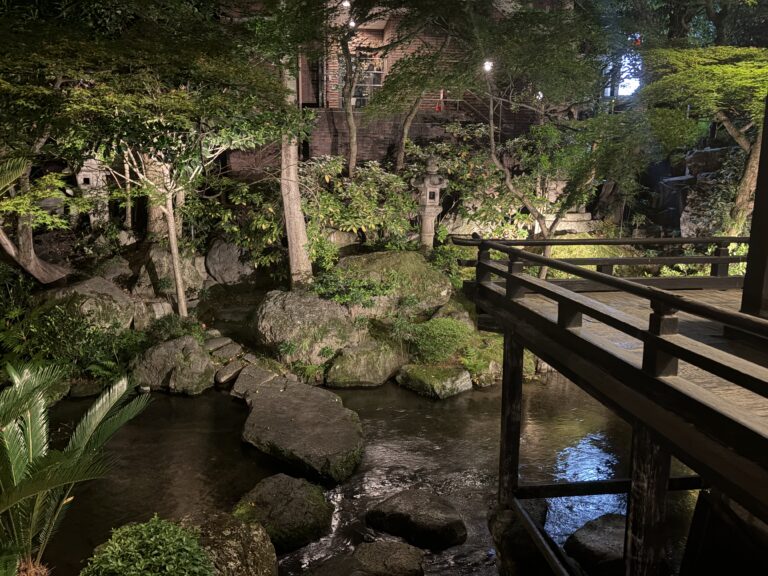
Ganko Takasegawa Nijo-en
Tonight, I’m taking guests to Ganko Takasegawa Nijo-en for a dinner with maiko. As photographs of the maiko are not permitted on social media, here is a picture of the garden instead. This garden was created in the early 17th century by the wealthy merchant Suminokura Ryōi. During the Meiji era, it became the villa of Aritomo Yamagata, who later served as Prime Minister; the garden was subsequently renovated by Ogawa Jihei, who was responsible for the landscaping of Heian Jingu Shrine and Maruyama Park, and remains in its present form to this day. At night, the garden is illuminated,…
- Kyoto
- Spot introduction
-
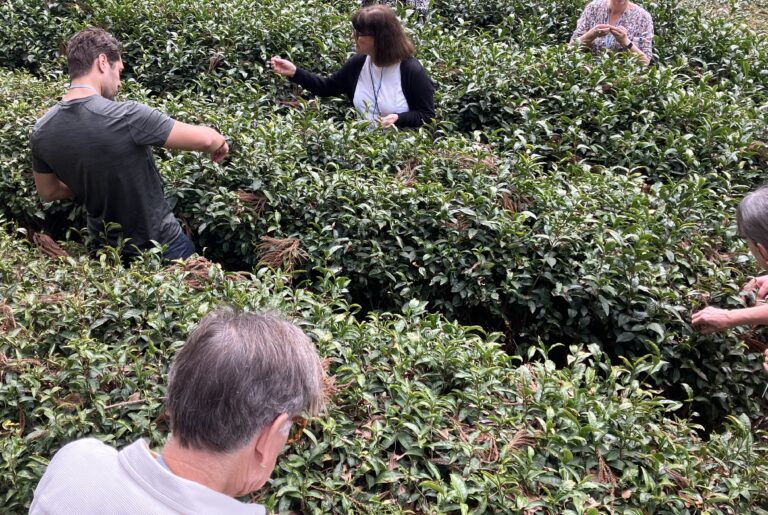
Tea Picking Experience
Wazuka Town is popular with foreign visitors as it is relatively close to Kyoto, offers scenic views, and provides the opportunity to experience tea picking. It is a frequent stop on tours. The chance to try tea leaf tempura and sample a variety of teas is particularly popular. At this time of year, the tea fields are covered with black sheets known as ‘kanreisya (cold-proof netting)’. This is to prevent sunlight from reaching the tea leaves, thereby bringing out the umami flavour of the ‘tencha’ used to make matcha. Due to the growing global demand for matcha, the use of…
- Kyoto
- Spot introduction
-
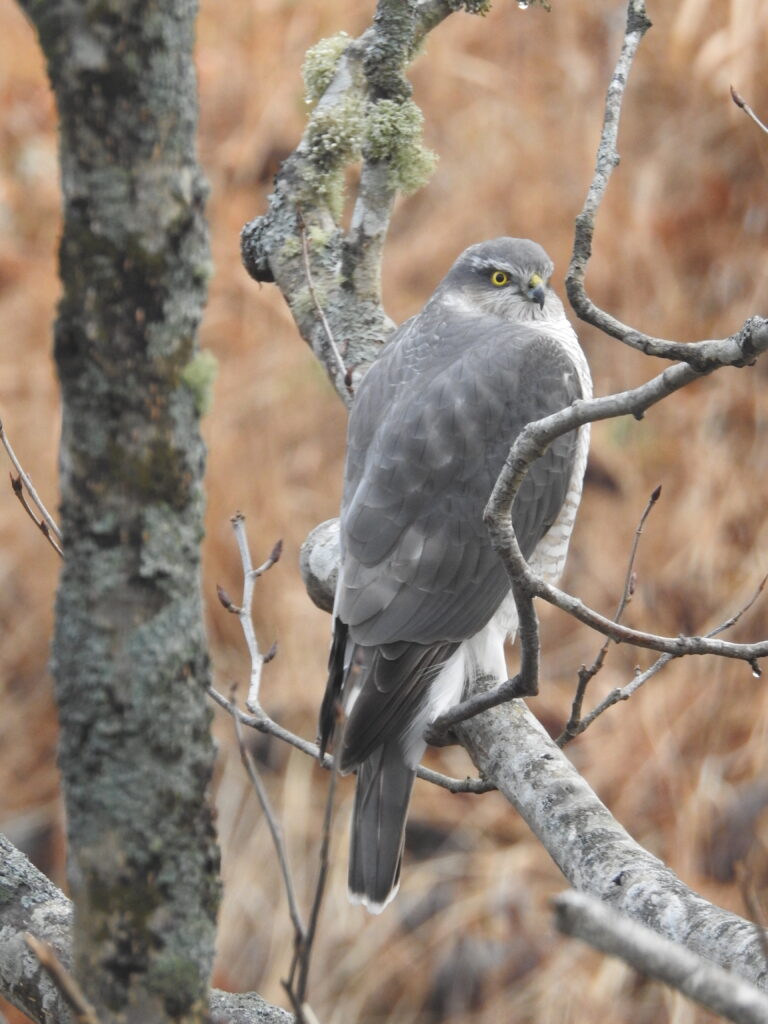
Wild birds are drawn to dirty places
The source of the Hantavirus infection is rodents in South America, and there have been reports suggesting that the Dutch couple who died may have contracted the virus whilst taking part in a birdwatching tour in Ushuaia, southern Argentina. One of the places visited on that tour was a rubbish dump. Some of you may be surprised to hear that they went to such a place, but for us bird enthusiasts, it is perfectly natural. Rubbish dumps are teeming with insects and rats, attracting large numbers of small birds and birds of prey that prey on them. One of the…
- Birds
- Column