

Blog
Blog Spot introduction 6ページ目
-
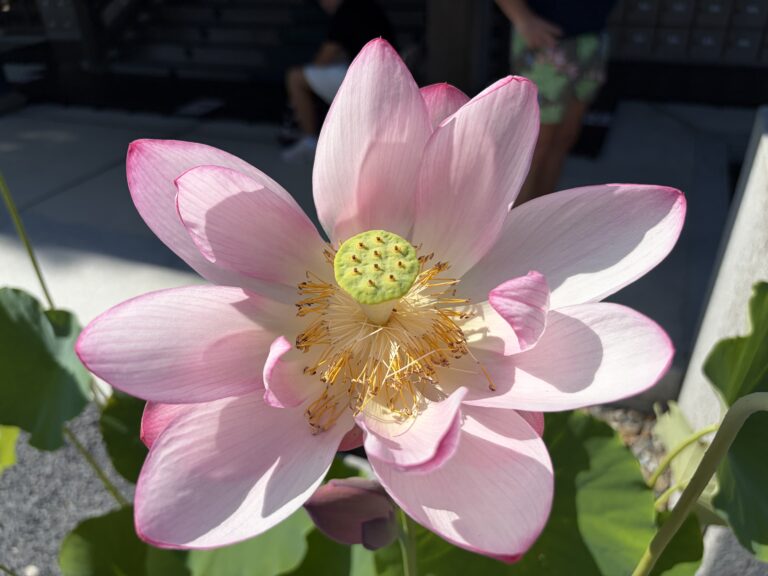
Lotus Flower
When it comes to flowers that add colour to Kyoto in summer, the lotus is the one to mention. The best time to see lotus flowers is from July to August. The lotus flowers at Chion-in Temple have also begun to bloom beautifully. As they start to open around 6 o’clock in the morning and close by midday, they can only be seen in the early hours of the morning. The lotus holds great significance in Buddhism. It is said that the *Vimalakirti Sutra*, one of the Mahayana Buddhist scriptures, contains the phrase ‘the lotus remains pure whilst in the…
- Flower
- Kyoto
-
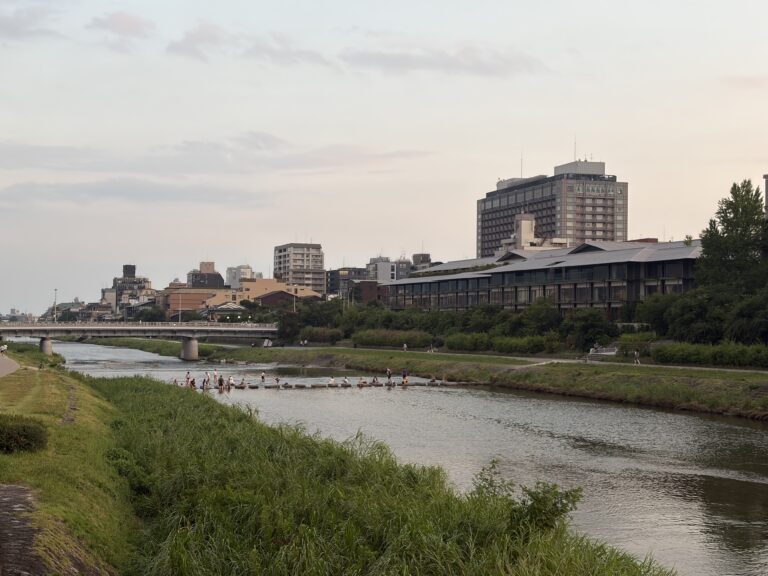
Cooling off by the Kamogawa River in the Evening
The unbearable heat continues in Kyoto. Today was the After Festival of the Yamahoko Parade, and I hear that 12 people were taken to hospital with suspected heatstroke. Although the heat shows no sign of letting up even as evening falls, the Kamogawa River feels a little cooler thanks to the breeze. For locals, it’s a classic spot for cooling off on summer evenings. They sit on the riverbank to relax or play on the stepping stones across the river, commonly known as ‘Kameishi’ (Turtle Stones) because of their shape.
- Kyoto
- Spot introduction
-
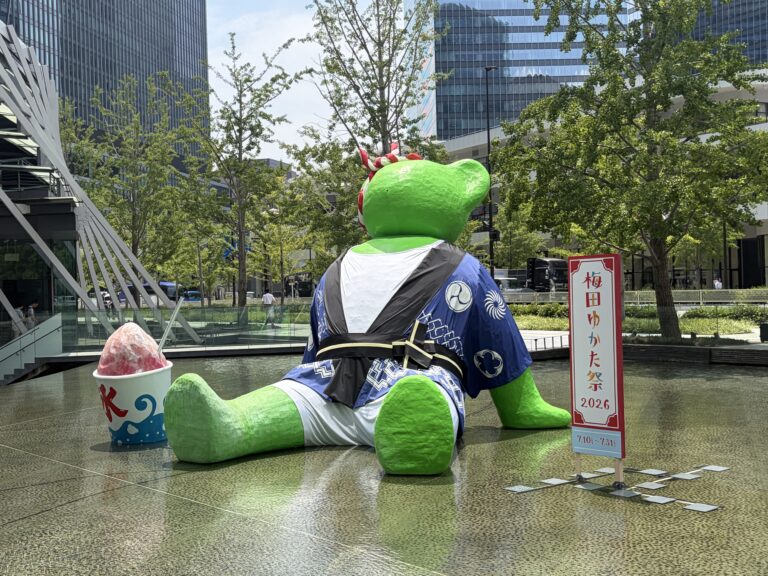
Green Bear’s New Outfit
The intense heat is set to continue until the end of this weekend, and it is said that, for the first time this year in Osaka, there will be a day when the temperature does not drop below 30 degrees even at night. The Green Bear at Umeda Kita Plaza. Its official name is TED HYBER, and since its installation at an event in April 2018, it has become a beloved symbol of Umeda. It was created by the French visual artist Fabrice Hyber. ‘Ted Hyber’ is a portmanteau combining ‘Teddy Bear’ with his surname, ‘Hyber’. For the artist, whose…
- Osaka
- Spot introduction
-
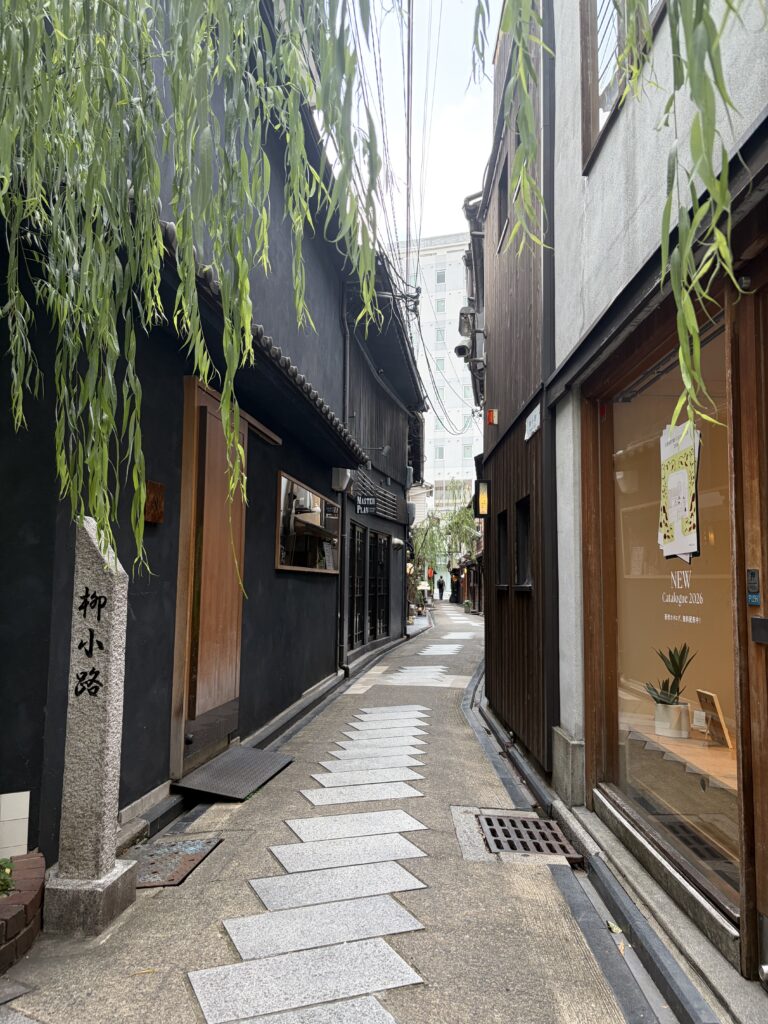
Yanagi-kōji
It was Toyotomi Hideyoshi who spearheaded the urban planning of Kyoto, a city that had fallen into ruin during the Ōnin War and the subsequent Sengoku period. From the latter half of the 16th century, a castle complex known as ‘Jurakudai’ was constructed; samurai residences and townhouses were laid out in a grid pattern; and earthen ramparts known as ‘Odoi’ were built around the city, thereby establishing its function as a fortified city. It was during this period that Yanagi-kōji, situated just off Shijō Kawaramachi, was created. In this alleyway stands the Hachibē Myōjin shrine, dedicated to ‘Hachibē-san’—one of the…
- Kyoto
- Spot introduction
-
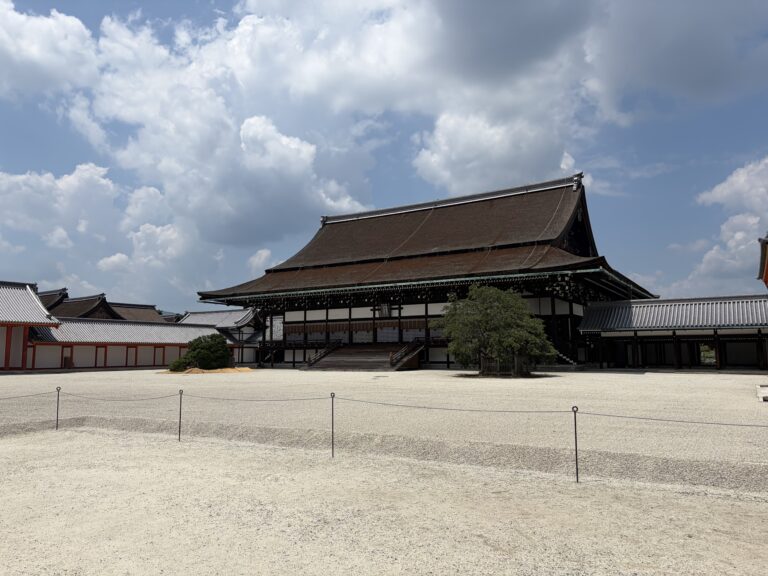
Kokushobi
The Japan Weather Association has adopted the term ‘Kokushobi (Extreme Heat Day)’ this year, based on a questionnaire. A day is classified as Kokushobi when the maximum temperature exceeds 40 degrees. Today in Kyoto, the temperature has exceeded 38 degrees. Although it is not officially classified as a ‘Kokushobi’, the heat and humidity make it feel as though one is inside a steam sauna. Almost all those walking outside are foreign tourists. Yesterday, a sign warning of heatstroke was displayed at the Kyoto Imperial Palace, indicating the highest level of risk. There was no one in front of the Shishinden…
- Column
- Kyoto
-
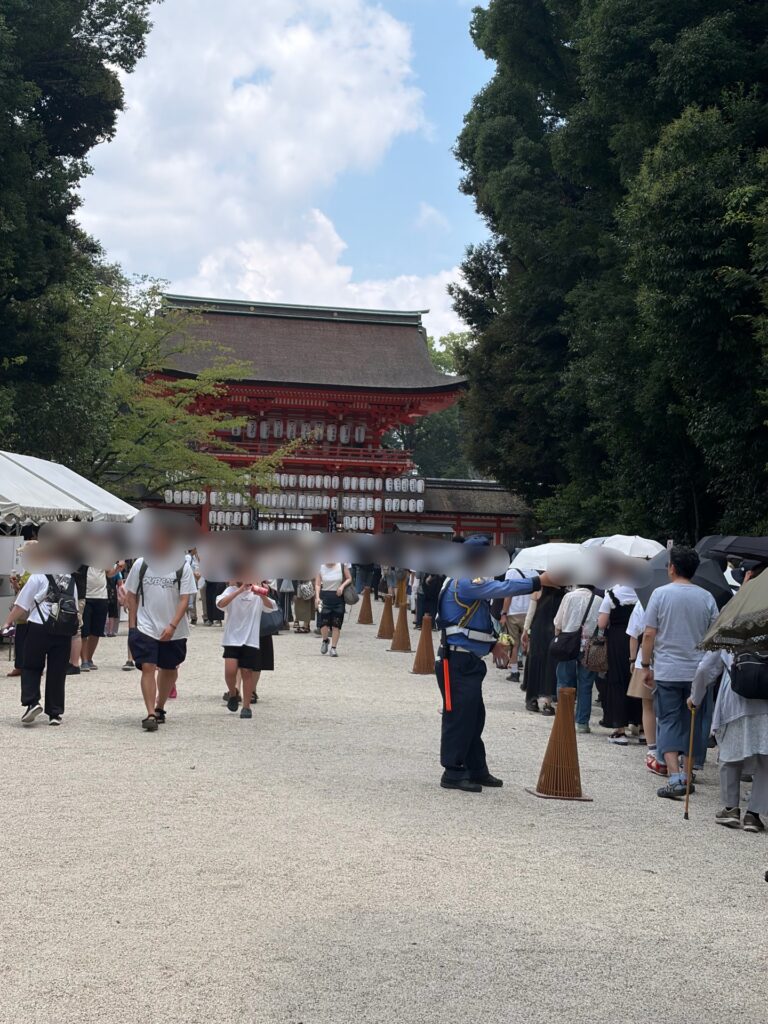
Mitarashi Festival
The Mitarashi Festival at Shimogamo Shrine is one of Kyoto’s summer traditions. Visitors dip their feet in the Mitarashi Pond within the shrine grounds to pray for good health and freedom from illness. Seoritsu-hime-no-Mikoto, enshrined at Inoue-sha—a shrine built atop the well shaft that feeds the Mitarashi Pond—is the goddess of water who purifies people of their sins and impurities; it is said that this custom spread amongst the common people from the Muromachi period onwards. Visitors enter the pond barefoot, holding a candle, and light it at the candle stand at Inoue-sha. The festival began last Saturday and continues…
- Kyoto
- Spot introduction
-
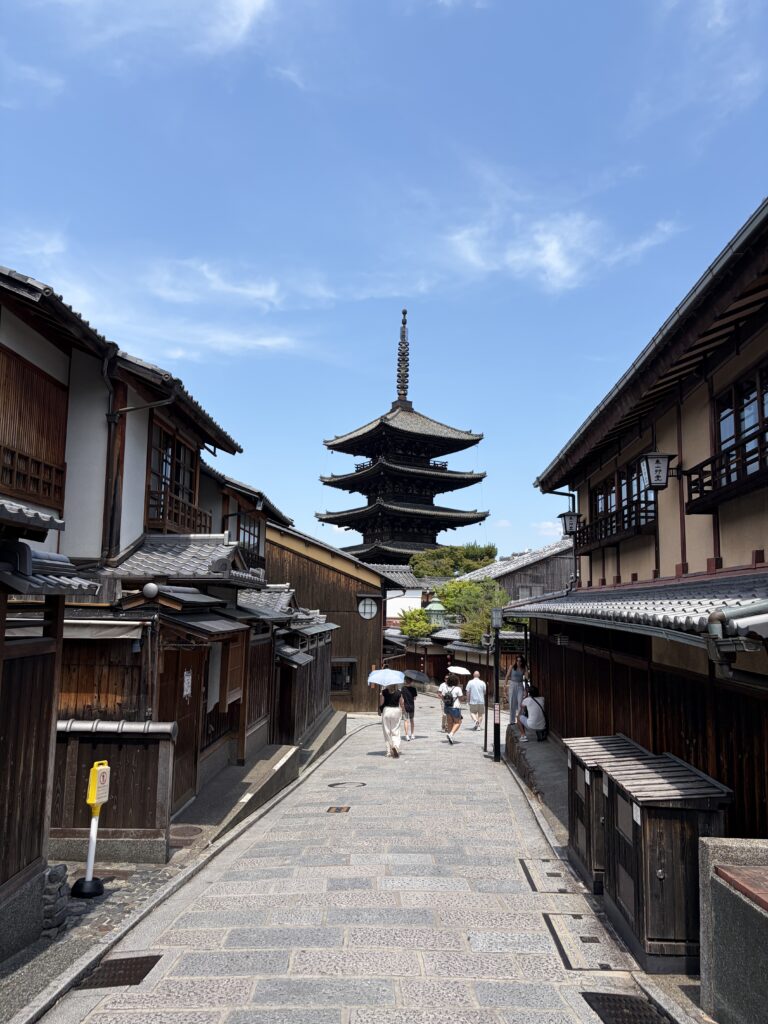
Relentless Heatwave
It’s the middle day of a three-day weekend. Japanese people have short vacations; they even call a three-day weekend—consisting of a weekend and a national holiday—a vacation. In Kyoto, the number of Japanese tourists seems to be increasing, whilst the number of foreign tourists appears to have dropped slightly. Perhaps many visitors are beginning to realise that the Japanese summer is more muggy and uncomfortable than they had anticipated. Even the Yasaka Tower, which is usually a popular ‘Instagrammable’ spot with a constant stream of tourists, has seen fewer visitors due to the extreme heat. Even at night, the temperature…
- Kyoto
- Spot introduction
-
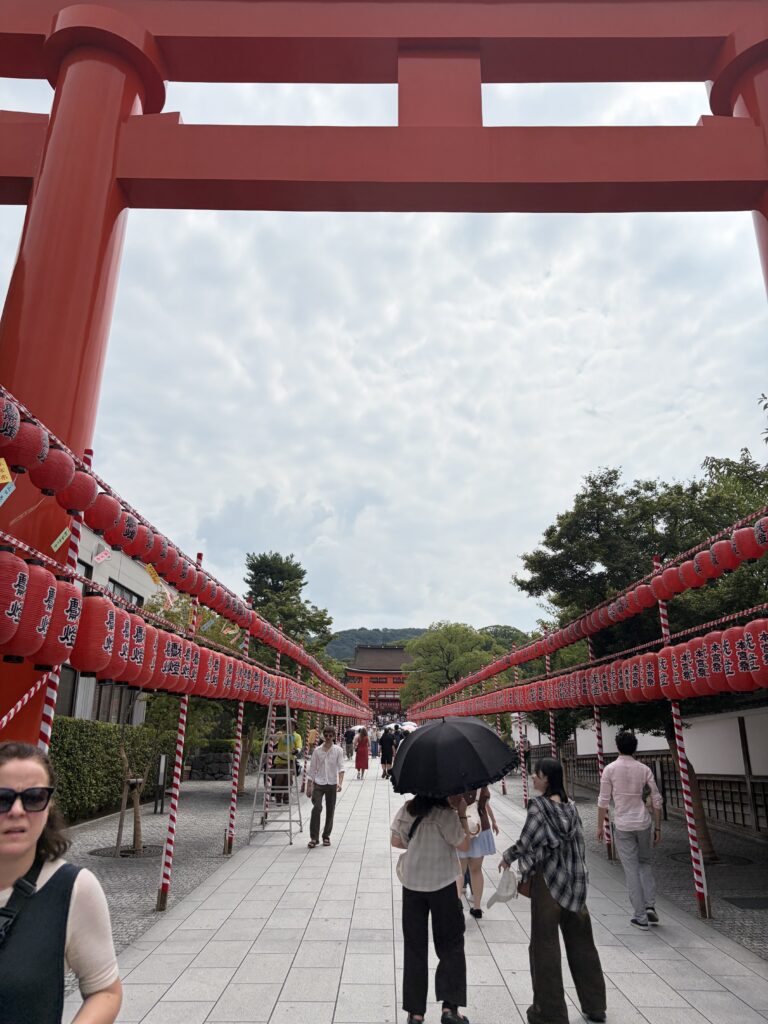
Motomiyasai Festival
The Motomiyasai Festival at Fushimi Inari takes place the day after tomorrow. This festival honours a branch spirit of Inari Okami—the deity of bountiful harvests and commercial prosperity—and attracts worshippers from the approximately 30,000 Inari shrines said to exist throughout Japan to pay their respects at Fushimi Inari, the head shrine. During the Yoimiya, which begins tomorrow at 6 pm, lanterns will be displayed throughout the shrine grounds, and nearly 400 illuminated lantern paintings will be lit, creating a magical atmosphere. Although Fushimi Inari attracts 10 million visitors annually, incidents caused by the rapidly increasing number of foreign tourists are…
- Kyoto
- Spot introduction
-
Scorching Heat
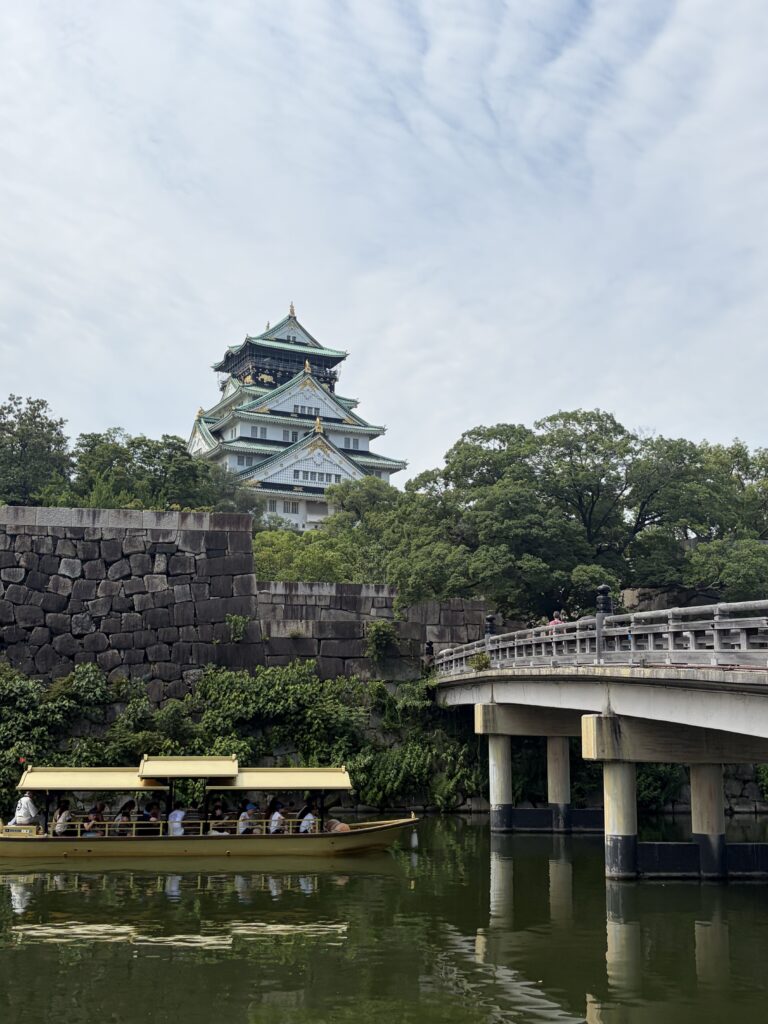
As Kyoto is situated in a basin, summers are sweltering and winters are bitterly cold. Today, the temperature reached 37 degrees, with humidity at over 80 per cent. It’s not just sweltering—it’s almost suffocating. We had originally planned to preserve the traditional machiya section of our guesthouse, but given this current heatwave, it was definitely the right decision to carry out a full renovation. The Yamahoko Parade took place amidst this intense heat. I hear as many as 25 people were taken to hospital by ambulance with heatstroke. I worked in Osaka as guide, and it was just as sweltering…
- Osaka
- Spot introduction
-

Chimaki
During the Gion Festival, the one thing the people of Kyoto never fail to buy every year is chimaki. These are displayed at the entrance to ward off misfortune, though the blessings they offer vary depending on the specific yamahoko float. When I first visited Kyoto, I mistakenly thought they were sweet chimaki confectionery meant to be eaten, and my Kyoto friend was quite taken aback when I tried to take the contents out. The main material used for chimaki is a large sasa (bamboo grass) known as ‘chimakizasa’, sourced from Kurama, Ohara and the Tanba Highlands. However, in recent…
- Kyoto
-

Yoiyoiyama
Tonight is Yoiyoiyama, the night two days before Yamahoko Procession. Starting tonight, Shijo Street will become a pedestrian-only zone, lined with yamahoko floats and food stalls. In the Yamahoko Procession, the order of the parade is determined by lottery to avoid disputes over the order, but the Naginata-boko, located near Shijo Station, serves as a messenger of the gods and is tasked with breaking the sacred barrier; as such, it is exempt from the lottery and always leads the procession. It is the most popular float, and there is always a line of people waiting to buy chimaki, amulet to…
- Kyoto
- Spot introduction
-
Hamo-Otoshi
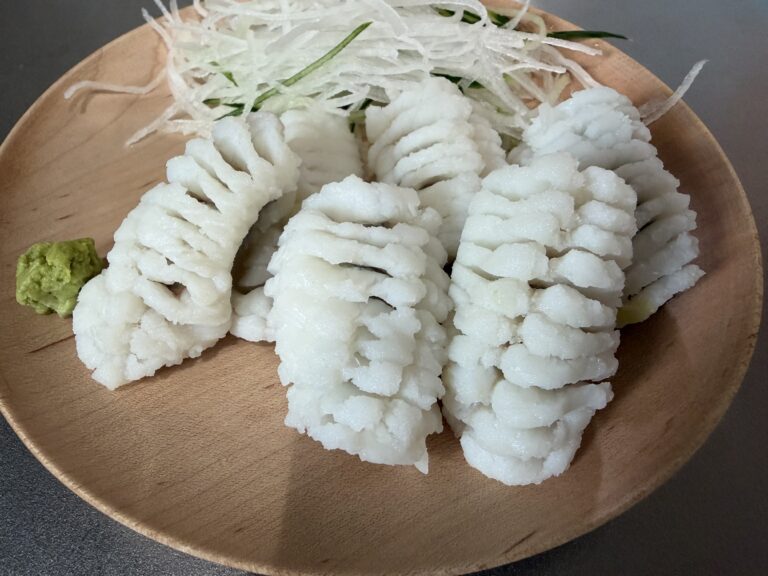
Tomorrow is ‘Yoiyoiyama’, the eve of the festival held two days before the Yamahoko Procession of Gion festival. Hamo (Pike Conger) is a fish traditionally eaten in Kyoto at this time of year. Although sourcing fish was difficult in Kyoto, which is far from the sea, hamo—a fish with extraordinary vitality—was reportedly the only species that could be transported alive from the Seto Inland Sea to Kyoto. However, hamo has sharp teeth and many small bones. Through trial and error, Kyoto’s chefs established a technique known as ‘honekiri (bone-cutting)’, in which only the fine bones are removed without cutting the…
- Food
- Kyoto